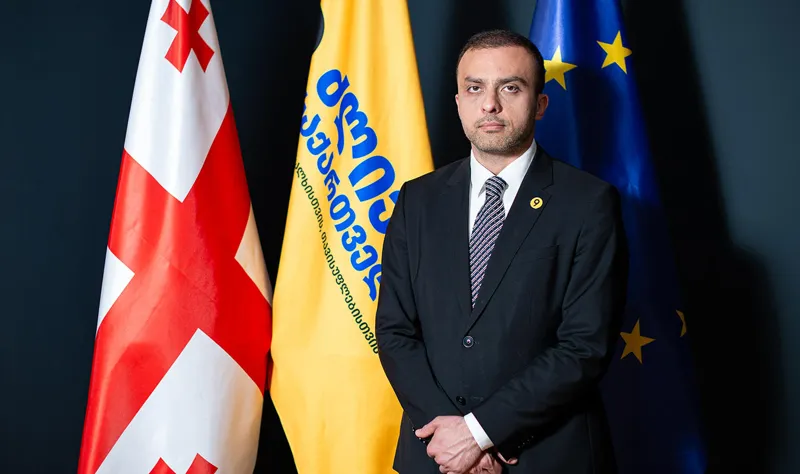


Diégo Colas: There will be more alternatives, more options, more possibilities on the table - it does demand that Georgia on its side, is ready for this moment, for this window of opportunities that will open
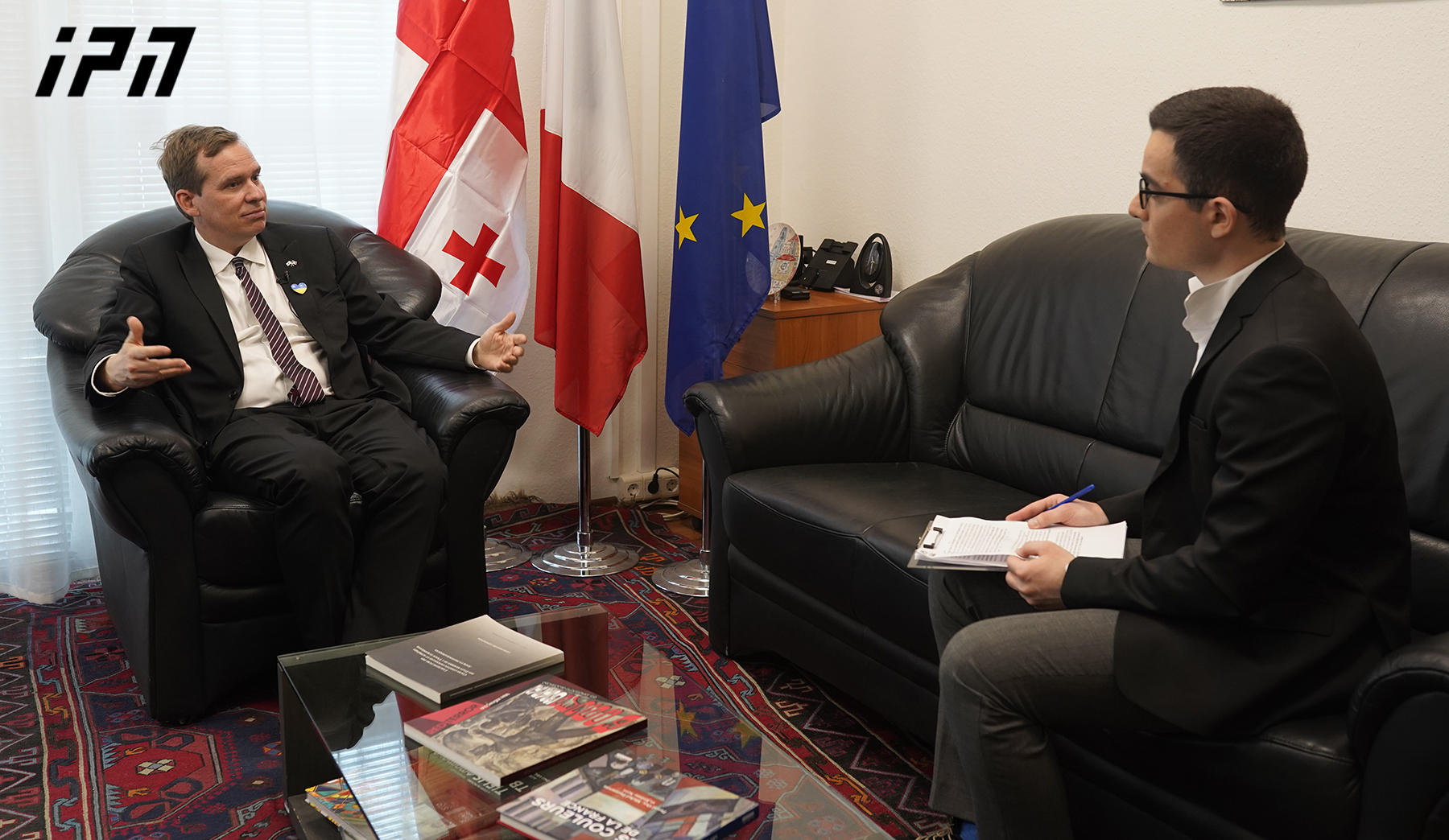
More than two months have passed since Russia's large-scale invasion of Ukraine. Western powers are trying to stop Putin's regime - the packages of sanctions they have imposed are weakening Russia, however, this has not been able to stop the war yet. What other steps can the civilized world take against Moscow, on the other hand, what does it offer to Ukraine and those countries that face the same type of threats from Russia, whether it was possible to avoid the ongoing war in Ukraine in case Ukraine and Georgia had been greenlighted at Bucharest Summit in 2008, what are the prospects for the countries affected by the Russian aggression in terms of joining the European Union - French Ambassador to Georgia, Diégo Colas, discusses these and other relevant issues in an exclusive interview with InterPressNews.
Diégo Colas, the Ambassador of the French Republic to Georgia, thank you very much for speaking to us! Let me begin our interview with a question regarding the French presidential election, which has clearly shown that Emmanuel Macron has won over the far-right challenger, however, it should be noted that far-right gained more ground in France and they had quite a successful result as well. During his victory speech, Mister Macron told thousands of cheering supporters in front of the Eiffel Tower that "an answer must be found to the anger and disagreements that led many of our compatriots to vote for the extreme right." In your opinion, what is the answer that President Macron is trying to find? Why does the far-right gain more ground in your country?
I think there was a very interesting debate in France during these elections, and it's very much a debate about how relevant is the choice of more Europe for one country. In France, you had for a so long time people arguing that or asking the questions, is Europe the way to go? Should we have more Europe? Should we do more reforms for Europe? And some people say yes because this will make Europe stronger and will make France stronger in a stronger Europe. And others are saying no, Europe only benefits some people, not everyone. And then you have people like Marine Le Pen and the far-right who basically say, we should have less Europe or Europe only when we like it. And then you have other people who say on the center-right or on the center-left no, we should do more Europe, but our style- some reforms, not all of them. Europe, but Europe in the French way. Basically, what was interesting with Emmanuel Macron since the beginning was how he was saying we have to really confirm our European choice. We have to make reforms to contribute to a more dynamic Europe. That's really been his line since the beginning. And basically, the choice that people had, it was the elections on Europe, on how relevant is Europe. At the beginning of his campaign, he put the European flag under the Arc de Triomphe. And that did create a debate on is that right, or is that not right? How much Europe do we want Europe, but only a French-style Europe or really Europe? And I find it very interesting, the result of this election because, yes, indeed, the far-right is fairly high level. That's also because there are always a debate on the incumbents and some people like him and some don't. But you find that the choice of being resolute for Europe and to do reform, resolutely to make Europe go forward and to make your country go forward in Europe has been electorally a success. 58% in the second round is one of the highest scores in the second round, and certainly by an incumbent President. And so it shows that there is political value in being resolutely pro-European. That's true for France, and I think it's true in many countries. It's a very interesting result in that regard.
What internal and external challenges does President Macron face as he becomes the first French President to be re-elected in 20 years? It was quite a historic election for France.
Yes, you are right that this election takes place in a challenging context because we still have the crisis of COVID, which did change a lot of things in the country and create a lot of tensions in France. Now we have the war in Ukraine, which is, of course, a very epoch-changing event. And so these are significant challenges that he will have to face to deal with the war in Ukraine and redefine our relations with Russia, with the wider Eastern Europe, like Ukraine and Georgia. So in addition to all the global issues that this war is intensifying, we see the food crisis, we see the health crisis is not entirely gone, too. And there's all this disorder that the unspeakable aggression of Russia against Ukraine has brought into this world, and that now needs to be addressed. So this is quite a challenge that is on the plate.
Alright, let's switch to Ukraine, which we already mentioned. Ukraine has been repelling a full-scale Russian invasion for more than two months. Russia is the most sanctioned country at the moment in the world as a result of its aggression, which led numerous countries to impose the toughest sanctions against the Kremlin. Nevertheless, Moscow continues its hostilities against Ukraine and its people, and so far there is no indication that Russia will stop doing so in the coming future. So, what is the solution when there are so many sanctions imposed, so big international pressure, but despite all that Russia still continues its atrocities? Let me quote the Russian President Vladimir Putin, who made a fresh threat to the West, saying any country that sets out to intervene in Ukraine will face a "lightning-fast" military response. So, we see this aggressive rhetoric of Russia and we also see sanctions that do not work properly at the moment in order to stop Russia to end its hostilities in Ukraine. How can this bloody war be stopped in Ukraine? What is the solution?
I think it's a bit early to say that sanctions do not work at this point. Since the beginning of the war, we have a policy to really put pressure on Russia to stop this aggression and to change completely its outlook on this question, which rests on several pillars, namely the five pillars. Sanctions are one of them. And you are right to mention that this is not sanctions like before. Before the sanctions were basically asset-freeze on some people, to make pressure on some negotiations. Now we are talking about something completely different. We're talking about a much more comprehensive use of economic tools to put pressure on Russia to change its choices. And that's only one of the pillars. The second pillar is support to Ukraine, support of a humanitarian nature and support of a military nature. We have not communicated a lot on what we do for various reasons, but there is quite a lot of that support also happening, including military weapons. What we do when we provide military equipment to Ukraine is not a direct intervention but to support Ukraine as it exercises its right to self-defense.
The third pillar is to deal with the international criminal legal aspect of the case. We see that unspeakable crimes are being committed in this operation. This is also a tool of pressure, but also of justice. And so the French government is working with the Ukrainian government to help them make the inquiries and the proper legal qualifications and legal cases that have to be made. We have also supported the international criminal courts' own investigation of this case. And only yesterday there was the UN Security Council discussion on these questions carried by the French and the Albanian delegations. So this is the third dimension to also put pressure on. There is the question of the isolation of Russia from international forums to express how uniquely unacceptable this behavior is and that they really feel this. So some of these measures are very symbolic, like excluding from sports competitions. But there is also no participation in international forums. Even yesterday, we had another success on that front with the UN World Tourism Organization taking a decision on Russia as well.
And last, there is also the support for our allies. We have also built a line of defense in the Baltic countries and in Romania. We have French soldiers today deployed in Estonia, in Lithuania, in the skies of Poland, and in Romania to help make clear that NATO will not be threatened and will not be attacked. And so we are part of this. So this is a very comprehensive response since the beginning of the war. You are right to say that it has not so far led Russia to stop its operations. This is continuing. So we will continue our effort, probably even intensify our effort. We have a sixth package of sanctions being worked on as we speak. And the question is whether these sanctions will include, for example, restrictions on Russian oil and gas. We in France have been always saying that we are ready for this. The thing is, as president of the EU for these six months, we have a responsibility to encourage agreements within the EU. And so we have to talk to all our partners because we need not only very strong sanctions but also unity. It's very important to maintain the two and therefore how to keep the unity and to move forward is a challenge right now, I'm hopeful that we will intensify on all fronts. We've also made announcements for the support, and we have, as I said, recent successes in the isolation and the legal front. So we are absolutely determined to have a success of that policy.
We have already mentioned how France helped Ukraine. But still I would like to ask you- is it necessary for your country to take additional steps or measures against Russia to end the war? Let me quote the Ukrainian President Volodymyr Zelensky who said the following last week in an interview with the French media - “President Macron and France, so it turned out - it is a war, must choose between business, money, between history and the fight for freedom, for people's rights, for life". What is your comment?
First, that's not the only thing he said. He also thanked the French President for the extent of support that France is bringing in all sorts of military assistance, but also in terms of sanctions. I think he [Zelensky] is right.
I think we have to do more. We have to intensify on all those fronts, including the sanctions front. Like I said, we have already expressed that we were willing to also take measures touching Russian oil. I think now that Russia itself has opened that front, too, by the suspending of the oil delivery to Poland and to Bulgaria. The EU will react as a group on this. So that means that if Poland doesn't get oil, the rest of EU will express solidarity. It is written in EU law. It is also our very strong policy to do this. There will be a European response to this. And so this is only taking us to that stage where sanctions will include these things in them as well.
We briefly mentioned the expulsion of Russia from different international forums and now my question concerns to the UN Security Council. Five countries are permanent members of this council, including France. Ukrainian President Volodymyr Zelensky urged that the UN body to expel Russia “so it cannot block decisions about its own war”. We see almost every draft resolution in the Security Council on the Russian aggression against Ukraine was blocked. And same applies to Georgia because Russia blocked resolutions about Georgia in the past too. There is an impression that Russia is abusing its veto power. Using its veto right to avoid punishment from the international community. Will France support removal of the Russia from that council? Is it on the table?
I don't think it can be done, to be frank, because I don't think that the UN charter allows for this, but what we're looking for is other ways to make sure that the decisions are taken. You're right to say that there has been vetoes used by Russia on the Security Council. But we have then moved on to the General Assembly where we had some very significant successes. The vote on the resolution by the UN General Assembly condemning the aggression. The two votes condemning the aggression, both the initial reaction and also the one on humanitarian support have been absolutely overwhelming, 140 and 141 votes.
Wherever we have tried expulsion, it has been a success. We have been recently in UNWTO before that, in in the human rights council of the UN as well. So we don't let that veto become an obstacle to decisions. We find other ways when the veto blocks the situation. You also saw that there was a recent resolution adopted to force any permanent members who uses the veto to justify themselves to the General Assembly. So that's also the beginning of something. We have always been open to reform of the security council, to enlarging the security council. We've always been open to discussions on veto and all these powers. We're not people who are blocking and defending our own prerogatives. We are, in fact, quite open to reforming these questions. And all tools that allow the decision-making to go forward and decisions to be taken have been used. I think so far with some success, we would wish for even more success, but I think we have been quite strong in the UN. We have not been prevented from doing much that we wanted to do.
In 2008, at the Bucharest Summit, NATO did not grant the MAP (The Membership Action Plan) to Georgia and Ukraine, although allies agreed that these countries will become the members of NATO in the future, but without a timetable. As far as it is known, several countries, including France and Germany, did not support the idea of immediately joining Georgia and Ukraine in NATO. Do you think the world would have avoided wars in Georgia in 2008 and in Ukraine in 2014 and 2022 if there had been a different decision made at the Bucharest summit?
First, we have to really remind ourselves what was the decision at the time? The question was Georgia and Ukraine wants to enter NATO. And the answer was yes, it will happen someday, not now. We need to prepare for it. And by strengthening the military of Georgia, the military of Ukraine, by creating more interoperability, by developing a lot of tools to allow these countries to defend themselves better. And that is what we have been working on since 2008. And sometimes when I hear discussions about it, it's like NATO said, no, it's not really the decision that was taken. The decision again was to say, let's work at it. And so that one day it becomes possible. And that's what we have been doing. And it's pretty clear with the very spectacular, brilliant, heroic performance of Ukraine today that this work has not been in vain. The courage of Ukrainian soldiers is the first reason why this happens. But such success also occurs because they have all these trainings, this interoperability, and all the help that is coming as well. So it is working this strategy. The second thing is that at the time, we decided to be prudent in our approach, that is to work at it, but at some future date because the fear was that Russia would not accept and the risk is that there will be war at some point if we are going too fast in this direction.
I think the present conflict shows that indeed we have met this situation where war has happened. So it rather confirms the fear that the war could happen. The thing is if we can always speculate historically if we had gone faster towards accession, would the war had come earlier? Would Ukraine have been more or less ready? Would Russia have been more or less ready? Would we have been more or less ready to provide the support that we provided? That's a debate for historians to have. The reality is what's important now is that we had a roadmap then to strengthen the army, the armed forces of Ukraine, and Georgia. We have been working on that. It's showing some success and it has to continue to be the roadmap to move forward, to do the reforms that it takes in order to have a more integrated partnership between us.
Very brief, yes or no question. Does France think today that the refusal to grant MAP to Georgia at the Bucharest Summit is the right decision? The right decision from today’s perspective?
I think the decision we took to strengthen the armed forces of Ukraine and Georgia to work at this future accession is a good decision and I think it's still very much a promising decision.
Some world leaders have repeatedly stated that a number of other countries are threatened by Russia, especially Georgia and Moldova. And we have just seen that the attacks have taken place in Moldova’s Russian-backed breakaway region of Transnistria. Besides, last month Georgia’s Russian-backed breakaway region of South Ossetia said they are going to hold a referendum on joining Russia. Given this latest escalation of tension in Moldova and Georgia, there are mounting fears that the war may spill over into other countries. Do you suppose Russia could re-invade Georgia or attack Moldova? Can you tell us what France will do to prevent Russia from re-invading Georgia?
When the conflict began in Ukraine, it was very clear that the conflict could easily spread to other places, and Moldova and Georgia were clearly identified as places where that could happen. Minister Le Drian went to Moldova, had a phone call with at the time Minister Zalkaliani, at the very beginning of the conflict, President Macron also called President Zourabichvili and she went to Paris after that phone call precisely to have this coordination. The point of this was to say that we see the risk of widening of the conflict to your country. We are worried about it like you and we are preparing to help you should that happen. So all these threats are well identified and we have been very keen to really show support and to prepare working in the event that this would be happening. For a long time, we thought that because of the heroic resistance of Ukraine, the conflict was narrowing on the Ukrainian fields, in Ukraine itself more than in other places. You are right that since a few days we have been very keenly watching what's happening in Moldova, in the region of Transnistria as well, to make sure that things don't spread out.
And there is this very aggressive rhetoric of Russia. So that only intensifies our determination to move forward in our pressure policy. We haven't waited until the beginning of this crisis to support Georgia. We have a strong military cooperation between France and Georgia. We have for many years in several fields such as infantry training, mountain infantry, such as special forces training. A very important element of this is air defense in the framework of the SNGP, that is the name of this cooperation within NATO for Georgia. We are the nation of reference for air defense. So we are working quite intensively at building up Georgia's air defense. We work on a strategy, a system, on having the right equipment. I think it's been going on for a while. I think it's time to intensify this particular effort. We have again not waited this conflict to work at this, and we are absolutely determined to continue doing so. And probably, I would say, on a field like this, we need to intensify our response.
Ukraine requested new security guarantees from western countries, including France. Given the fact that Georgia has very similar challenges and problems concerning Russia, how much can Georgia expect to receive the security guarantees from your country?
It will be an interesting discussion, exactly how that discussion goes. It is obvious that when we'll be at the end of this conflict, this will change a lot of things. And at the end of this conflict, it will be a new time and new environment in which to have these discussions on security, on accession, on all these fields. My impression is that some new things will become possible. The debate will be very different from what it was in the past and that those who have fought for the freedom of Ukraine today will very much have their words to say in this very important debate on rebuilding security arrangements, rebuilding relations between Europe, NATO, Georgia, Ukraine.
Georgia applied for membership in the European Union amid Russia's invasion of Ukraine. Now, the Georgian government is working on the EU membership questionnaire. Should Georgia expect staunch support from France in terms of EU membership? And in general, how would you assess Georgia's fulfillment of its obligations under the EU Association Agreement?
This is really an area where you can see that the debate is going to change. Before we were in a situation where there was a great hope by many in Georgia to enter into the EU and a policy of an open door. But really the association agreement was the one and only framework on which to do this. Now you have a new situation because of Ukraine and Ukraine's application and the obligation to somehow answer this application. I think that discussion will enrich itself. There will be more options on the table. I'm not exactly sure which one. I think we need to think very constructively, but I think there will be offers on the table to do more than in the past. Enlargement is a difficult process. Having more countries in the EU, having a lot more countries in the EU is a process that needs to be done very thoroughly because we cannot allow the EU to dissolve into irrelevance. And that's always been the fear with enlargement that if we bring too many countries, too diverse and not prepared countries, that then suddenly there is a situation where you cannot take decisions in the EU anymore. So we need to go through the process of enlargement, we need a lot of work. But I think because there will be a necessity to respond to Ukraine to Ukraine's application, there will be more alternatives, more options, more possibilities on the table. It does demand that Georgia on its side, is ready for this moment, for this window of opportunities that will open. Last year, we have had quite a lot of difficult discussions on all the rules of law institutional dimension. It's one of the dimensions, to be frank, it's an essential dimension because this is what makes everything work. The European Union works because judges are free, independent, able challenge the position defended in court by their government and ask questions to the Court of justice and make EU integration move forward. This mechanism is what lawyers call the mechanism of the preliminary ruling. This mechanism, which rests on independent judges, has been what makes the EU work the way it does and what makes of the EU the success that it is. So that is why this reform matters greatly. And this is not like something. It's good if we can do it, but otherwise we'll do as best as we can. It is really the heart of the Western transformation. Judicial reform, electoral reform, freedom of speech, freedom of the press, protection of journalists, all these elements are absolutely central. We have protection of minorities, protection of individual rights, rights to protest, right to march on the streets, etc. And all these things are the absolute center of the transformation project. And there is quite a lot of expectation. It's very important at the moment when things will become possible again, that Georgia is fully ready, prepared, as motivated as possible to move forward, because I think a moment when a lot of things are going to be possible is ahead of us in a few months.
In a few months, Georgia and France will celebrate the 30th anniversary of their diplomatic relations. How would you assess the cooperation between the countries in political, economic, military, and cultural terms? Do you see future prospects for the deepening of the existing relations?
Yes, we have had an intensification of our relations a few years ago with the creation, the establishment of what is called the “Dimitri Amilakhvari structured dialogue”. Dimitri Amilakhvari is, of course, a very important Georgian Prince, but also a hero of the French Foreign Legion. He died fighting real Nazis in 1942 in El Alamein. So he's the figure for the bilateral relations. This structured dialogue is important. It includes five working groups, meaning there are moments when ministers meet and celebrate these things and exchange views, and one such meeting should take place before the end of the year. But there is also constant work going on in a lot of fields to make sure that the relations become closer than ever. One of the field is the political field. And since the creation of Amilakhvari, we have had not only moments celebrating the bilateral relations, but you can find a lot of French National declarations on territorial integrity of Georgia for example more than before and more precise and at moments when it's really important to remind this position. There is military cooperation and I mentioned air defense but also mountain infantry training.
We had economic cooperation so the French Development Agency is now based in Tbilisi and has a three-year plan to really develop their relations and it's working I think quite well. We also had a visit by MEDEF (the French Employers Association) was there in November and a very successful visit which we are now reaping quite a lot of results. There is police and internal security cooperation as well which is quite intensive and finally cultural and education with the French school, but also the support of French language teaching in Georgian schools, the Franco-Georgian University which was a project and which now exists we have three programs which are already in place so we have all these cooperation in place. I hope that very soon we would have a second summit meeting on the ministers level of the Amilakhvari dialogue because of the election it was not possible to do right now but I'm hoping to have that soon precisely to highlight the extent of this cooperation. Even despite COVID and despite the fact that it was difficult to organize travels between the two quiet a lot has been done and achieved and is being developing right now.
Alright. Diégo Colas, the French Ambassador to Georgia, it’s been fascinating talking to you. Thank you very much for your time.
Tornike Kakalashvili
InterPressNews