Shalva Papuashvili: The Georgian Church and the Patriarch can say that, to a large extent, it was thanks to them that the Georgian people were ready for independence before the collapse of the Soviet Union - it probably hurts when they are accused of being pro-Russian
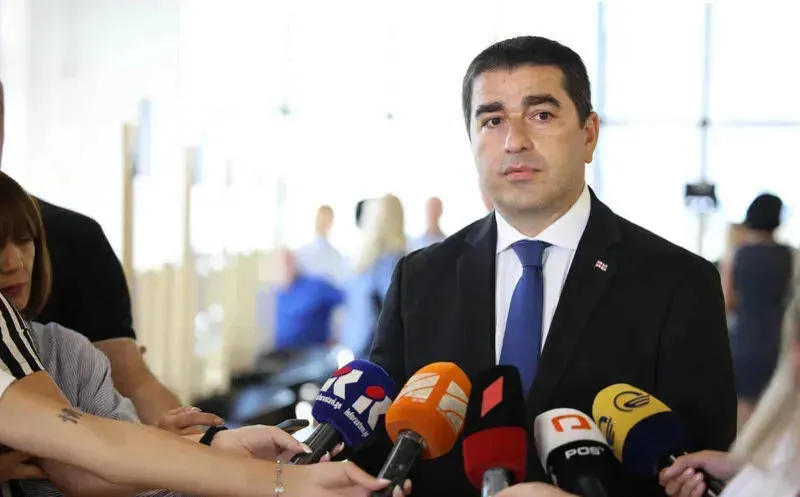
After independence, the Georgian Church has never interfered either in politics or in elections, which, among other reasons, despite the political contradictions in our society, determines its high authority and popularity, - the Chairman of the Parliament of Georgia Shalva Papuashvili writes about this on his Facebook page.
According to him, the most important problem is, of course, that the Georgian Church is accused of "pro-Russian" political sentiments.
"In Georgia, the state and the church are clearly divided. Their relations are so-called It is regulated on the basis of the Concordat, which was signed back in 2002 and which recognizes the special role of the Church of Georgia. The concordat was signed, in part, to compensate the church for the damage it suffered during the Soviet Union, during the Russian occupation. The separation of church and state is more protected in Georgia than in some European countries, where, in some cases, unelected church hierarchs occupy high levels of the legislature, and in others, state resources are spent on collecting taxes for the church. After independence, the Georgian Church has never interfered either in politics or in elections, which, among other reasons, determines its high authority and popularity, despite the political contradictions in our society.
The most important problem, of course, is that the Georgian Church is accused of "pro-Russian" political sentiments. First, more than two centuries ago, it was Russia that deprived the Georgian Church of its independence that had been maintained for centuries. After the collapse of the Russian Empire and the Soviet Union, the Georgian Church had to restore autocephaly twice. Not a single Georgian cleric would even think of submitting his church to Russian control, even because the Russian church is centuries younger than our church. As for the religious side, there is a Eucharistic connection between the Georgian and Russian churches, because both are Orthodox churches, as well as the churches of Constantinople, Greece, Romania and others.
In the 1970s and 80s, the Georgian Orthodox Church was the birthplace of the national awakening and independence movement. Catholicos-Patriarch Ilia II personally welcomed young dissidents into his parish and gave spiritual nourishment to their patriotic dreams of independence. The Georgian Orthodox Church and the Patriarch can say that, to a large extent, it was their merit that the Georgian people were ready for independence even before the collapse of the Soviet Union. "It is probably very painful for the strong fighters for the freedom of Georgia when they are accused of being pro-Russian," Papuashvili says.