Bob Hamilton: The only thing we should wish for Kobakhidze is a safe flight to Moscow when his government collapses
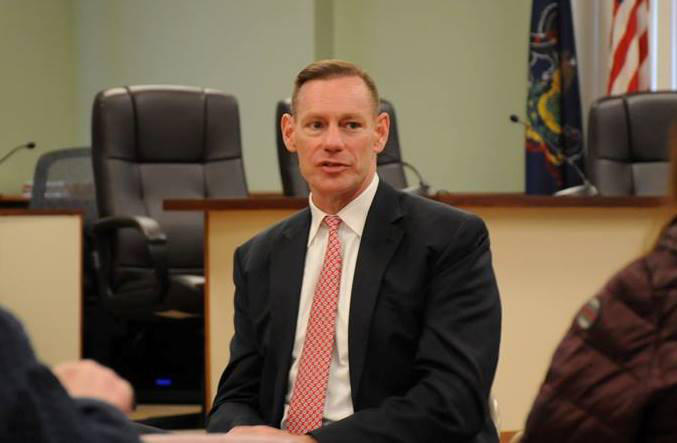
"The only thing we should wish for Kobakhidze is a safe flight to Moscow when his government collapses and is replaced by a government that represents the will of the Georgian people," said Bob Hamilton, an American Army reserve colonel and director of the Eurasia program at the Foreign Policy Research Institute, in an interview with Voice of America.
According to him, any official communication with the Georgian government legitimizes it. Furthermore, Hamilton stated that military assistance, like all other types of support, should be stopped for the Georgian government.
"Georgia will receive less attention from Western governments and will become less of a priority. The significance of Georgia for the West – Europe, the EU, NATO, and the U.S. – was based on two factors: one, it was the idea that Georgia was building civil society and democratic governance in a neighborhood where such things are rare, and that it could be an example for other countries in the region. It was seen as a country striving for democratization, liberalization... and if this process ends, Georgia will slip very low on the priority list of Western governments.
I think this is where we make a mistake. One of them was when NATO's Secretary General wished Prime Minister Kobakhidze a Happy New Year. (Later, it was clarified that the Secretary General had wished New Year to all partner country leaders.) I think this was absolutely unacceptable. The only thing we should wish for Kobakhidze is a safe flight to Moscow when his government collapses and is replaced by a government that represents the will of the Georgian people...
Any official communication with this government legitimizes it – a government that I believe most Western governments agree is illegitimate. We’re already starting to use terms like de facto prime minister, de facto defense minister... so if we use such language, we certainly should not continue formal diplomatic correspondence with them," Hamilton said.
Regarding the U.S. Treasury Department’s sanctioning of Bidzina Ivanishvili, Hamilton stated that this step was overdue and could have been taken 6 months or a year ago.
He also said that sanctioning Ivanishvili is a de facto recognition that he controls the country.
"I think sanctioning Ivanishvili is definitely welcome and necessary. I've been saying for a long time that this step was delayed. But it will certainly make him pay a price. This will be a penalty for the Georgian government for its authoritarian shift, not only anti-Western but also pro-Russian direction. It is important that the U.S. government used the sanctions mechanism and legislation that allows them to sanction organizations and individuals who help Russia.
This was a signal from Washington, from the White House, to the Georgian government, saying this is how America sees Georgia’s trajectory – not only as increasingly authoritarian and, in some cases, violently authoritarian, but also as distancing itself from the European future that 80% of the Georgian people want and turning towards Russia. The imposition of sanctions and the method used by the administration to impose them meant that America sees Georgia not only as authoritarian but also as pro-Russian.
Another thing the U.S. can do to increase the price is to extend sanctions to Ivanishvili's family and close associates, as we have done in Russia and some other countries. This would directly increase the cost for him and his family. If we feel more needs to be done, the sanctions could be extended to his family and close circle. Even without the government's sanctioning, raising his personal responsibility could be effective," Hamilton concluded.