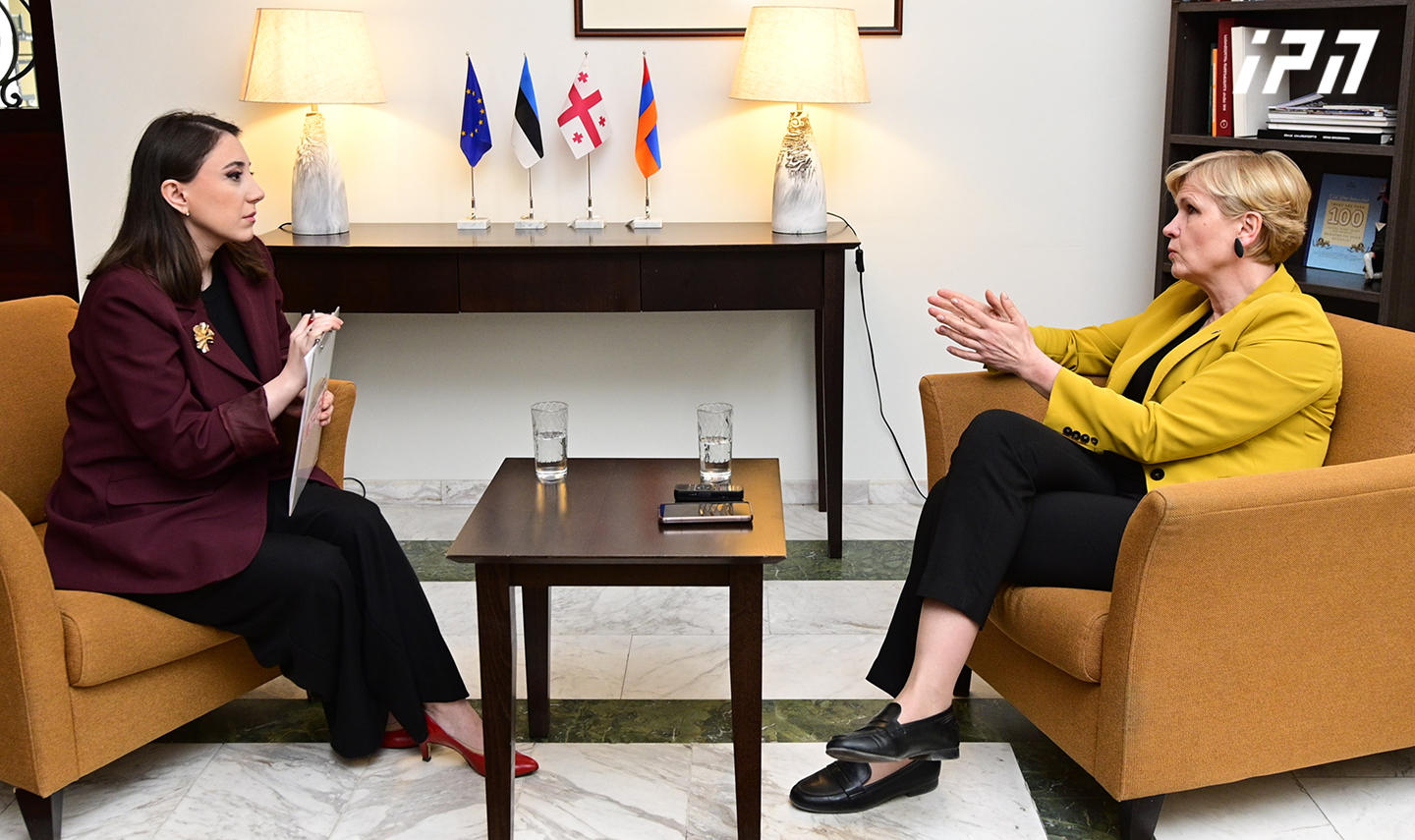
John Herbst: There will be no improvement in relations between Washington and Tbilisi under Bidzina Ivanishvili's leadership – Kobakhidze's friendly relations with their enemies in Iran show he is not our friend

"There will be no improvement in relations between Washington and Tbilisi during Bidzina Ivanishvili's leadership," said John Herbst, Director of the Atlantic Council's Eurasia Center, in an interview with "Voice of America." His comments were in response to two legislative acts introduced in the U.S. Congress regarding sanctions on members of the Georgian Dream party and non-recognition of the government's legitimacy.
Herbst noted that "a major global power does not recognize his government as sufficiently legitimate."
In his assessment, "this would further weaken Bidzina Ivanishvili, who is already significantly weakened by ongoing and persistent demonstrations."
"It's hard to predict exactly how much, but this is likely to significantly weaken the Georgian government's position, both in domestic and foreign policy," Herbst stated.
He added that "Kobakhidze's friendly stance with their enemies in Iran demonstrates that he is not their ally."
"The Trump team doesn't like Iran; they noticed that Kobakhidze was in Iran meeting with Iranian leaders. In my opinion, this means that even if [Viktor] Orbán tries, he won't succeed in convincing Trump to ally with Ivanishvili... A lot remains to be said... At this stage of the new administration, it's very difficult to predict. But what I can say is that there will be no improvement in relations between Washington and Tbilisi. I mean the relationship between Tbilisi under Bidzina Ivanishvili's leadership and the new administration. Kobakhidze's friendly stance with our enemies in Iran shows that he is not our friend," Herbst concluded.