Ombudsman: Legislative amendments affect fundamental rights of assembly, expression, and fair trial, creating risks of disproportionate restrictions
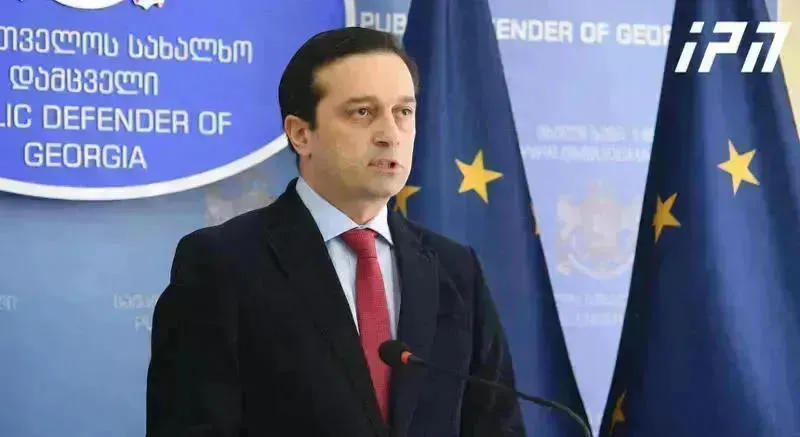
The Public Defender of Georgia has responded to the new legislative amendments proposed by the ruling party, Georgian Dream, stating that "these legislative changes affect the realization of fundamental rights, including assembly, expression, and fair trial, and create risks of disproportionate restrictions on these rights."
According to the Ombudsman, the expedited review of these amendments prevents all interested parties from participating in the legislative process. The adoption of changes on significant public issues without proper analysis and thorough discussion undermines both the legislative process itself and poses risks to constitutional rights.
The Public Defender calls on Parliament not to review the legislative package under an accelerated procedure and instead conduct discussions in accordance with Georgia’s parliamentary regulations.
"As is known to the public, the Parliament of Georgia has initiated an expedited review of several legislative amendments this week. Specifically, changes are being introduced to: The Law of Georgia on Assemblies and Demonstrations; The Code of Administrative Offenses of Georgia; The Criminal Code of Georgia; The Law of Georgia on Police.
The proposed legislative changes address crucial issues, such as imposing various restrictions on participants during assemblies and demonstrations, including limitations on gathering locations, attributes, and formats. Additionally, the Ministry of Internal Affairs is granted new powers regarding the prohibition and termination of assemblies.
The amendments to the Code of Administrative Offenses introduce stricter penalties for certain violations and modify the rules for administrative proceedings and procedural guarantees in court cases. Along with increased sanctions, both criminal and administrative offenses are expanded to include liability for committing insulting acts against state officials.
The Public Defender emphasizes that these legislative amendments affect the realization of fundamental rights of assembly, expression, and fair trial and create risks of disproportionate restrictions on these rights.
For years, the Public Defender has highlighted the shortcomings in regulations governing freedom of assembly, expression, and administrative offenses, stressing the need for appropriate reforms. However, the expedited review process excludes interested parties from meaningful participation in the legislative process. Adopting changes on significant public issues without proper analysis and discussion undermines the legislative process and poses risks to constitutional rights.
The Public Defender of Georgia urges Parliament not to consider the legislative package under an expedited procedure and to conduct discussions in accordance with the general rules established by Georgian parliamentary regulations," the statement reads.
For reference, "Georgian Dream" is planning legislative amendments, which include stricter regulations in both the Administrative Offenses Code and the Criminal Code.
Specifically, protests will be prohibited in closed spaces and buildings without the owner's prior consent. Fines will increase for offenses such as petty hooliganism, vandalism, disobeying law enforcement orders, insulting police officers, and blocking court entrances. Additionally, the period of administrative detention will be extended to up to 60 days.
Furthermore, verbal insults directed at state political figures and public officials in relation to their duties will be classified as an administrative offense.
Regarding amendments to the Criminal Code, according to Mamuka Mdinaradze, public incitement to violence will be punishable by up to three years in prison. The prison sentence for resisting, threatening, or using violence against police officers will increase from five to six years. Sanctions will also be tightened for attacks on police officers, government representatives, and their family members, especially if committed by a group, repeatedly, or using dangerous means. The punishment will also be harsher for harming a police officer’s health. Additionally, individuals who attack or threaten political officeholders, state officials, or public servants will be subject to criminal liability.