The Parliament has approved, in the first reading, the initiative to remove the term "gender" from the legislative framework and to abolish "gender equality councils"
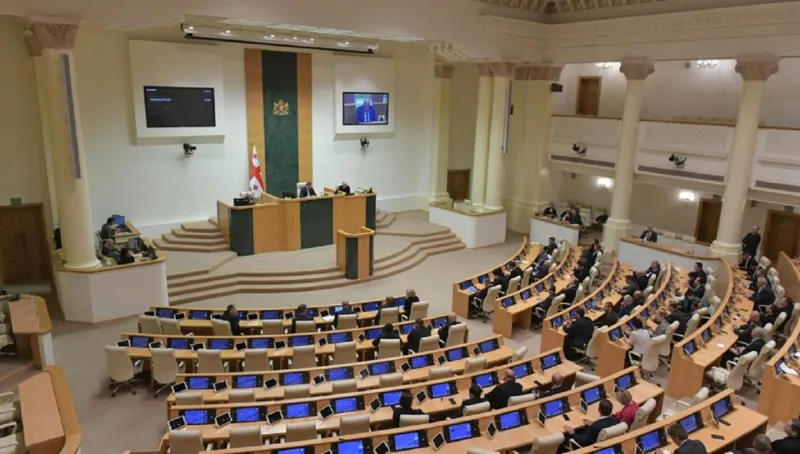
The Parliament has approved the initiative to remove the term "gender" from Georgia’s legislative framework and, along with it, to abolish gender equality councils in the Parliament and municipalities.
This change affects 16 different laws. The legislative package was passed today in the first reading with 83 votes.
All provisions related to the activities of gender equality councils will be removed from the laws.
According to the ruling majority, the term "gender" was "imposed from the outside," and based on this argument, they are removing "gender" and "gender identity" from the laws.
Under the proposed legislative package, the law "On Gender Equality" will be renamed the law "On Equality of Women and Men."
The draft law also replaces terms throughout the legislation:
- "Gender issues" will become "Issues of equality between women and men."
- "Intolerance based on gender" will be changed to "Intolerance towards equality between women and men."
- The term "gender-sensitive" will be replaced with "sensitive to sex-based characteristics," and similar modifications will be applied.
The initiators of the bill argue that "for a certain period, under foreign influence and with active lobbying from their representatives, the artificial term ‘gender’ was deliberately introduced into Georgian legislation."
They claim that this reflected global trends and, in some cases, posed insurmountable challenges for the state.
To illustrate these global trends, the bill references an example from the previous U.S. administration, where the State Department reportedly issued guidelines advising employees to avoid terms such as "boys," "ladies and gentlemen," "mother/father," "son/daughter," and "husband/wife," suggesting instead gender-neutral alternatives like "everyone," "people," "parent," "child," "spouse," or "partner."
According to the bill’s initiators, these "negative processes" remain relevant abroad, but under Donald Trump's presidency, discussions intensified about the "dishonest motives" and "orchestrated nature" of this ideological push.
They argue that "it became clear that the lobbying of this ideology was not driven by a superior interest in human rights protection but rather by a pragmatic calculation aimed at interfering in other states' internal affairs and gaining influence over them."
The bill was authored and initiated by members of the ruling "Georgian Dream" party and "People’s Power," including Archil Gorduladze, Tornike Cheishvili, Rati Ionatamishvili, Davit Matikashvili, Guram Macharashvili, Aleksandre Tabatadze, Tengiz Sharmanashvili, Aluda Gudushauri, Viktor Japaridze, Sozar Subari, Nodar Turdzeladze, Irma Zavradashvili, Levan Machavariani, Ramina Beradze, Irakli Kirkchalia, Salome Jinjolava, Tornike Berekashvili, Henrieta Tsitsava, and Mamuka Mdinaradze.