Valeri Chechelashvili: There is nothing in the constitution that prohibits ambassadors from attending court hearings, so should we also forbid them from observing elections? As for the Baltic countries, they understand best what is happening in Georgia today
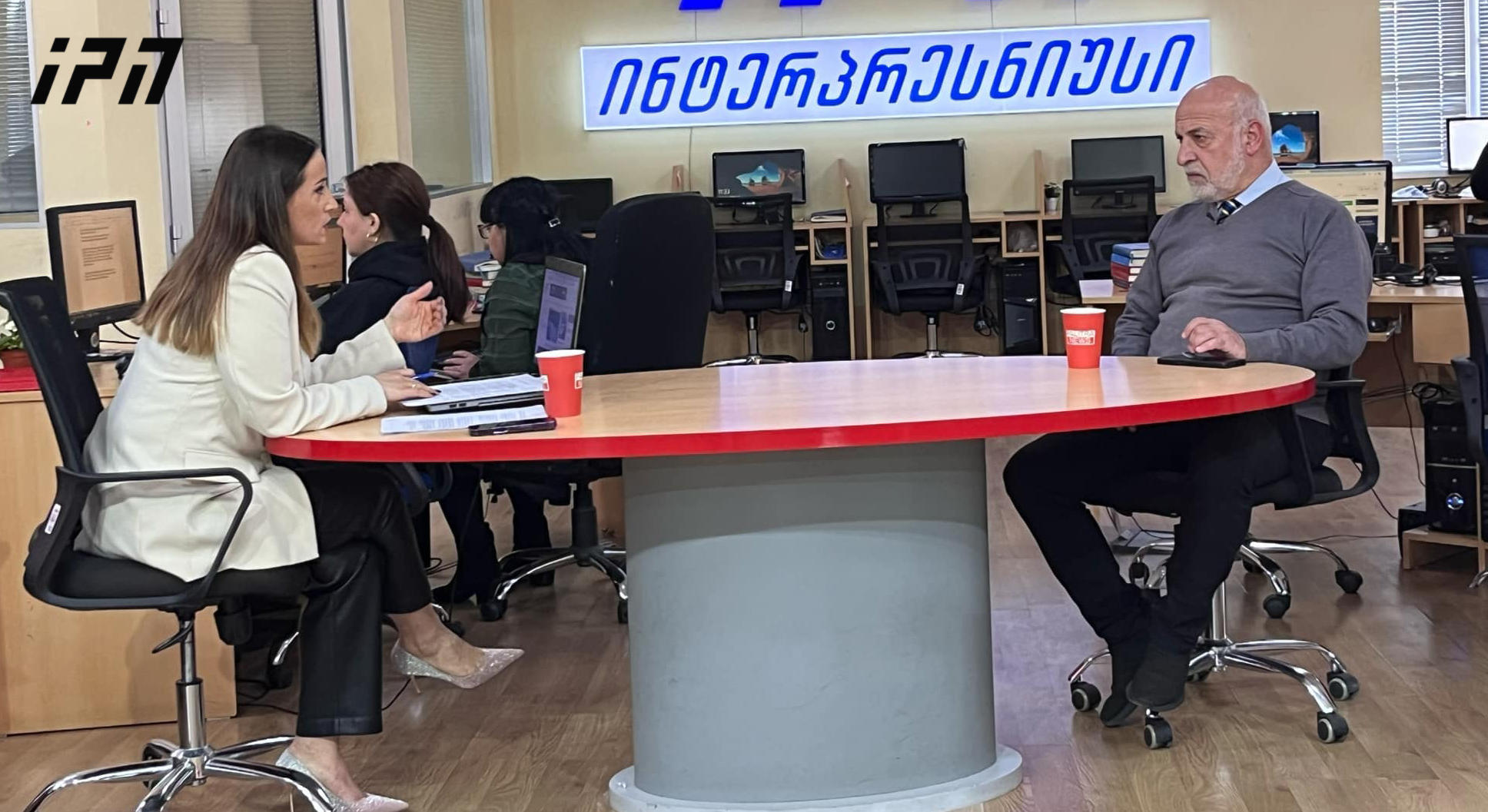
"If anyone from the European Union understands what is happening in Georgia today, it is probably the Baltic states the best," said Valeri Chechelashvili, former Georgian Ambassador to Ukraine and Russia, in an interview on "Palitranius" program "Daily Newsroom."
He commented on the sanctions imposed by the Baltic countries and the public criticism of the ruling team regarding this issue. According to Chechelashvili, the Baltic countries are friends of Georgia and have always supported the country.
"The Baltic countries are our friends. They have always proven their friendship and consistently supported Georgia, including its independence, sovereignty, and territorial integrity. I don't think anyone doubts that. The fact that they are active is understandable because we lived together in the Soviet Union for a long period. Therefore, if anyone in the European Union understands what is happening in Georgia today, it is probably the Baltic states the best," Chechelashvili stated.
He also explained that the decision taken by the Baltic countries regarding sanctions is a result of the government's policy. According to him, the public has repeatedly witnessed the excessive use of force against Georgian citizens, but none of the arrested or convicted individuals have been seen.
"This means that our legal system is not functioning effectively. The worse part is that this was all done by order. Therefore, the government is involved in instigating actions that harm our citizens and violate their rights," Chechelashvili added.
Regarding the ruling team’s statements that certain forces were interested in opening a "second front" in Georgia, Chechelashvili noted that blaming partners and pointing fingers is not an effective policy in diplomacy.
"If at that time (after Russia's invasion of Ukraine) the Georgian government had grounds not to fully align with the EU's policy towards Russia, it should have been a matter for in-depth discussions with our partners, demonstrating appropriate arguments, approaches, facts, etc. I believe this would have been entirely possible among strategic partners. The policy that ‘Georgian Dream’ was pursuing at the time did not have a proper system of justification. As a result, they shifted to finger-pointing and blaming our partners. This is not the most effective policy in diplomacy. You can always find an opportunity for dialogue," Chechelashvili said.
Furthermore, he commented on the criticism of European ambassadors for attending court hearings of individuals arrested during protests, stating that diplomats have the right to attend court hearings.
"Ambassadors are obligated to do what they are doing. If we continue the logic of Irakli Kobakhidze, then we should forbid ambassadors from observing electoral processes as well. This could be seen as interference and a violation of our sovereignty. There is nothing in our constitution that prohibits ambassadors from attending court hearings. This proves that ambassadors have doubts about how well our courts protect human rights. This is a fundamental European value, which is why they attend, and judges have all the means to dispel these doubts," Chechelashvili concluded.