Mamuka Kurashvili: From August 1, I was informing Zaza Gogava about the tense situation. As for talking to Saakashvili, even Ms. Tea mentioned how he was pacing around, so I had no contact with him
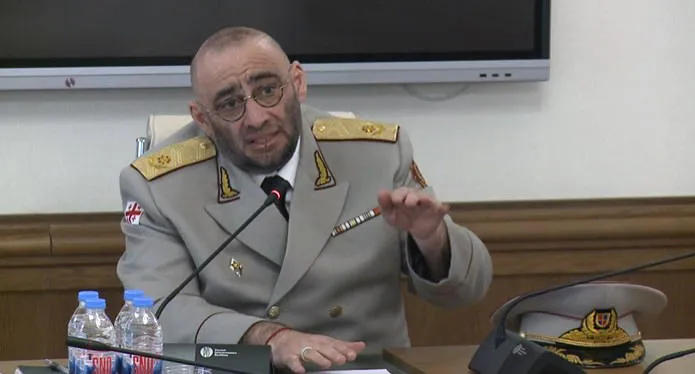
"In the event of an evacuation, of course, there would have been fewer casualties." This was the response of General Mamuka Kurashvili to a question from Ilia Injia, a member of the parliamentary investigative commission on the August War. Injia had asked whether an earlier evacuation of civilians would have resulted in more or fewer casualties.
The main topic of today's commission session was the situation in Georgia’s occupied territories from 2004 to 2008 and the August 2008 war. The commission's chair, Tea Tsulukiani, questioned Kurashvili about the evacuation of civilians from the conflict zone.
"On August 1, you saw that the other side was carrying out an evacuation, and on August 6, two Georgian soldiers were killed at a checkpoint. Since it was your duty to ensure civilian safety, did you inform the Chief of the General Staff, General Gugava, that the situation was escalating and that you needed to arrange for the evacuation of civilians? Or did you fail to communicate this?" Tsulukiani asked Kurashvili, reminding him that he had been warned about the consequences of providing false testimony.
Kurashvili responded that he had informed Zaza Gogava about the situation but could not recall his exact response.
I provided this information, I believe, on the 7th. I don’t remember the details of [Gogava’s response]. Every possible measure should have been taken to prevent escalation and further conflict. What you are asking is a very simple question. I apologize for having to clarify this, but from August 1, I had been reporting that the situation was deteriorating, that the civilian population was facing extreme difficulties, that houses in Nikozi were already burning, and that monitoring reports were being sent, Madam Tea. From the beginning of the month, I was updating [command] on every development. Gogava’s response was: ‘Do everything possible to de-escalate the situation.’"
Commission member Aleko Tabatadze then asked Kurashvili if, when he met with the Commander-in-Chief, he had warned him about the risk of escalation and war and inquired about the safety of civilians.
"When you met the Commander-in-Chief, did you tell him, ‘Escalation might begin, war might break out—what are we going to do about the civilians?’ Did you have this conversation?" Tabatadze asked.
Kurashvili responded that he had not been able to speak with Mikheil Saakashvili at the time.
"When I saw him, I made a report. I greeted him. Even Madam Tea mentioned how he was pacing around. I had no direct contact with him; he was inside a room… I couldn’t manage to speak with him."
At this point, Tsulukiani asked if Saakashvili had at least greeted him.
"You’re saying you didn’t manage to brief him, but did he at least greet you? Didn’t he ask, ‘What’s happening, Mamuka? What’s going on with our country?’ Was there no conversation like that? Not even a formal military briefing?" she asked.
Kurashvili replied: "He did not take the initiative, and I did not have the opportunity."
Tsulukiani then followed up: "If Mikheil Saakashvili had given you the opportunity to brief him, what would you have wanted to say?"
Kurashvili answered: "I would have advised him to prepare better."
Tsulukiani continued her questioning, asking whether, as someone with a peacekeeping function, he had told Zaza Gogava, "Look what’s happening to us!"
"Your main responsibility was peacekeeping. You had this function, and yet you found yourself in a situation where you had so much to say to the Commander-in-Chief, but he wasn’t giving you the opportunity. And you didn’t take the opportunity to address him in a military or civilian manner. Instead, this man [Saakashvili] just rushed in, took some pictures, and left. Meanwhile, you didn’t even inform the Chief of Staff about what had happened. You didn’t ask, ‘What should we do now?’"
Kurashvili explained why he had not briefed Zaza Gogava on civilian evacuation.
"At that moment, my attention was diverted by other challenges. I should have done it, but I didn’t. The main challenge was ensuring civilian safety. There were shootings, and I had to respond to that."
He also clarified that he had provided reports on the situation and kept the General Staff informed but was unable to personally brief the leadership due to the circumstances.
Sozar Subari, another commission member, then responded to Kurashvili’s remarks.
"The Commander-in-Chief was there. The Chief of the General Staff was there, waiting in the back room. You are saying that by August 1, military operations had already begun, and there had been casualties. But you didn’t mention this? Yesterday, Zaza Gogava told us that until August 7, they had no idea there was a threat of war breaking out. Meanwhile, you—who were supposed to be the most knowledgeable person on the ground—are saying that military operations had already started on the 1st. How could there be such a disconnect between the Chief of Staff, the Commander-in-Chief, and yourself?"
Kurashvili responded: "The military operations had been initiated by the other side, and I was reporting on them."