Alain Berset: The situation in Georgia is not as good as we would like – I hope to have contact with the Prime Minister of Georgia very soon, so we can see what can be done to move once again in the right direction
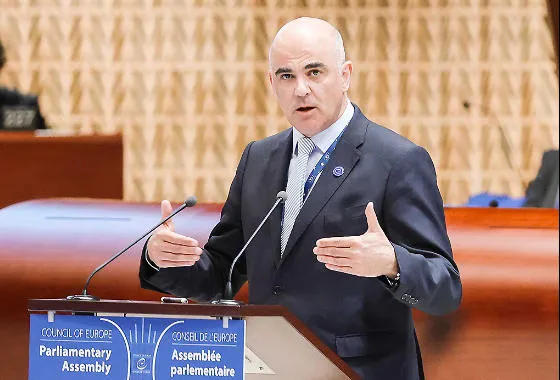
"The situation in Georgia is not as good as we would like. It was definitely heading in the wrong direction for many months, but it could have been much worse,” – stated Council of Europe Secretary General Alain Berset in the Parliamentary Assembly in response to a question about Georgia posed by Swedish MP Azadeh Rojhan.
The Swedish MP asked:
“Given the serious concerns we have in the Assembly regarding Georgia, and your own visit to the country where you highlighted challenges in terms of democracy and the rule of law, I would like to ask: how can we work more closely together? And perhaps the most important question – is now the right moment to launch a joint procedure, a shared initiative, to help Georgia return to its democratic and European path?”
Berset replied:
“Thank you for the question on Georgia. As you know, we’ve been working extensively on Georgia-related matters following the elections, and even before. After the elections, I visited Tbilisi with a delegation in December to explore how we could cooperate in the months ahead – to ensure good intergovernmental collaboration, promote positive change in terms of human rights and freedoms in the country, and find ways to discuss legislation – particularly concerning the so-called foreign agents laws.
I had good discussions with the ruling party, the opposition, NGOs, and the international community. I returned with a positive impression about the potential for change, despite the rather difficult context we were facing.”
He mentioned that he had a long phone call with Georgia’s Prime Minister Irakli Kobakhidze, during which the Prime Minister shared information on the government’s plans and intentions to return to the commitments made in December.
“In early February, I received a message that Georgia was not available to continue joint work on a detailed revision or withdrawal of the so-called foreign influence law. It was a long phone conversation with Prime Minister Kobakhidze. He informed me of the government’s intention to return to the December commitments. Since then, there has been no direct communication.”
According to Berset, the key question now is what can be done. He expressed hope that he would soon re-establish contact with Georgia’s ruling party and Prime Minister.
“After two discussions in the Committee of Ministers, I proposed we attempt to develop a structured dialogue with Georgia. Let’s see what we can achieve together, because the situation in Georgia is not as good as we would like. It was heading in the wrong direction for many months, but it could have been much worse. That’s the point.
Right now, we are facing negative dynamics. We need more contact. We want to work more closely together and give structured dialogue a chance to succeed. After the vote and the decision to recognize the mandates under certain conditions, the message from the Parliamentary Assembly of the Council of Europe was clear. Now we must see if it’s possible to act on that message and move again in the right direction.
I hope to have contact very soon with Georgia’s ruling party and Prime Minister, to see what we can do together to once again move in the right direction. As for your question – I believe it is clearly too early to initiate the next step or next stage. Since you asked, you deserve a clear answer: I think now is too soon,” – said Alain Berset.