Irakli Kobakhidze: “On one side, there’s standing in line for a visa; on the other side, there’s peace, stability, development, and the rule of law. Society faces this simple dilemma. If they want to stage a revolution, they won’t succeed—let no one have any illusions about it”
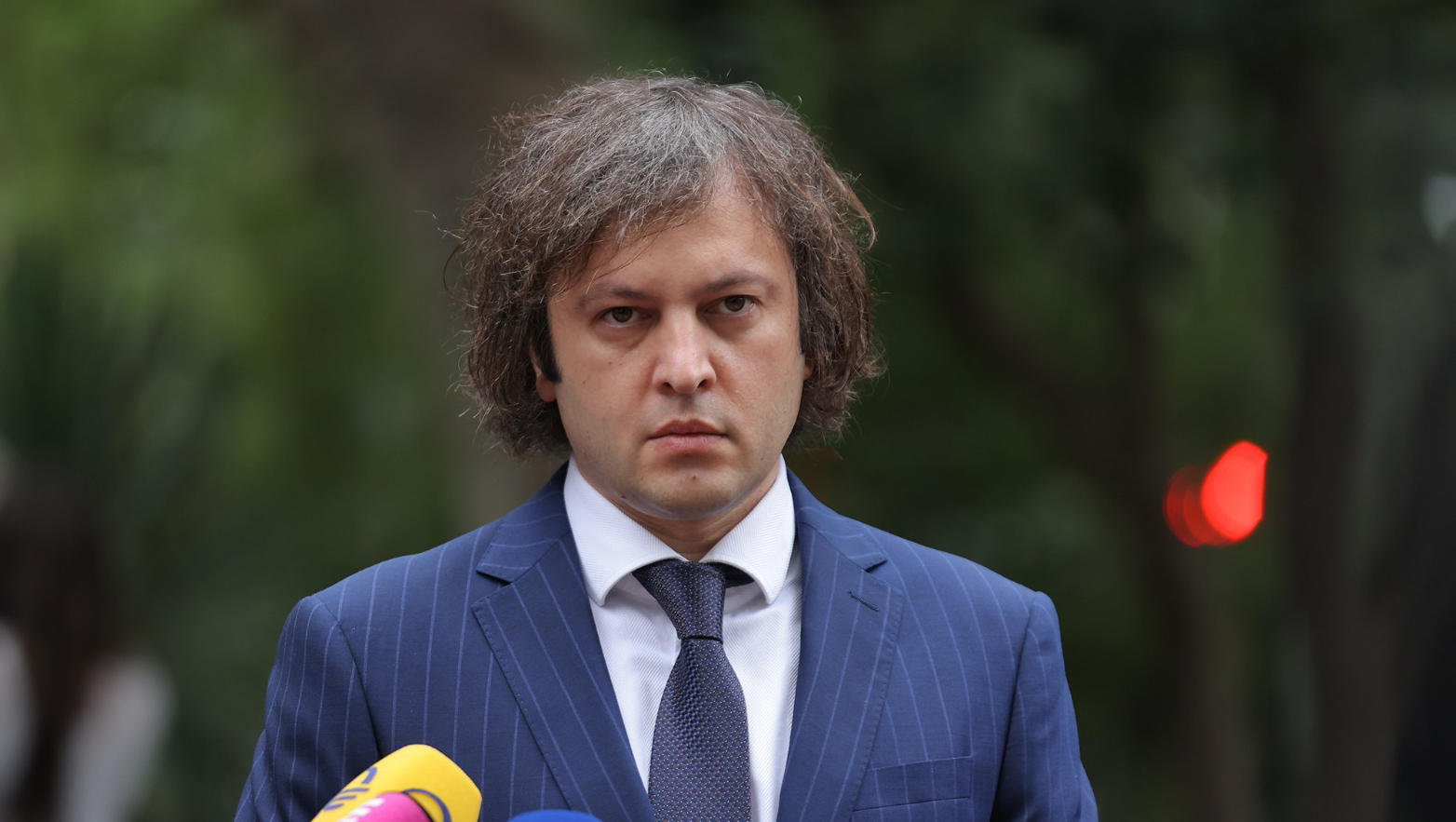
“European studies themselves show that trust in European bureaucracy and the European Union in Georgia has radically declined because society constantly observes the process of creating new challenges for the country and the fact that European bureaucracy blatantly opposes the principle of the rule of law and the state interests related to our country’s stability,” said Georgian Prime Minister Irakli Kobakhidze on Adjara Public Broadcaster’s program “Free Space.”
According to the head of government, the European Parliament has adopted its seventh resolution, and all seven resolutions are unjust, which negatively impacts the reputation of the European Parliament and European structures as a whole in society.
“The European Parliament has already adopted its seventh resolution, and all seven are unjust, which greatly undermines the reputation of the European Parliament and European structures as a whole in society. Primarily, the demands of European bureaucracy are related to the non-enforcement of the rule of law in the country. This is the main theme. Additionally, they often demand the punishment of specific individuals, the release of criminals, and the non-enforcement of justice against them. This is absolutely incomprehensible. The second theme that emerges in these demands is the encouragement of revolutionary processes in the country. We have observed events over the past few years. Not only American but also European funds were directly involved in financing revolutions. Under the new administration, such funding from the U.S., particularly through USAID and NED, has essentially stopped. These were the two main channels. In such conditions, European funds have become the primary instrument for financing revolutionary processes and radicalism. Unfortunately, all of this is reflected in the European Parliament’s resolutions. We need peace and stability in our country, and we need the rule of law, which is directly linked to stability, peace, and calm. When such a pattern is evident in the European Parliament’s resolutions and other decisions, it is very regrettable, and in such conditions, it is no surprise that, according to European studies themselves, trust in European bureaucracy and the European Union in Georgia has radically declined. This is because society constantly observes the process of creating new challenges for the country and the fact that European bureaucracy blatantly opposes the principle of the rule of law and the state interests related to our country’s stability,” the Prime Minister stated.
Additionally, the Prime Minister spoke about visa liberalization, stating that “visa liberalization is the only tangible benefit for Georgian society from the European integration process, and if they take away this one benefit, they will have nothing left to offer. If they want to stage a revolution in this country, they will not achieve that result, and no one should have any illusions about it.”
He expressed hope that “ultimately, European bureaucracy will make a pragmatic decision, as suspending visa liberalization is not in their interest for a simple reason.”
“If someone wants to use this to somehow attempt a fifth revolution, those people will gain no benefit, and no fifth attempt will succeed,” Kobakhidze added.
According to Kobakhidze, everyone should clearly see what is at stake from the perspective of European bureaucracy.
“On one side, there’s standing in line for a visa; on the other side, there’s peace, calm, stability, the country’s development, and the rule of law. Today, society faces this simple dilemma. I think the choice is straightforward. Either way, I am hopeful that European bureaucracy will ultimately make a pragmatic decision. From a pragmatic perspective, suspending visa liberalization is not beneficial for them for a simple reason: if someone wants to use this to somehow attempt a fifth revolution, those people will gain no benefit, and no fifth attempt will succeed. Just as the previous attempts failed, a fifth attempt in the event of visa liberalization suspension will be equally unsuccessful. On the other hand, what will happen is that the only tangible benefit our population has received from the European integration process at this stage—namely, not having to stand in line for a visa—will be taken away. If they strip Georgian society of this one benefit, they will have no bargaining chips left. They will effectively discard their last bargaining card and achieve no result. If their goal is to stage a revolution in this country, they will not achieve that result under any circumstances, and no one should have any illusions about it,” Irakli Kobakhidze stated.
Furthermore, Irakli Kobakhidze noted that there is an attempt, by raising the issue of visa liberalization suspension, to “interfere in our democratic elections,” which “greatly undermines the image of European bureaucracy, which is regrettable.”
According to the Prime Minister, every time before elections, there are various attempts to damage the electoral chances of “Georgian Dream.”
Specifically, Kobakhidze recalled the year 2020, stating that the suspension of a 70 million euro loan was aimed at damaging “Georgian Dream’s” electoral chances, and actions continue in the same spirit now.
“It all started in 2020 when the European Union was planning to suspend a loan of approximately 70 million euros for the country two weeks before the elections. Back then, we preempted it and refused the loan, as we didn’t need it for anything, but it was directly aimed at affecting the election results and damaging our electoral chances. Actions continue in the same spirit. We also remember that during the same previous elections, the ambassador openly called for voter mobilization on election day against the ‘Georgian Dream’ government and in favor of the opposition. We recall numerous instances of such direct interference. Here, too, there is an attempt to interfere in our democratic elections by raising this issue, which also greatly undermines the image of European bureaucracy. What is particularly regrettable is that this not only discredits European bureaucracy but also the entire European Union, which is truly unfortunate,” Irakli Kobakhidze stated.