Shalva Papuashvili: Giorgi Gakharia's party saved itself by entering Parliament
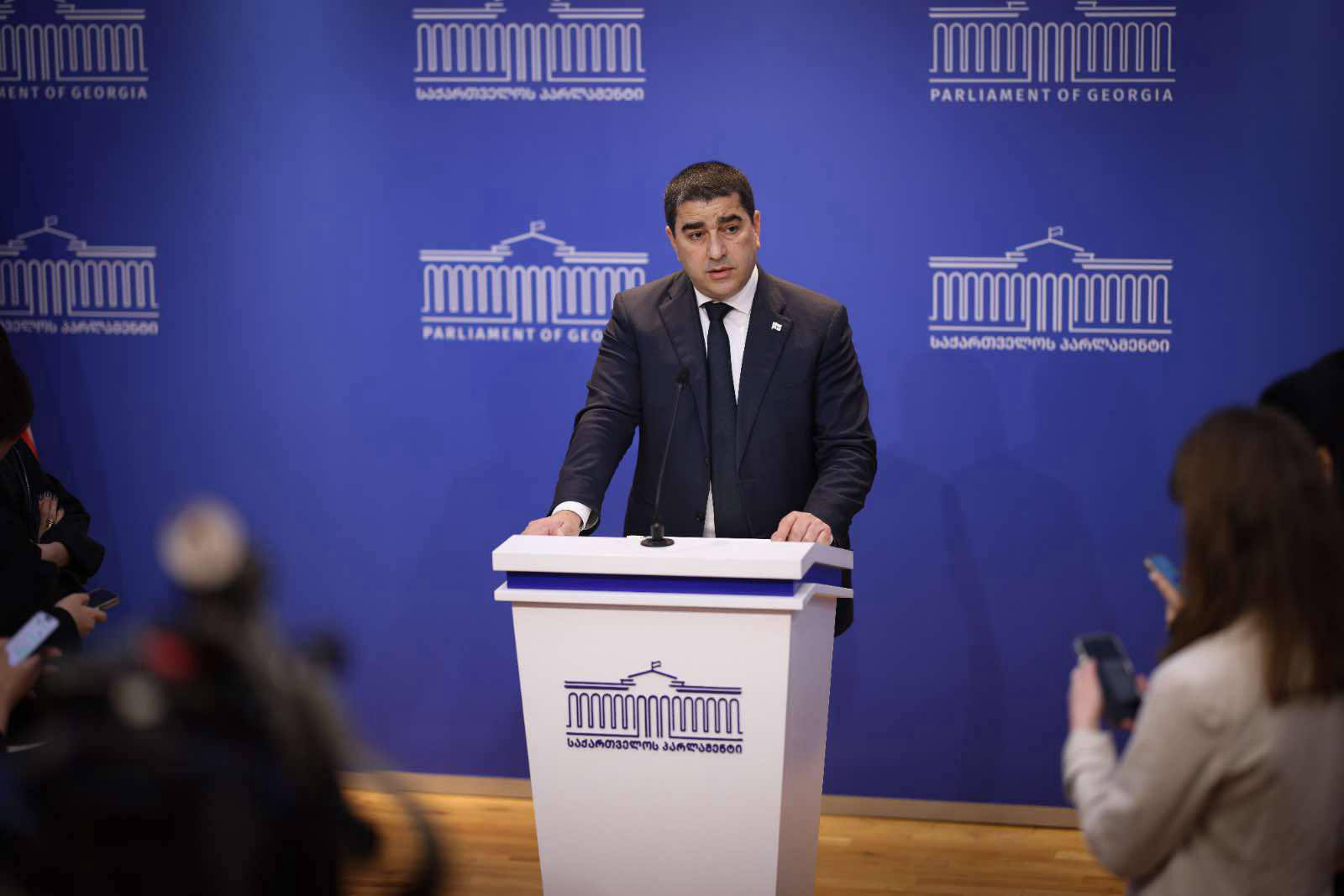
"Giorgi Gakharia's party saved itself by entering Parliament," Parliament Speaker Shalva Papuashvili stated regarding the constitutional lawsuit on banning parties. Papuashvili explained to journalists why the party "Gakharia for Georgia" was not included in the lawsuit.
"Regarding Giorgi Gakharia's party, the legal argument for their unconstitutionality was—or would have been—election sabotage. By entering Parliament, they escaped this legal argument," Shalva Papuashvili said.
When asked where the government's questions to Giorgi Gakharia regarding the Chorchana and June 20 events went, Shalva Papuashvili responded that what falls under political evaluation is something the government always assesses.
"As for the constitutional standard for declaring a party unconstitutional, if anything fit this standard, we reflected it in our lawsuit for any party that met it. There were two main criteria for deciding which parties to target in the Constitutional Court. First, how solid the legal arguments were regarding the party's unconstitutionality. This argument applies to 3 + several parties that did not end up in the lawsuit. The second criterion, which is an international standard, is that it is not enough for a specific party to be anti-constitutional in its actions or ideas; one condition is that it poses a real threat to the constitutional order. One-person marginal parties—whether de facto or only on paper—do not pose this threat. That is how the parties were determined. As for Gakharia's party, it escaped the first criterion—the legal argument—by entering Parliament," Shalva Papuashvili said.
Regarding the question of whether this was some agreement or deal between the government and Giorgi Gakharia, Shalva Papuashvili explained that "Georgian Dream" avoids no one.
"We avoid no one—not those against whom we demanded a ban in the Constitutional Court, regardless of their reaction or that of their patrons, and so on. Nor did we avoid not including some parties because they are currently marginal. The only criterion was constitutional-legal substantiation," Papuashvili said.
When asked whether other parties would have saved themselves if they had entered Parliament, Shalva Papuashvili replied that, besides sabotage, there are other constitutional-legal claims and arguments against all three parties.
"No one else could have entered. The point is that these parties further confirmed their radicalism and unconstitutionality by this very action. They even 'burned the bridges' that would have left them the opportunity to enter Parliament. Besides sabotage, there are other constitutional-legal claims and arguments against the 'United National Movement,' 'Coalition for Change,' and 'Lelo.' They might have been freed from this one argument, but what will the 'United National Movement' do about the torture system that the Strasbourg Court directly exposed and confirmed? What will they do about the seizure of TV stations and businesses?" Papuashvili said.
For reference, "Georgian Dream" is appealing to the Constitutional Court to ban three parties. According to Parliament Speaker Shalva Papuashvili, the constitutional lawsuit prepared by the ruling party demands that the following parties be declared unconstitutional and banned: "United National Movement," "Coalition for Change," and "Strong Georgia - Lelo."