Davit Mzhavanadze: If the ‘communist’ Gia Volski bans me, what will that change? Will I be unable to speak my mind?! – Merab Kostava and Zviad Gamsakhurdia were called ‘informals,’ and our ‘informality’ is not a choice, but a reality created by Georgian Dream
Banning parties will not change anything in reality. “If the ‘communist’ Gia Volski bans me from politics, he won’t be able to ban me from speaking or communicating with people — we don’t need formalities for that! Members of the national liberation movement, Merab Kostava and Zviad Gamsakhurdia, were called ‘informals’ by the communists, and our informality is not our choice but a reality and factual condition created by the authorities!” said Davit Mzhavanadze, a member of the Coalition for Change, commenting on Georgian Dream’s initiative to ban three opposition parties.
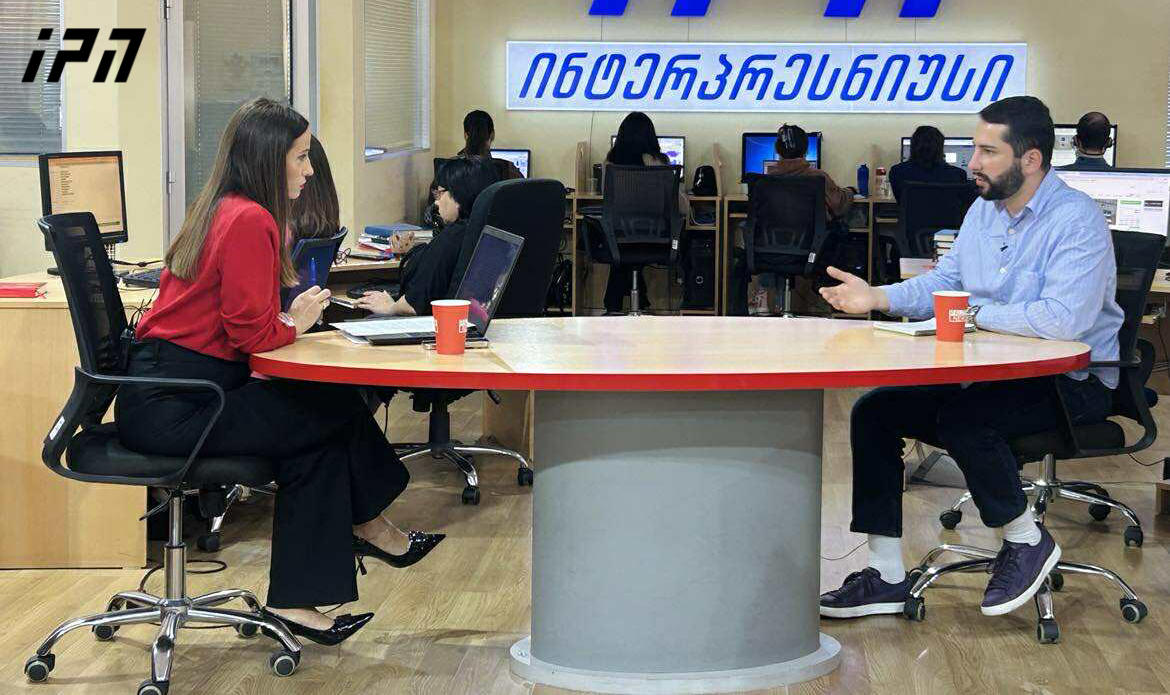
As Mzhavanadze stated on PalitraNews’ program “Day Newsroom,” the country last faced such a situation exactly 35 years ago, when under the communist regime all other parties were banned.
Regarding Georgian Dream’s statement that they will not, for now, appeal to the Constitutional Court to ban specific individuals from political activity, but will monitor whether those connected to banned parties attempt to engage in politics through other means — and if so, they will appeal to the Court — Mzhavanadze said that what Georgian Dream is talking about is impossible to implement unless they plan to launch Stalinist-style repressions, when hundreds of people were destroyed.
According to him, Georgia’s democratic development will be decided through street protests.
“What was previously a de facto situation, Georgian Dream’s regime is now formalizing — banning even political pluralism itself.
The political process in Georgia was already dead even without these bans — especially after last year’s parliamentary elections, which showed clearly that real elections no longer take place here. There are no free or neutral institutions left in Georgia. The main political process happens not at polling stations or within institutions, but in the streets. This ban changes nothing for us — it means nothing. All of our party leaders are in prison. The Georgian Dream regime has long been conducting maximum repression and pressure against our coalition, yet we continue to exist, gain new members, and strengthen our protest.”
“Georgian Dream may think that banning us on paper will suppress dissent and opposition, but that won’t happen. It’s clear which phase they’ve entered — perhaps Kobakhidze’s team is trying to convince both themselves and Ivanishvili that this will have real results, but it won’t. This will backfire on them, and I’m sure even a large portion of Georgian Dream’s own voters won’t see this decision as logical or appropriate.”
“The last time Georgia saw this kind of situation was exactly 35 years ago, when the communist regime had banned all other parties. On October 28, 1990, the first multi-party elections were held, and Georgia rejected the regime we had lived under for decades. Now, 35 years later, Georgian Dream has decided to drag us back there and ban everyone except themselves. But that won’t happen!”
“The process that can save democracy in this country is the protest happening on Rustaveli Avenue and throughout Georgia. That is the main space where politics is being done — for a long time, there has been no other. Some may see it as a radical form, some may dislike it, but historically, peaceful protests like this have toppled empires — Gandhi did it in India, and it helped bring down the Soviet Union. It’s a proven, democratic, and people-driven path when no other way remains to resist the government.”
“Even before now, we needed more organization and coordination among civil and political groups — to strengthen the protest, to counter disinformation inside the country, and to speak with one voice abroad. That was necessary, especially during the past year. Ironically, banning parties will only help and accelerate that process!”
“It’s clear that we won’t be allowed to participate in elections, but even when we could — what difference did it make? We didn’t participate in the October 4 elections because it was obvious that the process was fake. So if we’re formally excluded from sham elections, that won’t stop us.
Our main goal was never formal unification. We never thought that if we weren’t operating under an official brand, we couldn’t function. When they took away our party number, we didn’t even react — the number and the name mean nothing. What matters are the ideas and the people united by those ideas.”
“If the communist Gia Volski bans me from politics, what will that change? Will I be forbidden from leaving my home or from saying online what I think?!
Even Joseph Stalin couldn’t suppress thought like that — not until he exterminated tens of thousands in 1937–38. Before that, there were countless uprisings and resistance — even Stalin couldn’t control that in little Georgia. How will these people manage it now? Will they forbid me from stepping outside my home?!” said Davit Mzhavanadze.