Nino Tsilosani: The EU Ambassador confirms that the accession process was suspended by the European Union itself five months before Irakli Kobakhidze’s statement - I wonder if the few dozen people standing on Rustaveli Avenue will apologize now?
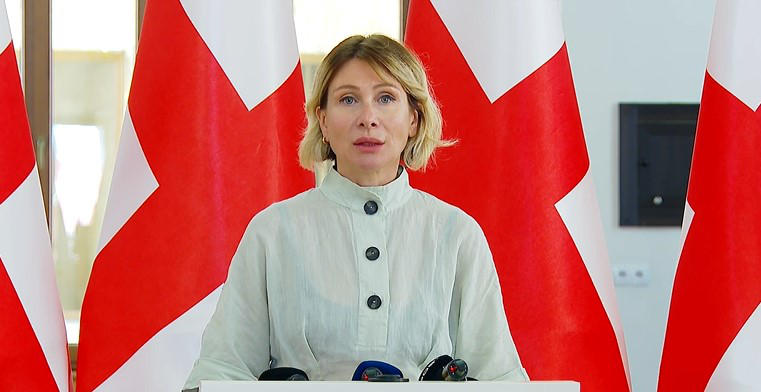
“In the letter, the EU Ambassador confirms that Georgia’s EU accession process was not suspended because of Irakli Kobakhidze’s statement, but rather five months earlier by a decision of the European Union itself,” said Nino Tsilosani, Deputy Speaker of the Parliament, responding to information released by ‘Rustavi 2’ that “the decision to suspend Georgia’s EU accession process was made by the EU itself five months before Kobakhidze’s statement.”
According to her, it is interesting whether the protesters standing on Rustaveli Avenue will now protest against the EU’s decision and apologize for “unfairly accusing the Georgian Dream government of halting the EU accession process.”
“This is a scandalous letter, in which the EU Ambassador confirms that it was not due to Irakli Kobakhidze’s statement, but rather five months earlier that the EU itself decided to suspend Georgia’s EU accession process. Based on this letter, I wonder if the few dozen people standing on Rustaveli Avenue will protest against the EU’s decision and apologize for completely unjustly blaming the Georgian Dream government for the suspension of the EU accession process.
It is especially regrettable that the EU Ambassador’s letter refers to the suspension of a program — I mean the organized crime program — in which Georgia was a particularly successful ally of the EU and other Western partners. When you talk about suspending such a program, of course, the motives behind it become clear. We will wait for the moment when the EU’s real goal becomes genuine enlargement, not using the idea of enlargement as a tool of blackmail against different countries.
This blackmail was exactly what Irakli Kobakhidze spoke about in his November statement, when he said that we will never allow ourselves to be blackmailed into making decisions such as a change of government, bringing their appointed puppets to power, or, even worse, involving Georgia in military conflicts,” said Tsilosani.
For reference, according to ‘Rustavi 2,’ EU Ambassador Pawel Herczynski sent a letter on November 5, 2025, to the Deputy Minister of Foreign Affairs of Georgia, stating that “Georgia’s participation in EU-funded regional programs in the areas of security and organized crime has been suspended.”
According to the same report, Pawel Herczynski also wrote to the Deputy Minister: “In light of the particular circumstances in Georgia and in accordance with the conclusions of the European Council of June 27, 2024, which effectively resulted in the suspension of Georgia’s EU accession process, we inform you that Georgia’s participation in the following EU-funded regional projects in the field of security and organized crime has been suspended.”