Rasa Juknevičienė: The fact that the Georgian Government fears an independent investigation shows they fear the truth and accountability - This indicates that the facts revealed by the BBC are most likely true
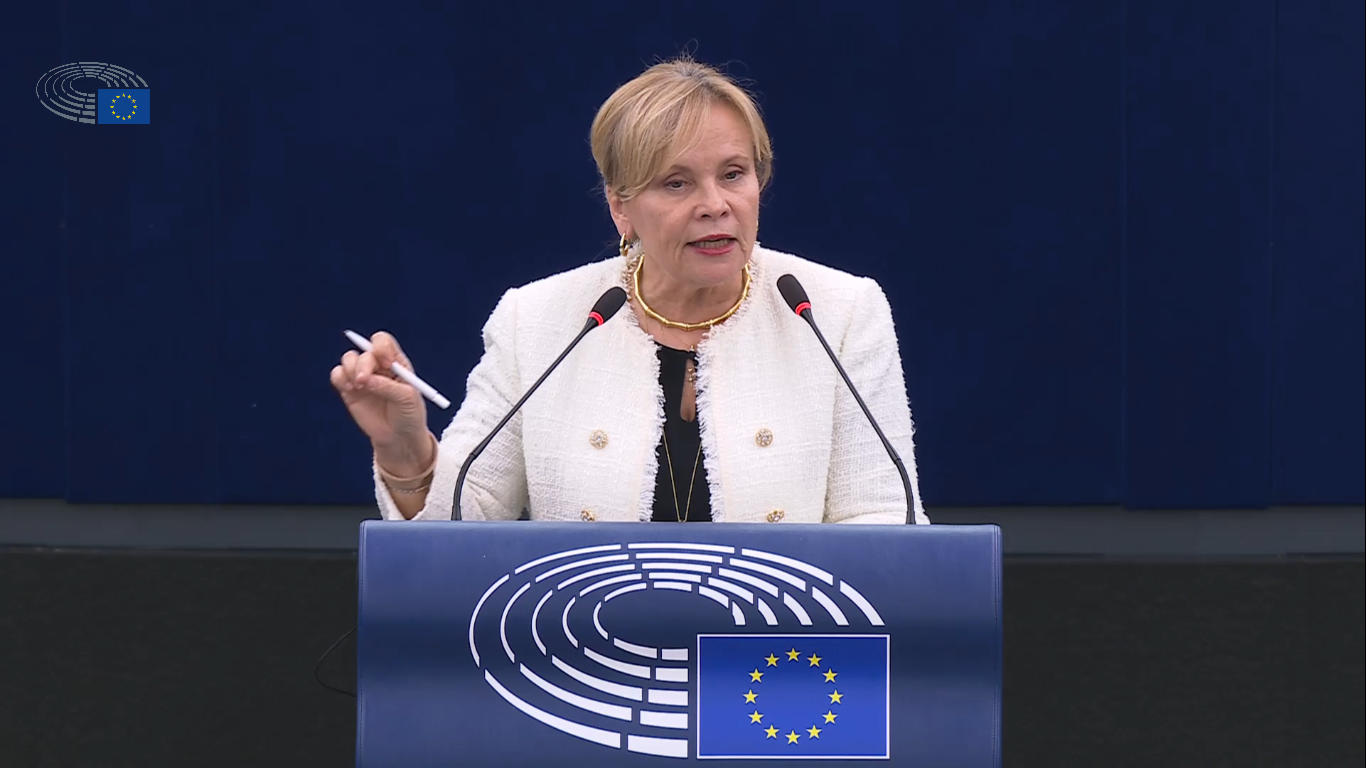
“The fact that the Georgian government fears an independent investigation only shows that they are afraid of the truth and accountability,” said Member of the European Parliament Rasa Juknevičienė during her address to the European Parliament.
“First of all, I would like to thank all my colleagues who worked hard to ensure that the Sakharov Prize was awarded to two imprisoned journalists. Despite the thousands of kilometers separating the prisons of Andrzej Poczobut and Mzia Amaghlobeli, their struggle for freedom is the same.
How did all this begin? Could this happen in our countries? In both countries — Belarus and Georgia — it all began with democratic elections. At the outset, there were repressions against the media, first and foremost against national broadcasters. It is important for us to analyze the path these countries took up to the day when journalists ended up in prison, because our democracies are also under attack.
Yesterday’s Sakharov Prize concerned all prisoners of conscience and freedom in the prisons of Alexander Lukashenko and Bidzina Ivanishvili. We sent them a clear signal from the European Parliament — you are not alone. We see you, we hear you, and we are trying to help you. You have many friends here in the European Parliament.
However, the situation in Georgia is deteriorating. I would like to draw your attention to a recent BBC investigation. It reveals that a chemical substance, used since the First World War, was employed to suppress protests in 2024. Chemical substances were mixed into water cannons. This must be investigated. I call on the Commission and the Council to respond and initiate an international independent investigation.
The fact that the Georgian government fears an independent investigation only shows that they fear the truth and accountability. This indicates that the facts uncovered by the BBC are most likely true. We must help the Georgian people who are fighting, because Georgia is Europe,” Juknevičienė said.