Shalva Papuashvili: It can now be stated with certainty that the war in Ukraine has two losers - Ukraine and the European Union
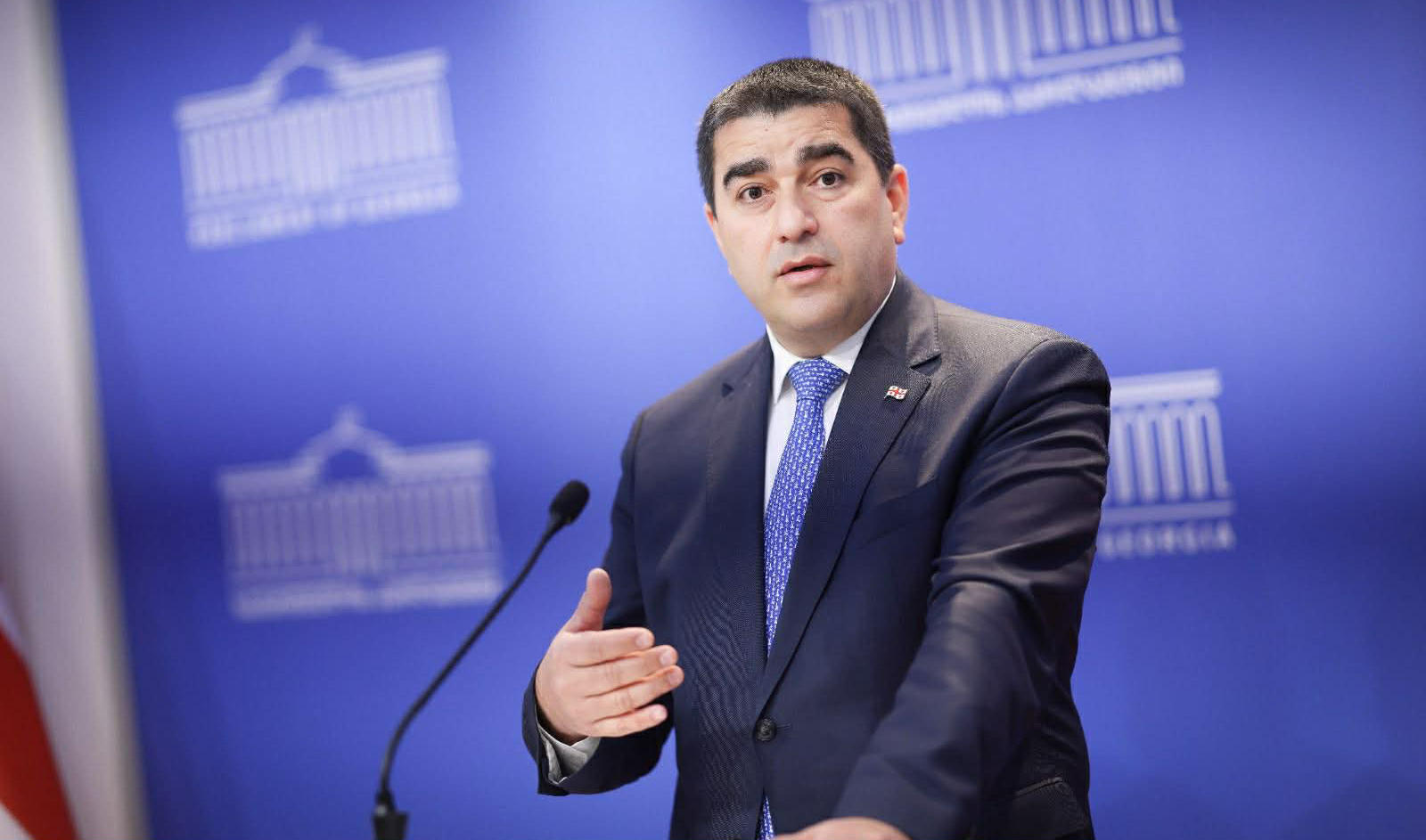
It can now be stated with certainty that the war in Ukraine indeed has two losers - Ukraine and the European Union. Ukraine, which is now being forced to make a decision to de facto recognize the loss of its own territories, and the European Union, which has been burdened with the responsibility of providing financial and military assistance to Ukraine, Speaker of the Parliament Shalva Papuashvili told journalists.
According to Papuashvili, it is still impossible to say whether there will be any winner in the Russia–Ukraine war.
“Ukraine could not have joined NATO. This is the main point. Not only Boris Johnson, but President Zelenskyy himself said yesterday that even during Biden’s presidency he was clearly told that Ukraine could not become a NATO member. This is the tragic reality: at the end of a war that began over NATO enlargement, Ukraine and others are being told that NATO will not expand and never intended to. This is what was actually said through Boris Johnson, and this is what Zelenskyy said yesterday.
After the Bucharest Summit in 2008, year after year we heard about the ‘open door’ - that ‘Ukraine and Georgia will definitely become NATO members.’ Ukraine was told every year that it would certainly become a member, and now it has become clear that there was never any intention to admit Ukraine to NATO. There are two explanations for this. One is naivety, which some Western politicians may have had. The second is malicious intent - to encourage a country, to create the perception, something European-funded NGOs and Europeans are very fond of, that the country is already standing at the open door, now at the window, about to step in - just a little more, a little more - and thus, encouraged by this, to go toward all kinds of escalation. Just as Saakashvili did in 2008, as we have seen in Ukraine many times. And in the end, when it came down to it, when the war started, not a single NATO soldier stood in a trench.
It is still impossible to say whether there will be a winner in this war, but it can already be stated with certainty that it definitely has two losers - Ukraine and the European Union. Ukraine, which is now forced to decide on de facto recognition of the loss of its own territories, which has lost hundreds of thousands of its citizens over these four years, spilled blood, and whose economy has been destroyed. The second is the European Union, which has now taken on its shoulders the burden of financing Ukraine’s financial and military assistance. For all this, with last night’s decision, the EU is taking out a loan and, with that loan, giving yet another loan to Ukraine. The EU itself is under debt obligations, its economic growth is hovering around zero, and we can also see the level of internal political tension. So it is still difficult to say whether this war will have any winner at all, but the losers are clearly defined in the form of Ukraine and the European Union.
I said that it is not yet clear whether this war will have a winner, but one sector will certainly be a winner - the financial sector, from which the European Union is now borrowing €90 billion. And who the leading companies in that financial sector are, I think, is very well known to everyone.
Hopefully, this war is nearing its end. Not everything is clear yet, but all sides are optimistic that the war is approaching its conclusion. Toward the end, it becomes finally clear what the map of financial benefit looks like, what the map of damage looks like, and what the geopolitical map looks like,” Papuashvili said.
For reference: After 15 hours of discussions at the EU summit in Brussels, European leaders failed to reach an agreement on using frozen Russian assets to provide billions of euros in financial assistance to Ukraine. According to Politico, EU leaders then discussed resolving the issue through joint borrowing, which would involve sending €90 billion to Ukraine over two years. The plan does not include Hungary, Slovakia, or the Czech Republic. Germany, which had long opposed this type of financing, agreed to the plan.