Paata Zakareishvili: Papuashvili would be better off not speaking at all - in exceptional cases, he should particularly remain silent - Ukraine is such an exceptional case - he has become an advocate for Russia - This is not pro-Russian, it is Russian policy
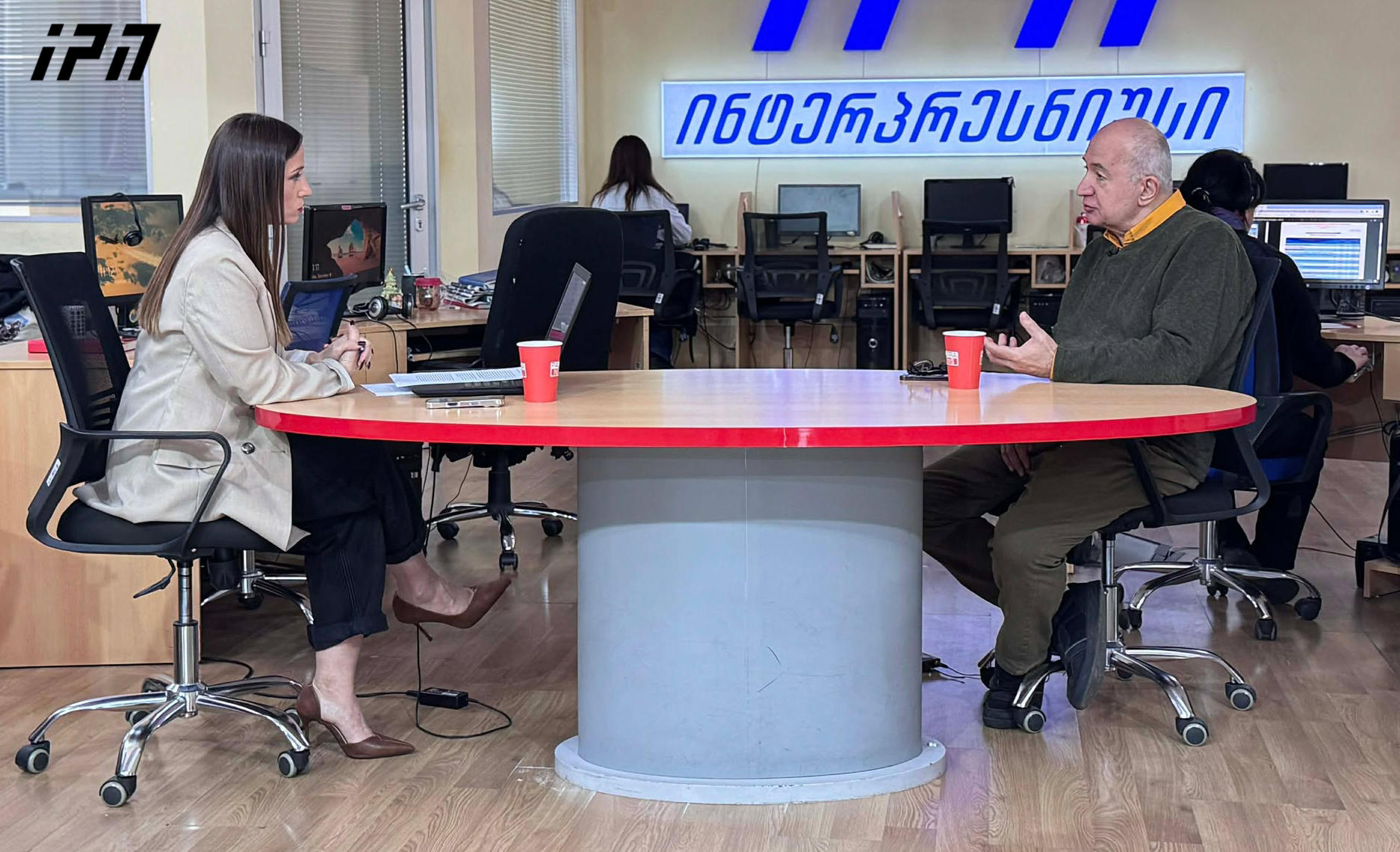
“Georgian Dream is afraid of excessive noise and headaches. If Zurab Japaridze had been released from prison at 12:00, there would have been journalists, relatives, and friends present, there would have been noise, a celebratory mood, and comments. They avoided that,” explains political analyst Paata Zakareishvili regarding the decision to release one of the leaders of the Coalition for Change, Zurab Japaridze, a few hours earlier than his family expected.
Zakareishvili told Palitranius’ program Day’s Newsroom that Japaridze could challenge in court why he was released early. He emphasized that “a prisoner’s early release does not happen so easily.”
“Zurab Japaridze’s arrest had nothing to do with the parliamentary commission. He did not participate in the 2008 processes and could not have had any special or exclusive information. It was clear that summoning him was aimed at having him refuse, so that an execution could then be carried out against him. That’s exactly what happened—they knew very well that Japaridze would not attend the commission’s session.
The commission did not summon Nino Burjanadze, who knows everything. Burjanadze publicly explained on her own initiative how Saakashvili had planned certain things. The commission did not summon Irakli Alasania—did not summon those who know more about the 2008 events. Japaridze had nothing to do with 2008; he was not even a member of the “United National Movement” at the time, yet he was summoned—complete absurdity!
As for his release, ‘Georgian Dream’ is not in crisis or agony. They overcame the crisis, but they do not want excessive noise. ‘Georgian Dream’ fears excessive noise and headaches. If Japaridze had been released at 12:00 with journalists, relatives, and friends present, there would have been noise, a celebratory mood, comments—they avoided that.
Japaridze can file a lawsuit in court if he wishes to contest his early release. A person must either serve the sentence imposed or there must be a corresponding decision allowing early release. Early release does not happen so easily,” Zakareishvili said.
He also noted that Japaridze’s short-term imprisonment could be strategically effective for him as a politician.
Additionally, Zakareishvili emphasized that society includes a large portion of people who do not support either the “Nats” or the “Kotsi.”
“Honestly, I am more concerned about young people who have been in prison for a long time and have not yet been released. They are not politicians, and their fate is more important to me. I call on the authorities to first release these young people, who have been imprisoned unlawfully.
The United National Movement and those who have left it need to understand that they are unacceptable to a large portion of society. There are three political centers in the country: ‘Georgian Dream,’ the ‘collective United National Movement,’ and some third force.
You don’t want this third force to be ‘Lelo’ or Giorgi Gakharia? Someone like Kiphiani appears—or someone will appear—who does not want either the ‘Kotsi’ or the ‘Natsi.’ So, give these people the right to have their own vision,” Zakareishvili said.
Regarding other issues, Zakareishvili also spoke on global political processes, including the EU’s decision to provide €90 billion in financial aid to Ukraine, which he described as “very high-class terms.”
“If all EU states had agreed to unfreeze assets and transfer them to Ukraine, it would have been effective because this money would not have been a loan. The aggressor’s money goes to the budget of the affected state—it would have been easier. There were many risks—not for the EU itself, but for EU companies, because some of their assets are also in Russia. Russia froze these assets in mirror fashion. The EU targeted Russian state assets—not oligarch assets, which have not been a problem for a long time. For the first time during this war, sovereign state assets were targeted, which is very significant. The EU is not a state; it does not have sovereign state assets, so Russia cannot freeze non-existent EU sovereign assets. That’s why it froze companies.
These are very high-class terms. Until Russia compensates and returns the funds to Ukraine and restores its economy, Ukraine is free to repay this interest-free loan. These are fantastic terms for Ukraine, almost as if there were no war—they are extremely important. Regarding the €220 billion, it would not have been given all at once. It would have been distributed over time. So this €90 billion is no less important for Ukraine. The EU must borrow this money from its internal resources and then transfer it. More work is needed; someone must be found to lend the money. Given the crisis caused by some EU states, which prevented the unfreezing of Russian sovereign assets and their transfer to Ukraine, these are very good conditions,” Zakareishvili said.
In the context of Ukraine’s funding, Zakareishvili also responded to a statement by the Speaker of the Georgian Parliament, Shalva Papuashvili: “Brussels should not spend its own money to rebuild Ukraine; now they are thinking about what to take from Russia, what to take from individuals.” Zakareishvili said, “Papuashvili would be better off not speaking at all; in exceptional cases, he should particularly remain silent.”
“This is an exceptional case where the person has become an advocate for Russia. He defends aggressive Russia instead of speaking about Russian aggression. Yesterday, Sandu and Zelensky met, and Sandu very clearly said that we are fighting Russian aggression and must end it together. Kobakhidze could not utter the words in Putin’s sphere that Russia is the occupier of Georgia’s territories.
Against this backdrop, Papuashvili went even further. He began defending Russia. He is concerned that the EU does not have its own money, forgetting that Russia is the aggressor. He cannot see why the EU seized Russian funds and thinks the EU is the aggressor, taking money from Russia instead of finding it themselves. Why punish the aggressor? This is the most shameless statement. This is not pro-Russian policy; it is Russian policy. He did not need to do this at all. No one understands him except the Georgian electorate and citizens. He clearly wants to signal to his voters that they are a pro-Russian force,” Zakareishvili said.