David Darchiashvili: Trump probably couldn’t find anything to invite Georgia to the “Peace Council” - and who should he invite? The informal Ivanishvili, the low-rated Kobakhidze, or Kavelashvili with a merely ceremonial role?
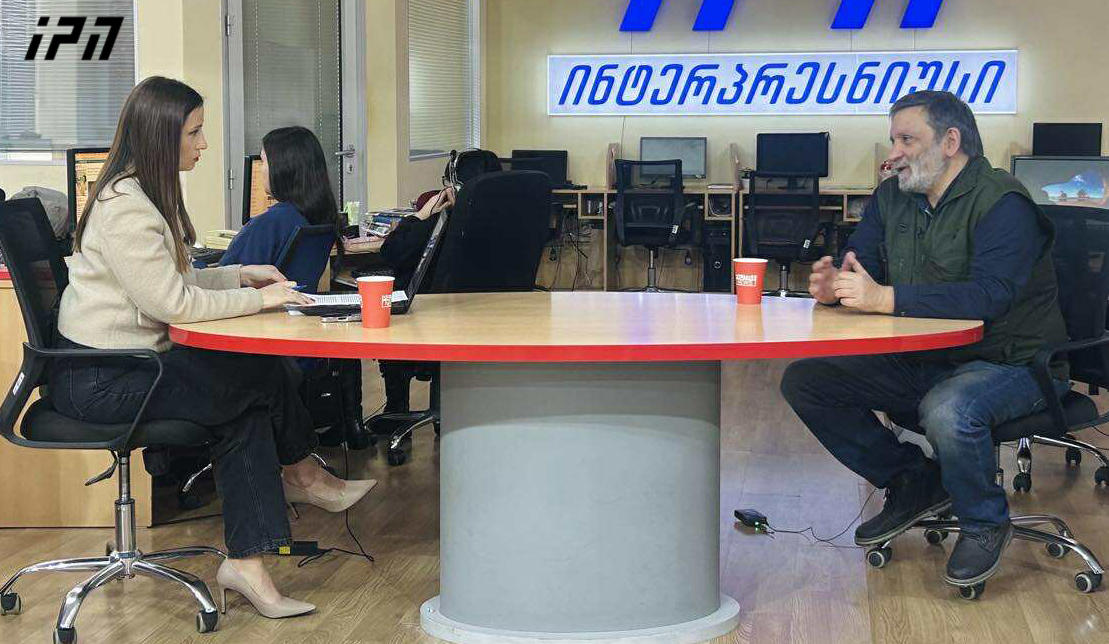
Georgia does not represent a particularly great value for Trump; his focus is directed toward other regions, Ilia State University professor David Darchiashvili said on Palitranews’ program "Day’s Newsroom", commenting on the fact that “Georgian Dream” has failed to reset relations with the United States, despite expecting a “reset” with Washington for the past year.
According to him, “as a result, Georgia is losing out in every sense - both democratic Georgia and Ivanishvili’s Georgia.”
“The situation that has developed in Georgian-American relations is somewhat strange, specific, and not easy to explain. For Trump, the rule of law and democracy do not represent values of the same importance as they traditionally did for the United States, at least after the end of the Cold War. Therefore, Ivanishvili’s behavior [which probably surprises Ivanishvili’s team] should not be particularly out of line with Trump’s tastes. Trump tends to express sympathy toward strong, authoritarian leaders. He invited Lukashenko to his announced ‘Peace Council’ on Gaza. Supporters of ‘Georgian Dream’ are probably wondering what went wrong and what Georgia did wrong. I think the key point here is that Georgia simply does not represent significant value for Trump. His focus is on other regions. He has been completely absorbed by the tensions surrounding Greenland. Because of all this, Georgia is losing out either way - both democratic Georgia and Ivanishvili’s Georgia. I do not rule out that relations with Georgia may have been delegated to a lower level; there are often rumors about this, and that some contacts may be taking place behind the scenes,” Darchiashvili said.
As for whether there is any chance that the U.S. president might invite Georgia to the Gaza “Peace Council,” given that many countries around the world, including Georgia’s neighbors, received invitations, Darchiashvili believes that Trump “couldn’t find anything to latch onto regarding Georgia - and besides, who should he invite?”
“Trump’s interest in Armenia and Azerbaijan has become evident. He is interested in that corridor. Moreover, he has a fascination with ending wars, and he found a good moment for that. He couldn’t find anything compelling in Georgia - and who should he invite? He cannot invite Ivanishvili because he is an informal figure. Kobakhidze’s rating, I believe, is very low. He does not appear on the international stage as a significant, influential actor. Kavelashvili, meanwhile, has only a ceremonial function. Internally as well, Georgia does not demonstrate anything that would be interesting for Trump in terms of its political structure or elite configuration. Somehow, Trump did not see anything particularly special even in Georgia’s geography. This is not only Georgia’s problem; to some extent, it is also Trump’s problem. If he believes that something interesting exists in the South Caucasus and that this interest can be realized without Georgia, that is a flawed vision. But we, too, are doing nothing to persuade Trump or the international community and to draw attention to Georgia,” Darchiashvili said.
Darchiashvili also noted that Trump is “very seriously damaging” Western, Euro-Atlantic unity.
“Trump has managed to reject the fundamental principles of international relations and international law to such an extent that he is willing to take territory from his allies. He is very seriously harming Western, Euro-Atlantic unity - that’s how we can see it. He is so obsessed with establishing some form of personal glory. There is the myth of Herostratus: he burned down the Temple of Artemis in order to enter history. There is something Herostratic about Trump - he wants the Nobel Prize, he wants to shine like the peak of a glacier under the sun. But there are clearly forces behind him. There is a certain type of worldview and discourse in the U.S. that believes Euro-Atlantic unity is no longer valuable, and that it is better for the world to be divided among large, powerful states rather than governed by international law. As good analysts in the West say, this is not a rollback of a few decades, but of 150-200 years - back to the era of empires, which is extremely dangerous,” Darchiashvili said.
Regarding ongoing developments inside Georgia, Darchiashvili also spoke about the pardon act issued by Mikheil Kavelashvili on the Epiphany holiday. According to him, the authorities “turned Epiphany into a form of torture because they do not regard their opponents and the participants of the Rustaveli protests as human beings.”
“The authorities always believe that any concession toward an opponent is a sign of weakness. This is a culture, a specific logic. Putin was raised in the same logic - a Petersburg-KGB-style line of thinking that you should never concede anything. If you concede, you are weak, meaning you are no longer ‘manly’ enough. They believe that releasing protesters would be a retreat. I think the opposite is true - it would have been an opportunity to return to normality, a step toward civility. But they do not see it that way, and that is a very big problem. Georgian society suffers from a very severe illness.
On the one hand, the authorities are deeply troubled by the fact that the opposition does not recognize their legitimacy. I understand that this is hard to bear - not being recognized. But the authorities must reflect on the fact that they themselves are responsible for creating this situation. They must take steps to somehow correct this abnormal state of affairs. It is well known which steps need to be taken. On the other hand, the authorities’ attitude toward their opponents amounts to a denial of their humanity. This is how they treat opponents, including Mzia Amaghlobeli. Society is divided into two parts: the ‘real people,’ who are supporters of the authorities, and everyone else, who are enemies and must be destroyed - culturally, civilizationally, in terms of taste and values, in every possible way. This is the condition Georgian society is in, and it is impossible for it to embark on a path of long-term development when such mutual rejection exists. For those who wondered why Epiphany was turned into such an ordeal - expectations were created and then not fulfilled - this is because the authorities do not regard opponents as human beings: neither Mzia, nor the participants of the Rustaveli protests, nor the journalists who care about them. To the authorities, they are a herd that must be treated this way,” Darchiashvili said.