The Hill - Texas oil executive lobbies against Georgia sanctions legislation - MEGOBARI Act
A Republican donor and Texas oil executive is lobbying against bipartisan legislation imposing sanctions on pro-Russian, anti-democratic officials in the country of Georgia, according to a letter obtained by The Hill.
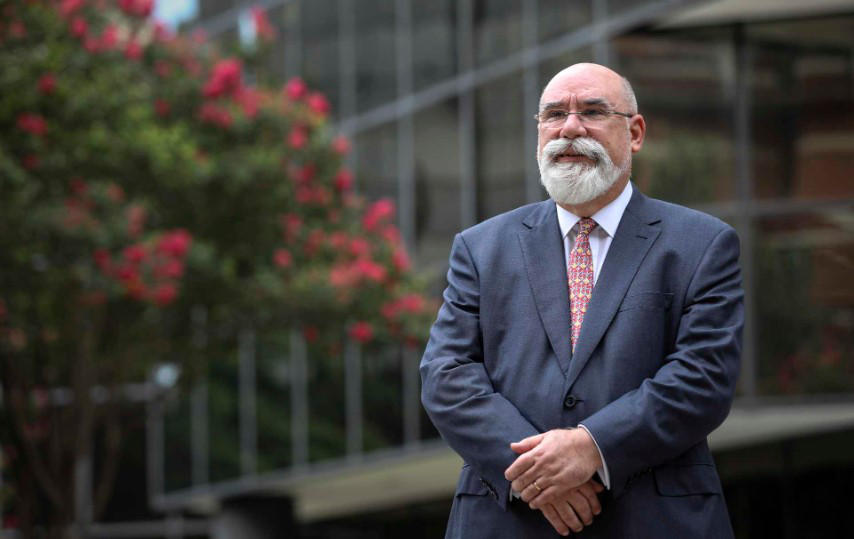
According to The Hill, Steve Nicandros, chairman and CEO of a Houston-based energy company claiming more than half a billion dollars of investments in Georgia, sent a letter to at least one Republican House member this month calling for opposition to the MEGOBARI Act. The Hill is not publishing the name of the lawmaker to protect sources.
“Nicandros wrote that his company is preparing a new $100 million investment program in Georgia, to take place over the next two years. He argues that MEGOBARI, and other efforts to sanction Tbilisi, will harm U.S. businesses operating in Georgia.
MEGOBARI imposes costs on the ruling Georgian Dream government for its violent crackdown on popular protests, democratic backsliding, and cozying up to Russia, China and Iran. It is currently stalled in Congress, with no immediate pathway to passage.
Still, the legislation has wide backing among House and Senate lawmakers. It passed the House in March by a wide, bipartisan margin, but was blocked from advancing in the Senate by Sen. Markwayne Mullin (R-Okla.).
Nicandros has donated to Mullin’s campaign, his PAC, and other Republican lawmakers. Mullin told The Hill in September that his opposition to MEGOBARI was not related to Nicandros. In 2020, Mullin advocated on behalf of one of Nicandro’s companies, Frontera Resources, in a dispute with the Georgian government.
House Speaker Mike Johnson (R-La.) tried to add MEGOBARI to the National Defense Authorization Act at the end of last year, but was blocked by Senate Majority Leader John Thune (R-S.D.).
Nicandros sent a letter to lawmakers on Jan. 19 asking for them “to oppose the Megobari Act (H.R. 36/S.868) and any additional legislation modeled on it.”
In Frontera’s 2020 dispute with Tbilisi, the company claimed more than $500 million in investments in Georgia. The company reportedly spent $1 million on lobbying fees and in July of that year, Tbilisi allowed Frontera to resume its operations in the country.
“For nearly three decades, my company has invested extensively in Georgia’s energy sector,” Nicandros wrote in his Jan. 19 letter.
Nicandros framed his outreach as a follow-up to a letter he sent in September to some Republican members of the House Foreign Affairs committee. In that letter, he thanked those members for voting against a bill that would withhold recognition of the Georgia Dream-led government.
That bill, and MEGOBARI, are sponsored by Rep. Joe Wilson (R-S.C.), who has previously raised concern about Nicandro’s advocacy against the legislation.
“As Co-Chairman of the Helsinki Commission, a body with subpoena power, I will endeavor to learn more about the operations of this individual,” Wilson wrote in an email to Reuters in September.
In the Jan. 19 letter, Nicandros called out Johnson, citing the December article published by The Hill reporting the Speaker’s support for MEGOBARI. He said support for this act “raises concern” about “perpetuating Biden-era policies.”
President Trump has not reversed any of former President Biden’s actions against Georgian Dream members, which included sanctions against officials involved in a violent crackdown on protesters who were opposing the GD’s decision to suspend its accession to the European Union.
Biden’s other actions included issuing sanctions against GD honorary chairman Bidzina Ivanishvili, and suspension of the U.S.-Georgia Strategic Partnership, which fostered collaboration on democracy, defense, security, the economy, trade, energy and cultural exchanges.
Ivanishvili, who amassed a billion-dollar fortune in post-Soviet Russia, has directed the GD to repair relations with Moscow, holding back sanctions imposed over Russian President Vladimir Putin’s war in Ukraine, resuming flights between the countries, and copying Kremlin legislation to crack down on civil society.
The Trump administration in July sought to reset ties with Ivanishvili, who rejected the outreach as U.S. sanctions remained in place.
In an email to The Hill this week, Wilson defended the MEGOBARI Act as necessary to bolster Trump’s efforts in the South Caucasus, such as a “Trump Route for International Peace and Prosperity” running through long-time foes Armenia and Azerbaijan.
The two countries, which sit on Georgia’s southern border, signed a peace deal with Trump in August. But Azeri media have reported rising tensions between Tbilisi and Baku could threaten the route”, reads the article.
“The historic peace between Armenia and Azerbaijan, the success of the Trump Route for International Peace and Prosperity, and removing China, Iran, and Russia from the Middle Corridor are only possible if the Georgian Dream government changes its anti-American behavior,” Wilson said. reads the article.