Shalva Papuashvili: People learned about the supposedly “secret” 1-lari deal from my own declaration - there was nothing to investigate or uncover - in reality, the matter concerns the formalization of a grandfather’s inheritance between two cousins
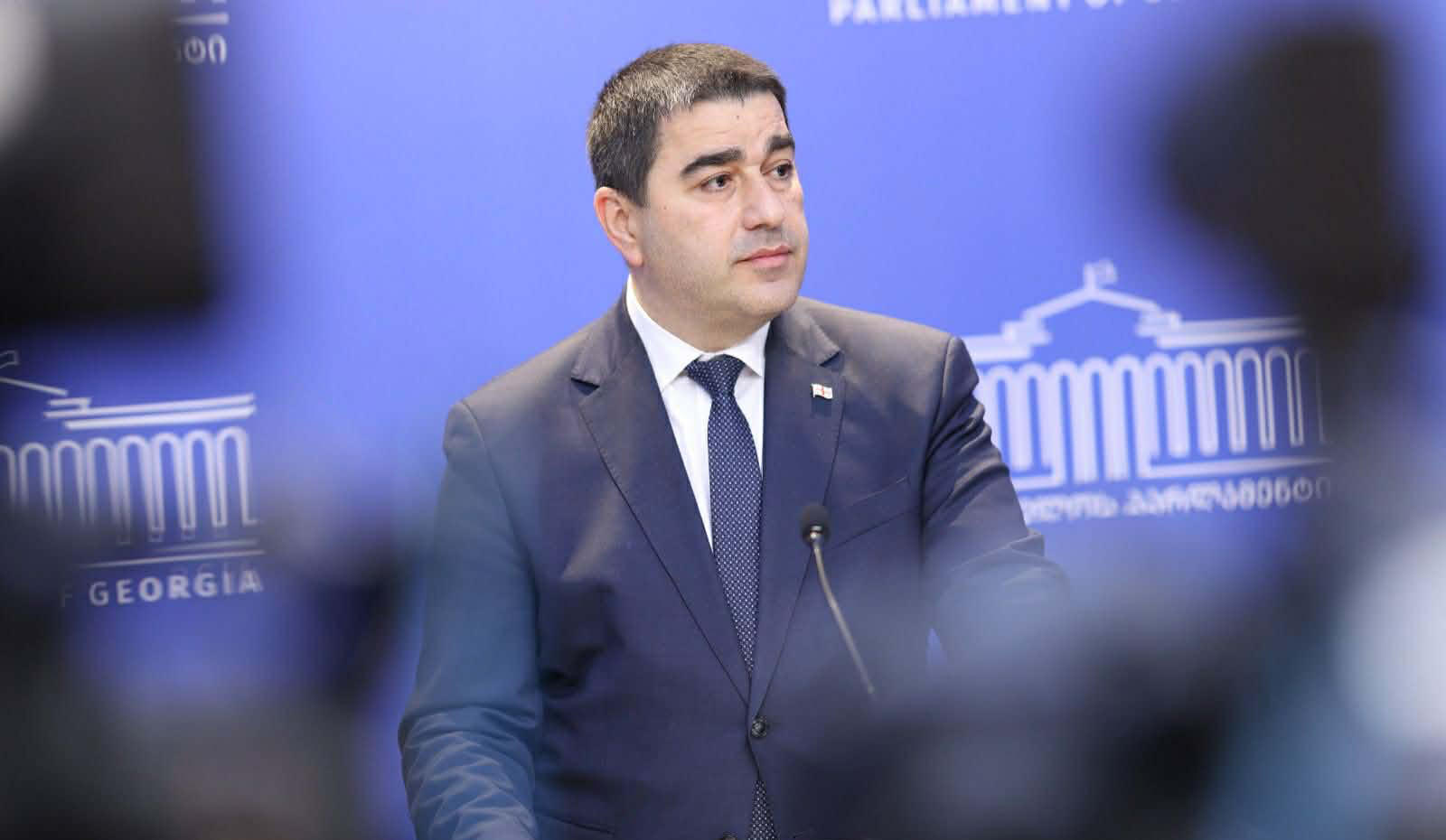
The Speaker of the Parliament of Georgia, Shalva Papuashvili, calls false the information claiming that he bought a land plot from the state for 1 lari in the Signagi municipality.
Papuashvili made this statement in response to journalist Gela Mtivlishvili, who shared on social media an article prepared by “Georgia’s Stories” in April 2024, claiming that Shalva Papuashvili bought forest land in Kakheti for 1 lari.
Papuashvili also published a photo of his property declaration and explained that the purchase agreement was concluded for a symbolic amount deliberately, as he had already been the de facto co-owner of the land plot before that.
“What this person with fake registration in Estonia is spreading is a classic example of disinformation.
Moreover, it is such brazen disinformation that, as he himself stated a few days ago, due to similar-level falsifications regarding this issue and the Shovi tragedy, the EU refused to fund him. In other words, the falsification was so blatant that even for Brussels — which looks for every possible pretext to blame us — it crossed a red line.
In principle, citing just this one fact would have been enough for me to close this topic. However, since this person neither understands my words nor, as he himself says, the EU’s words, and continues to pollute social media with this completely false banner, I will once again explain what is false and what is true.
As for the truth. The truth is that my only ‘merit’ in being a co-owner (and not the sole owner) of the mentioned plot together with my cousin is that I am my grandfather’s grandchild.
This plot and adjacent plots (which for some reason he does not mention) were owned by my grandfather from the moment property rights emerged in independent Georgia — part as ownership, part under lease.
My grandfather passed away in 2003 and left the inheritance to me and my cousin. What he owned as property we registered as property; what was under lease, we renewed with a new lease agreement. Since lease procedures required visits to various regional institutions, correspondence, and approvals, and so that we would not both have to go everywhere, we agreed that my cousin would handle the lease agreements for that part of the land. Even then, this remained our joint property, and we paid the lease fees together.
From 2005, it became possible to buy out leased land plots. The buyout price was set by law by the state. Initially, we did not rush, but when it was announced that regulations would change after 2010, we started the buyout procedures. Since the lease agreement was only in my cousin’s name, legally only he could carry out the buyout. We therefore agreed that he would buy it out and later, when the time came, we would divide the property. We paid the purchase price together and thereafter paid the property tax together. Thus, these plots were in our de facto co-ownership.
Let me also note that this is not some private family story known only to two people. In Kiziki, even if not everyone knows my grandfather and his family personally, they have at least heard who we are and what we do. So everyone knows that this land belongs to me and my cousin.
Our life went on harmoniously — the land was cultivated and wine was pressed — until I decided to enter politics in 2020. Knowing that I would have to file an official declaration, I decided to legally formalize everything that was my property, so that later there would be no questions about where this property came from or why proceeds from any sale came to me.
This is clearly visible in my very first declaration: my wife registered the village house that her grandmother had gifted to her earlier, and I registered the plots mentioned above. For example, arable land was divided exactly in half between me and my cousin and registered separately (incidentally, this too was for 1 lari, but for some reason that arable land across the road did not interest this person). As for plots that were physically difficult to divide, we registered them as co-owned.
Now about the 1 lari. This shameful manipulation was first attempted in 2023 by “Batumelebi,” claiming that I bought something from the state for 1 lari — a lie so blatant that they eventually apologized and deleted the articles. Now this person continues the manipulation.
The fact is that both “Batumelebi” and this person learned about the supposedly secret 1-lari deal from my own declaration. There was nothing to investigate or expose. In reality, the issue concerns the formalization of a grandfather’s inheritance between two cousins.
Here is the story. When in 2020 I decided that everything I owned or co-owned should be properly reflected in the registry before entering politics, both we and the registry faced a dilemma: how do you formalize what already belongs to you? The registry needs a document — some form of contract — to reflect real life as a legal property situation. Since nothing new was happening between us and we had owned these plots jointly from the start, we proposed that my cousin submit a statement recognizing ownership, but the registry did not have such a form. Therefore, the most appropriate solution was to conclude a purchase agreement for a symbolic amount. This showed that I did not receive the land for free and that it was not a gift, while the symbolic amount of 1 lari clearly indicated that the contract was symbolic and not commercial, reflecting that ownership registration occurred due to other obligations between the parties.
Once again, all of this — that the contract was deliberately for a symbolic amount, why it was symbolic, and that I had been a de facto co-owner before — was not uncovered by any investigation. It is written in black and white in my very first declaration from 2021 and in every declaration since, and I have attached photos to this post.
Thus, the symbolic purchase price was a deliberate choice to show that I registered what I had already possessed since the 1990s as my grandfather’s family member — first under lease, then since 2003 together with my cousin under lease, and since 2011 together with my cousin as co-owner.
Purchasing real estate or company shares for a symbolic amount is nothing new; it is common practice. The state itself uses this practice when transferring property for a symbolic 1 lari to indicate recognition of ownership rights or fulfillment of other obligations. And if you trust neither me nor the state, you might look at how Kezerashvili transferred television shares for 1 lari to his current partners. Were there any questions about that deal?
That is why this lie, which from the start had short legs and malicious intent, failed to gain traction.
The moral of this story is as follows: First, this banner and the story it presents are an example of fake journalism, since this matter has no connection whatsoever to the state. Yet the way this disinformation was spread shows the perception they tried to impose — as if the state transferred some land to me, which is once again completely false.
These plots date back to my grandfather’s time, and my connection stems from being his heir. After my grandfather’s death in 2003, my cousin and I held the land first under lease, and since 2011 to this day as co-owners.
The symbolic purchase agreement is standard practice to transparently show that other rights and obligations lie behind the transaction, and the real history of our co-ownership was reflected in 2020 and explained in my 2021 declaration.
Second, the falsity of this claim is also evident from the fact that no one who looked into the issue continued spreading it, and, as this person himself says, even the EU refused to fund him.
Finally, do not trust media with fake registration in Estonia,” Papuashvili writes.