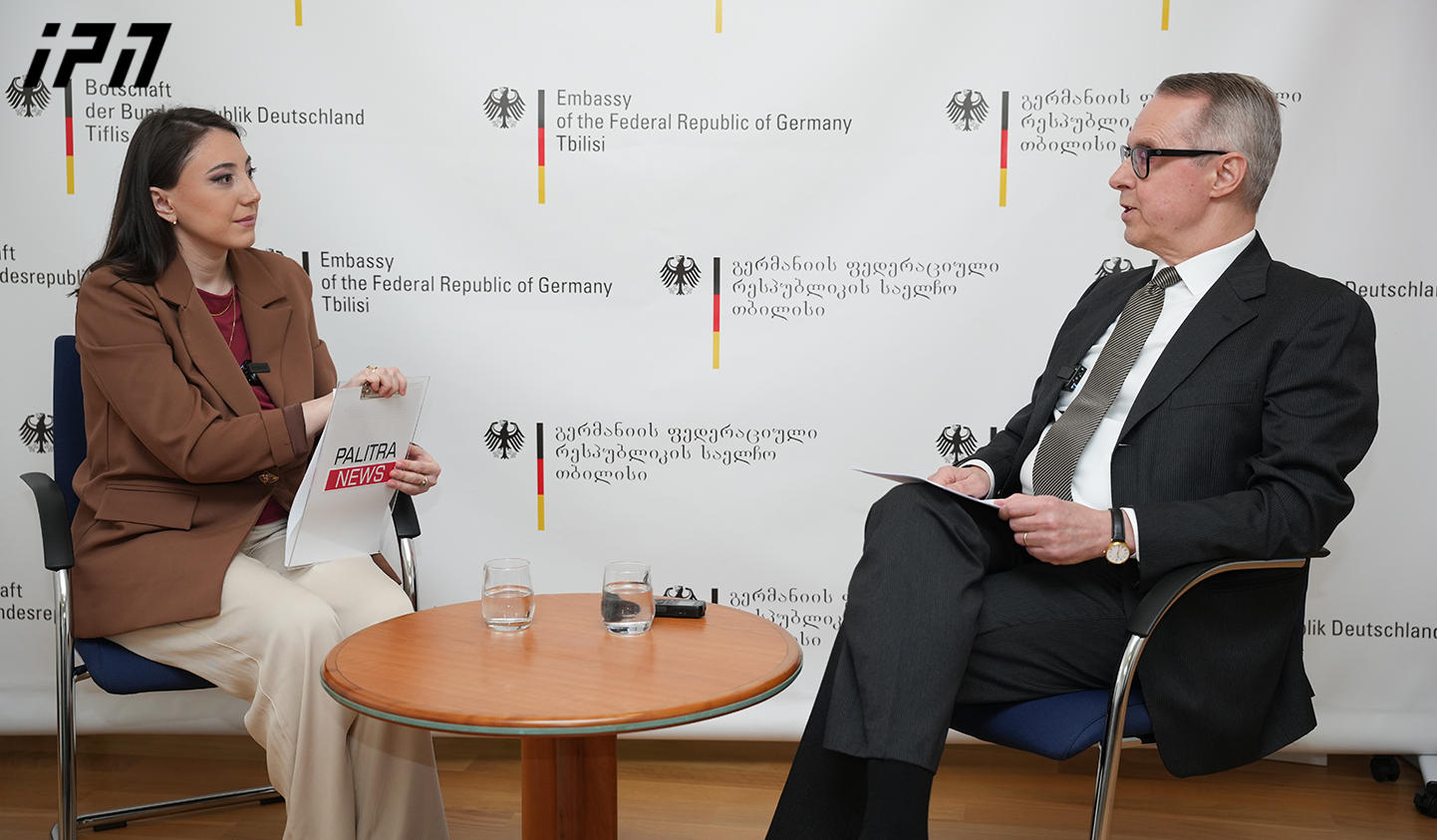
Valeri Chechelashvili: Russia’s influence in the region is weakening, Armenia and Azerbaijan are slipping away, leaving Georgia alone; that’s why Moscow’s motivation to target us is increasing - and it won’t need many resources to do so
“I think the Americans are also irritated by the narrative of ‘Georgian Dream’ that says, ‘We are ready to start from a clean slate.’ What’s frustrating about this is that the U.S. has invested billions of dollars in Georgia’s statehood. What does it mean to start from a ‘clean slate’? At the same time, all communication channels with Europe are completely blocked. The leaders of ‘Georgian Dream’ speak to Europeans in a way that cannot be called diplomatic,” Chechelashvili said in the PalitraNews program "Day’s Newsroom".
He commented on U.S. Vice President J.D. Vance’s visit to the South Caucasus, during which he will visit Armenia and Azerbaijan. Chechelashvili noted that it is particularly alarming that Vance is coming to the region but will not visit Tbilisi. He said this decision was influenced by letters sent to Vice President Vance and former President Trump by Georgian Dream, written in a “didactic, condescending tone.”
“We remember the visits of Vice President George Bush to Tbilisi - he came only to Georgia and did not visit other countries. When Pence visited, he did not go to our two neighbors either. One exception was Dick Cheney’s visit to Azerbaijan, but that was a completely different situation. This suggests that J.D. Vance probably believes that there is nothing to discuss with ‘Georgian Dream’ at this time. I think this was influenced by the letters sent to Vance and Trump from ‘Georgian Dream.’ Imagine a team of diplomats working on the Armenia-Azerbaijan peace agreement and preparing a meeting in Washington - they would naturally include Georgia, because the South Caucasus cannot exist without Georgia. But then, imagine the dialogue in Vance’s office: ‘Vice President, won’t you consider Georgia?’ - and then they remember that letter from Irakli Kobakhidze, which instructs them in a condescending, didactic tone, telling them how to behave. You have to understand the emotional picture - Trump and Vance are personalities where everything in diplomacy is considered carefully, and condescending advice is definitely not the tone to win their favor.”
Chechelashvili emphasized that the “Georgian Dream” narrative of starting anew is also irritating to the U.S.:
“The problem is that billions of U.S. dollars have been invested in Georgia’s statehood, military and political capacity development, humanitarian aid, education programs, etc. What does ‘starting from a new page’ mean? Does it mean that we have forgotten all this? Are we supposed to ignore hundreds of millions of dollars spent on programs to combat hepatitis C? Why should we start anew? Instead, we need to restore the unique relationships we had in the context of strategic partnerships.”
He noted that Georgia’s international isolation increases the country’s vulnerability, as its strength historically depended on solid geopolitical allies - the U.S., NATO, and the EU. Being the most reliable partner in the region for these actors was a serious foundation of Georgia’s regional reputation. According to Chechelashvili, Georgia is now left without this support.
“Today, we are practically without it. Communication channels with Europe are completely blocked. The language that ‘Georgian Dream’ leaders use toward Europeans cannot be called diplomatic. As for the threat, of course, the threat comes only from Russia. From other sides, we have no threat. What I see as a danger is that Russia’s influence in the region is weakening; Armenia and Azerbaijan are slipping from its grasp. Regarding Armenia, Russia has some last attempts related to the June elections. Certain figures, supported by the Armenian-origin Russian oligarch Karapetian, are attempting to counter Pashinyan with pro-Russian forces in parliament. If this succeeds, we may have some breathing room. If it does not, Georgia remains alone, as the only leverage in the South Caucasus. Consider also that we are the weakest link along the entire perimeter of the Russian Federation borders. Central Asia is under China’s strict guarantee of sovereignty and territorial integrity - Russia will account for that. The Baltic countries are NATO members. Ukraine remains. In the South Caucasus, Azerbaijan is a strong military power, so it’s difficult to joke there. Add Turkey and Pakistan - Georgia remains the weak link. What can Moscow do? First, its motivation to act against us will increase if a ceasefire is reached with Ukraine because Russia will need a quick victory abroad to offset criticism at home. The weakest point is us. What can Russia do? For example, it could demand, in ultimatum form, that the railway via Abkhazia be opened, or that Georgia grant a long-term lease of Anaklia port, claiming it as a core interest. If these ultimatums are not fulfilled, it could continue the so-called creeping occupation and even close the East-West highway. These are threats because we are isolated and, moreover, our real potential is weak since we have, unfortunately, cut the military budget several times. Russia does not need many resources to act. The only real deterrent would be the sense that it could be very costly internationally - but Russia does not feel this now, as we have no strong partnerships.”