Representative of State Special Protection Service - hTe organizers of the rally were asking us to give them the keys to the palace - I was in the yard and I heard Murtaz Zodelava's voice: "Let's not back down, the palace is ours," he was with Irakli Nadiradze
I was in the yard of the presidential palace and I heard Murtaz Zodelava's voice. He was saying, "Let's not back down, the palace is ours." Murtaz was with Irakli Nadiradze, - Giorgi Tsevelidze, the head of one of the units of the State Special Protection Service, who was questioned as a witness, said at the trial in the October 4 case.
According to Giorgi Tsevelidze, his unit directly protects the presidential palace, and is entrusted with control and security of the palace. In response to questions from lawyers, he confirmed that "special forces were present at the presidential palace on the day of the October 4 rally."
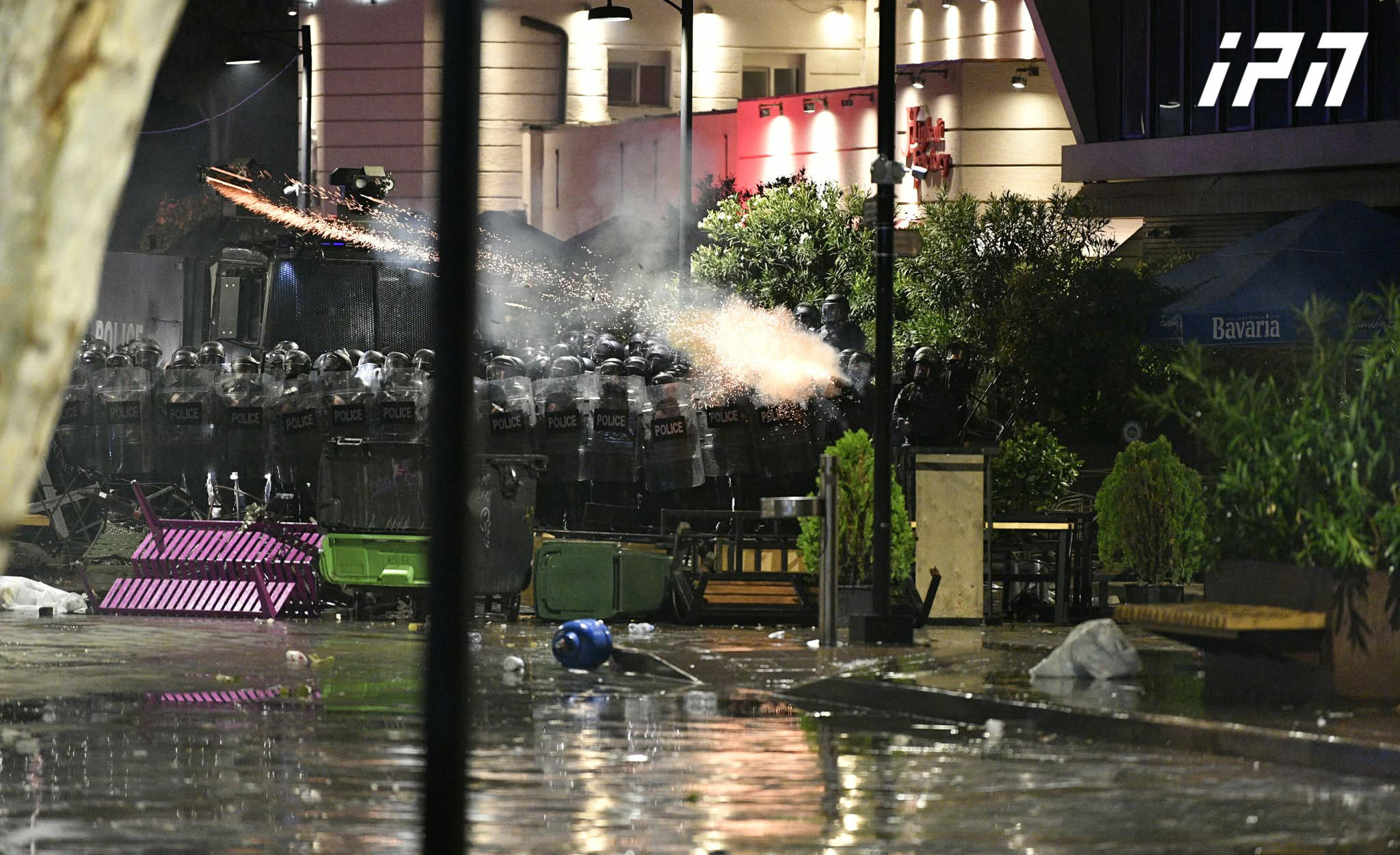
According to him, before the protesters arrived, “the palace fence was in a normal state,” and during the protest itself, he saw “about 6-7 people climbing the palace fence… The middle part of the palace fence was damaged first, and then gradually other parts.”
In addition, according to the witness, the protesters could be heard shouting “till the end, till the end,” and throwing things. According to him, both he and his employees were injured; he was hit by an iron structure.
“The organizers were addressing the protesters with gestures, and they were also addressing us to give us the key [to the palace]… I was in the tyard of the palace and I heard Murtazi’s voice. He was saying, “Let’s not back down, the palace is ours.” Murtazi was with Irakli. They didn’t even spend a minute in the yard,” said Giorgi Tshelidze.
The witness was questioned by lawyers, including Beka Basilaia, who asked him about one of the statements made by Prime Minister Irakli Kobakhidze about October 4.
“The Prime Minister stated that we had information about the direction in which the protest could develop, but we decided not to act in advance and we made a surprise. So the Prime Minister says that they knew about the plan for the protest, but the Special State Protection Service and the unit that provides security for the presidential palace did not know about this information?” Basilaia asked the witness.
In turn, Giorgi Tsevelidze explained that he knew nothing.
“I knew nothing,” said Tsevelidze.
In addition, to another question from the lawyer about what action Zodelava and Nadiradze took when entering the palace yard, he answered as follows:
"No action... There was shouting from both of them, but I don't remember exactly who was shouting what," - noted Giorgi Tshelidze.
The trial of 10 people accused in the October 4 rally case was held at the Tbilisi City Court.
For information, Murtaz Zodelava, Paata Burchuladze and Irakli Nadiradze were charged under Article 19-222, Part 2, Subparagraph “a” of the Criminal Code of Georgia, which refers to an attempt to seize and block objects of strategic and special importance committed by a group. They are also charged under Article 225, Part 1 of the Criminal Code of Georgia, which refers to the organization and leadership of group violence. They are also charged under Article 317 of the Criminal Code of Georgia, which refers to a call to change the constitutional order of Georgia by force and to overthrow the state government, which is punishable by up to 9 years of imprisonment.
Irakli Shaishmelashvili is charged under Article 317 of the Criminal Code of Georgia, which refers to a public call to change the constitutional order of Georgia by force or to overthrow the state government, which is punishable by up to 3 years of imprisonment.
Lasha Beridze is charged under Article 19-222, Part 2, Subparagraph “a” of the Criminal Code of Georgia, which pertains to an attempt to seize and block objects of strategic and special importance, committed by a group. He is also charged under Part 1 of Article 225 of the Criminal Code of Georgia, which involves organizing and leading group violence.
Irakli Chkhvirkia, Nika Gventsadze, and Tornike Mchedlishvili are charged under Subparagraph “a” of Part 2 of Article 19-222 of the Criminal Code of Georgia, which involves an attempt to seize and block strategic and special importance objects, committed by a group. He is also charged under Part 1 of Article 225 of the Criminal Code of Georgia, which involves organizing and leading group violence. The aforementioned act is punishable by 6 to 9 years of imprisonment.
Guri Zhvania is charged under Part 2 of Article 225 of the Criminal Code of Georgia, which pertains to participation in group violence.
Paata Manjgaladze is charged under Part 1 of Article 225 of the Criminal Code of Georgia, which pertains to organization of group violence. The aforementioned act is punishable by imprisonment for a term of 6 to 9 years.