Shalva Papuashvili: For the second reading on non-recognition of constitutional bodies, there will be a specific formulation of what is punishable - this is not about an individual, but about Georgia; some foreigners treat recognition of our country as if it’s recognizing a khachapuri
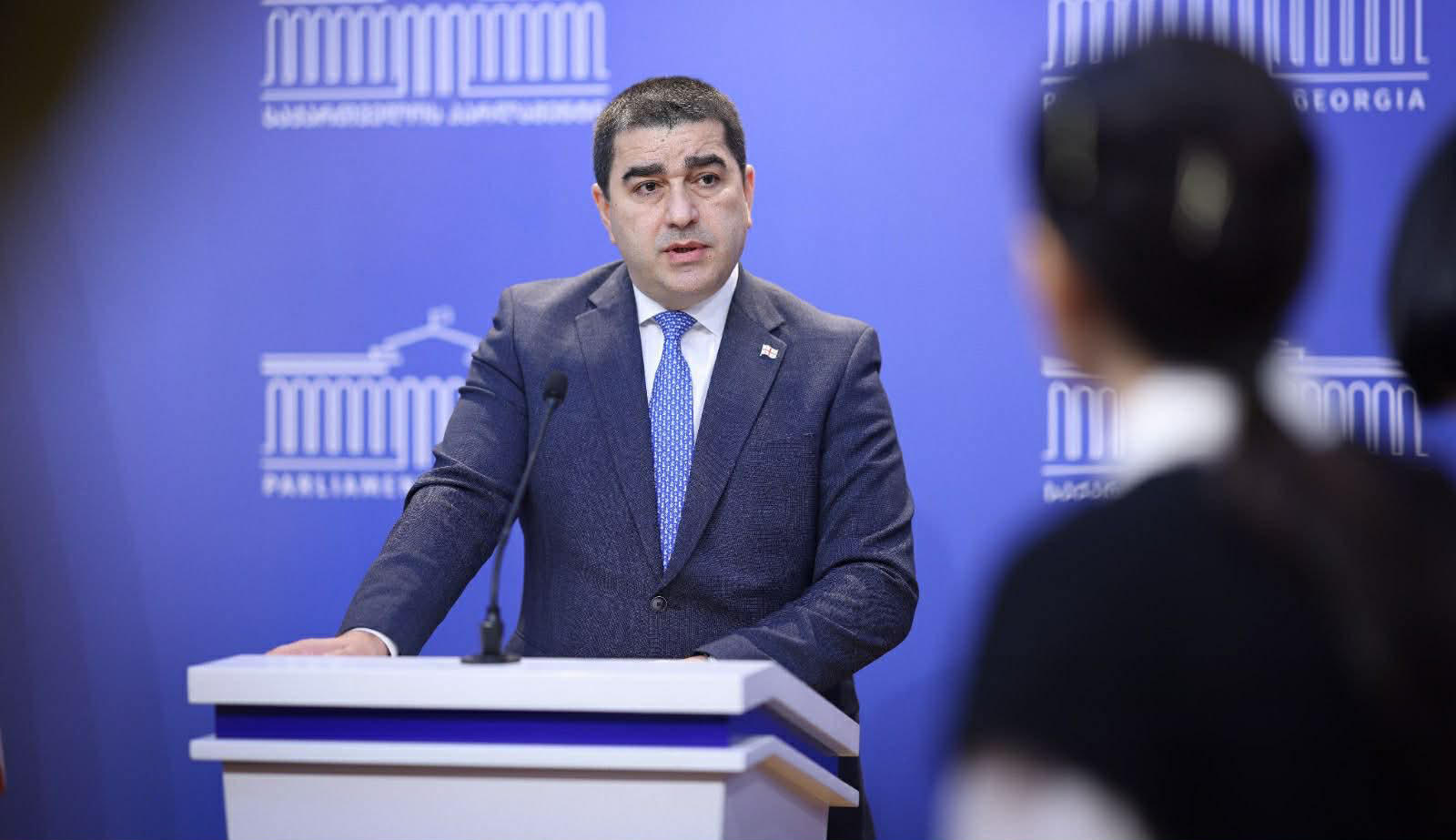
“The provision has already been passed in the first reading. Regarding the non-recognition of the constitutional order and its bodies, the second reading will provide a specific formulation of which actions are punishable and what the sanctions will be. This is not about Mikheil Kavtelashvili or any particular individual; it is about Georgia as a state and the recognition of its constitutional bodies. Some foreigners treat the recognition of our country as if they were simply recognizing a khachapuri,” Parliament Speaker Shalva Papuashvili said, responding to a question on whether Georgian Dream is considering criminal liability for those who publicly refuse to recognize the legitimacy of constitutional bodies.
He emphasized that groups who do not respect the constitutional order and place themselves outside democracy have no right to claim participation in democratic processes.
“Our plan is the same as that of any independent state that respects its own sovereignty. Respect for the constitutional order is the foundation of any state. Groups that do not respect the constitutional order and place themselves outside democracy have no right to participate in democratic processes. This is what this law concerns.
It is not about individual groups or people; it is essentially about foreign interference. This is one of the instruments of external interference, when attacks on the legitimacy of Georgia’s constitutional bodies are used to undermine our state.
In reality, this is not a domestic issue - it is an externally driven effort to abolish Georgian statehood and put us on the Moldovan path, where at some point we would be told: ‘You are small, weak, maybe someone should annex you and save your territory.’ Non-recognition of the constitutional order and its bodies - claiming that the law is not law for them, that the courts are not courts - is an externally directed agenda. This is why it is important to regulate it,” Papuashvili said.
He added that these laws address foreign interference, not the groups themselves, which are merely instruments:
“We see what the attempt is. They cannot erase us from the map - it is obvious. Madam Kos came here, flew over us, went to Azerbaijan and Armenia, and spoke about the Black Sea and the central corridor without consulting us. This is the exact same style that was used to cancel individuals, the liberal approach of nullifying a person, now applied to states. It is as if Georgia does not exist, and the few NGOs that are paid and hired represent Georgia. If it were up to them, they would probably relocate all supporters of ‘Georgian Dream’ and the country’s independence to some island and build an NGO paradise there, managed by their second-tier officials. These laws, including the transparency law, address foreign interference, not the groups that are merely tools,” Papuashvili said.
When asked whether the goal was the arrest of Georgia’s fifth president, Salome Zourabichvili, Papuashvili responded: “No, this is simply a good visualization to help people understand the modern challenges we face.”
“Our concern and problem are the foreign groups that orchestrate all of this in Georgia. They award scholarships and fund activities to undermine Georgian statehood. The independence of our country was not won with blood to allow someone in Berlin or Tbilisi - I am referring to Gakharia and Zourabichvili - to undermine our statehood with scholarships and appointments. The target is to prevent foreign interference locally, using people on the ground - many people,” the Parliament Speaker said.
Papuashvili also noted that some foreigners, when they come, say: “You have good khachapuri, wine, and dance, but as for the state - you must do what we say.”
“The provision has already been passed in the first reading. Regarding non-recognition of the constitutional order and its bodies, the second reading will define the specific punishable actions and sanctions - criminal sanctions. This is already in the Criminal Code in the first reading. Again, this is not about Mikheil Kavtelashvili or any individual - it is about Georgia as a state and the recognition of its constitutional bodies. Some foreigners treat recognition of our country as if it’s recognizing a khachapuri. They arrive and say: ‘You have good khachapuri, songs, and dance, but as for the state - you must do what we tell you,’ just like in the Soviet Union when the state was not recognized,” Papuashvili said.
For reference, Archil Gorduladze, Chairman of the Legal Affairs Committee, stated that the law may define and impose criminal liability on anyone who publicly calls for non-recognition of constitutional bodies. Gorduladze made the statement in response to MP Levan Machavariani, who asked in yesterday’s parliamentary session whether the Parliament should consider sanctions against political groups or activists who refuse to recognize the legitimacy of the elected government, create parallel power structures, boycott government decisions, obstruct police work, claim that the country is run by an occupying force, and encourage others to take similar actions.