Tengiz Kirtadze: There is no talk of uniting into one team; if “Lelo” fears that party differences will be absorbed, they are mistaken - Today the discussion is about rules of conduct; I do not rule out unification in general, but I am very skeptical
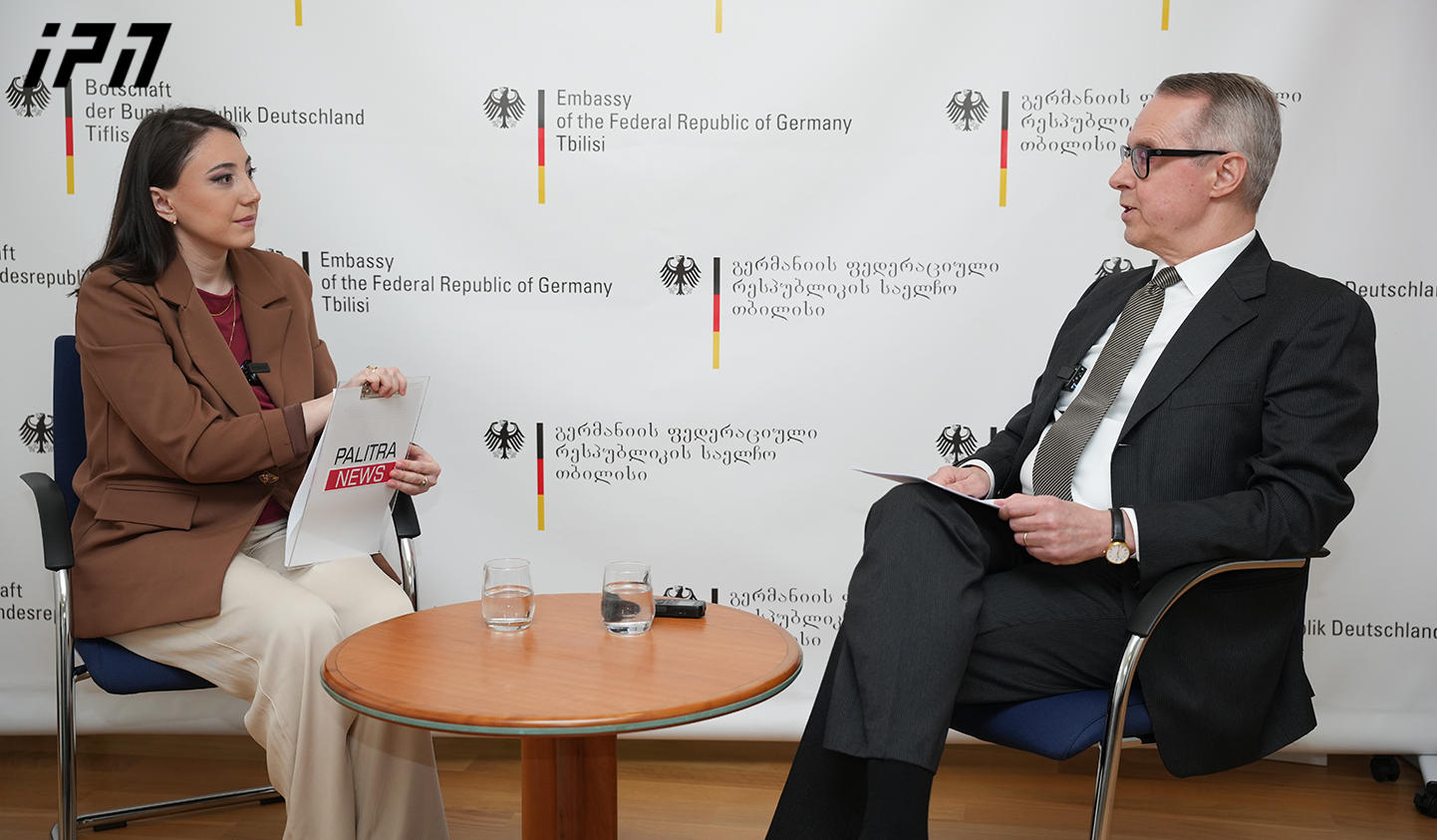
There is no talk of uniting into one team anyway. If “Lelo” fears that party differences will be absorbed and a uniform mass will be formed as a result of this process, then they are very mistaken. On the contrary, democratic parties agree on a unified democratic strategy against the regime and, among other things, on rules of conduct, - this was stated by one of the leaders of the party “Federalists,” Tengiz Kirtadze, during his appearance on the “PalitraNews” program “Day’s Newsroom,” responding to the statement and decision of “Lelo - Strong Georgia” to continue the political fight independently.
As he noted, a very large part of the agreement on rules of conduct between the parties has already been coordinated.
“I actually agree with ‘Lelo’ in this case. ‘Lelo’ knows what this process is about; they have simply decided at this stage, for some reasons, to refuse joining. I don’t know whether this is a party interest or other motives are driving it, but there is no talk of uniting into one team anyway. If ‘Lelo’ fears that party differences will be absorbed and a uniform mass will be formed as a result of this process, then they are very mistaken. On the contrary, democratic parties agree on a unified democratic strategy against the regime and, among other things, on rules of conduct - what demand society has and how democratic parties should behave in relations with each other. This agreement precisely covers the fact that in the part where there is agreement on the path of resistance, parties will proceed with one strategy, but where there are ideological differences between parties or differences in tactics that are not part of the agreement, of course any party will preserve its own identity. This is not just a side effect of this process - it is the purpose of this relationship: for parties to preserve their differences.
I cannot make forecasts about the future. I do not rule out the variant of parties uniting in general, but I am very skeptical. As of today, the discussion is about agreeing on a unified strategy and rules of conduct. In an ideal case, of course, this should have been done yesterday or the day before yesterday, taking into account that our society has been fighting against the regime in the streets for 15 months already, and the political spectrum should have kept pace with this. They should have already shown a certain alternative - what would happen in case the regime is replaced. Unfortunately, this could not be achieved; there are both objective and subjective reasons for this. Also, in general, in autocratic regimes the opposition is always weak both politically and financially. Due to propaganda, it may be in confrontation with each other, or have difficulty contacting each other, or lack experience of cooperation with each other, or have negative experience of cooperation. Overcoming all this had to be done during the preparation of this agreement. That is why, unfortunately, it was prolonged. It should also be taken into account that a number of leaders were and still are in Ivanishvili’s dungeon, which complicated the process of reaching this consensus. But I am optimistic that a very large part of the agreement that should be signed has already been coordinated. There is verbal consent on this, and now the process of clarifying the details is underway. The Georgian opposition spectrum remembers a number of agreements: they would sign documents, take photos, and then we remember how the history of these unities continued. Those agreements were not even worth the paper they were written on. This is a fundamental issue that is being done this time - what kind of relationship is necessary between political parties,” - stated Kirtadze.
Regarding other current issues, he also spoke about the removal of actor Andro Chichinadze’s banner from the “New Theater” building and the events that developed around it, noting that “the banner is a symbol and embodies a person who does not betray the country’s national interests.”
“The banner is hanging silently, but it screams very loudly and attracts attention. It is a symbol; it embodies a person who set aside his entire personal life and confronted that regime in a decent and peaceful manner - the regime that betrays the country’s national interests and did not agree to any deal, went all the way on this path. This is an example for any citizen in our country who can claim decency. That is why this banner is noisy. In exactly the same vein, we can consider the changed legislation that we have already surpassed even Russia in terms of severity. If you recognize Bidzina Ivanishvili’s regime as illegitimate, this too comes from that opera - you cannot express national spirit, patriotism, fighting spirit, the desire to fight, because the example of Andro Chichinadze, Mzia Amaglobeli, and other prisoners of conscience, and such principledness, is contagious. They want to uproot this everywhere. If Zviad Gamsakhurdia and Merab Kostava were alive today, Bidzina Ivanishvili would throw them in prison,” - stated Kirtadze.
Another issue Kirtadze spoke about is the information from “Geostat” according to which the volume of oil produced in Georgia and sold abroad has increased by 3000%.
“The Kulevi oil refinery is not functioning as of today. The plant we are talking about - where oil refining takes place - is not even completed. There is a pipeline in Georgia. After the start of the war in Ukraine, practically refined oil was coming in, but not by circumventing sanctions. Russian oil can be purchased if it has been bought below the sanctioned price and from non-sanctioned companies. They always tried to comply with this. Almost ready oil was coming in, then some solutions were mixed in to give the final product the name ‘Made in Georgia’ and then it was taken for sale. This had the volume of a medium-sized business. But already Brussels has noticed that this could be an indirect mechanism for circumventing Russian sanctions. No one benefits from having some company, an oil terminal in Georgia, where Russian oil comes in, supposedly refined in Georgia, gets labeled ‘Made in Georgia,’ and is sold legally - whether in EU countries or elsewhere. That is why the Kulevi oil terminal and all those persons, all those banks that will be involved in these processes, are potential candidates for sanctions. When you allow such high-risk operations in your country, it is never a good sign. The regime always prefers to do its business unnoticed. When you step onto such a slippery field where there is a high risk of sanctions, it indicates that you are aware of economic problems,” - stated Tengiz Kirtadze.