David Matikashvili: The platforms of free speech, "Imedi" and "POSTV," have been shamelessly sanctioned, but all of this is futile because coercion achieves nothing - the creators of this decision have made themselves ridiculous
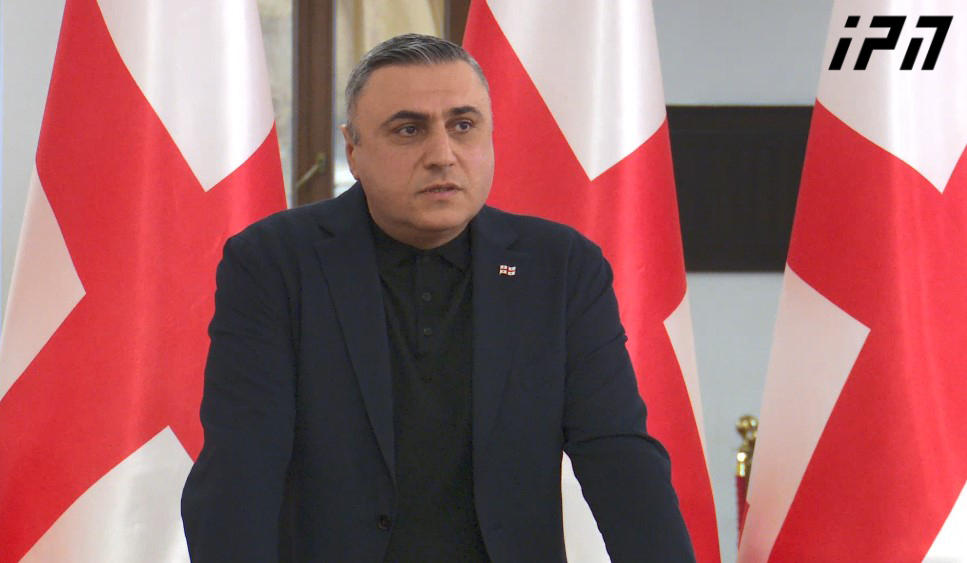
Today, the platforms of free speech in Georgia - "Imedi" and "POSTV" - have been shamelessly and unscrupulously sanctioned, but all of this is futile because coercion achieves nothing - the creators of this decision have made themselves ridiculous, - this was stated by David Matikashvili, Chairman of the Parliament's Procedural Issues and Rules Committee, to journalists.
According to him, the purpose of the United Kingdom's decision to sanction the two Georgian television companies is to stifle free speech.
As Matikashvili notes, the more subjective coercion is manifested against Georgian free media, the more support and solidarity these two television companies will gain.
"Great Britain has not yielded first place to anyone in the ranking of shameful decisions. Today, the British Ambassador will have to answer the fair questions of the Georgian side: how does stifling free speech in small Georgia help Ukraine against Russia? It would be laughable if it weren't so pitiful. Britain's former Prime Minister, Boris Johnson, practically forced Ukraine to refuse to sign the peace agreement in Istanbul - that agreement under which Ukraine would have largely preserved the status quo in terms of territorial integrity that it had before the war began. Today, Great Britain is sanctioning Georgian television companies - 'Imedi' and 'POSTV' - for a ridiculous reason: supposedly 'Imedi' and 'POSTV' are contributing to Ukraine's destabilization. Such cynicism, such amorphous attitude toward events, is probably distinctive in the decisions made in Great Britain. For example, the Druzhba oil pipeline, through which Russian oil and gas flow to Europe, through which Russia receives billions from the European Union - supposedly sanctions on it should be lifted because lifting sanctions helps Ukraine in the war, and 'Imedi' and 'POSTV,' which preach free speech, supposedly contribute to Ukraine's destabilization. Let them know one thing - they will not extinguish 'Imedi' for the Georgian people. There was a time in 2007, again during the rule of the fifth column, when with batons, kicks, and the use of weapons they smashed the 'Imedi' building, beat journalists, and seized the television company 'Imedi,' but then everything turned around the way it should have - 'Imedi' was returned to its owner, to the people. Today, the platforms of free speech in Georgia - 'Imedi' and 'POSTV' - are so shamelessly and unscrupulously sanctioned, but all of this is futile because they should know one thing: coercion achieves nothing. The more subjective coercion is manifested against Georgian free media, the more support and solidarity these two television companies will gain. The purpose [of the decision] is to stifle free speech - free speech should not be heard. In their opinion, society should be locked in their 'bubble,' crooked, degraded information labyrinth, and alternative opinions and words that do not fit the views of the informal governing tentacles operating in the world today should, in their opinion, be eradicated from the information field. This is the only reason for all of this. They could have at least come up with something, fabricated at least one argument. They mentioned 'Imedi' and 'POSTV' in connection with Ukraine's destabilization - has anyone heard such nonsense before?! This impudence requires answers, and it is precisely for this answer that the British Ambassador has been summoned to the Ministry of Foreign Affairs," - stated Matikashvili.
For information: On February 24, the United Kingdom imposed sanctions on the television companies - "Imedi" and "POSTV." According to the British government, sanctions were imposed on "Imedi" and "POSTV" as organizations "involved in spreading Russian disinformation." The sanctions imposed by the United Kingdom include asset freezes, prohibition of financial services for managing assets, and director disqualification. The sanctions document notes that "Imedi" and "POSTV" "deliberately spread misleading information to their audience - primarily in Georgia - about Russia's full-scale invasion of Ukraine."