Valeri Chechelashvili: The summoning of the ambassador is a sign that "Dream" is bothered by the sanctions; as for Natia Turnava's call - who needs a bank that cannot make international transfers? The field of action for banks is mined
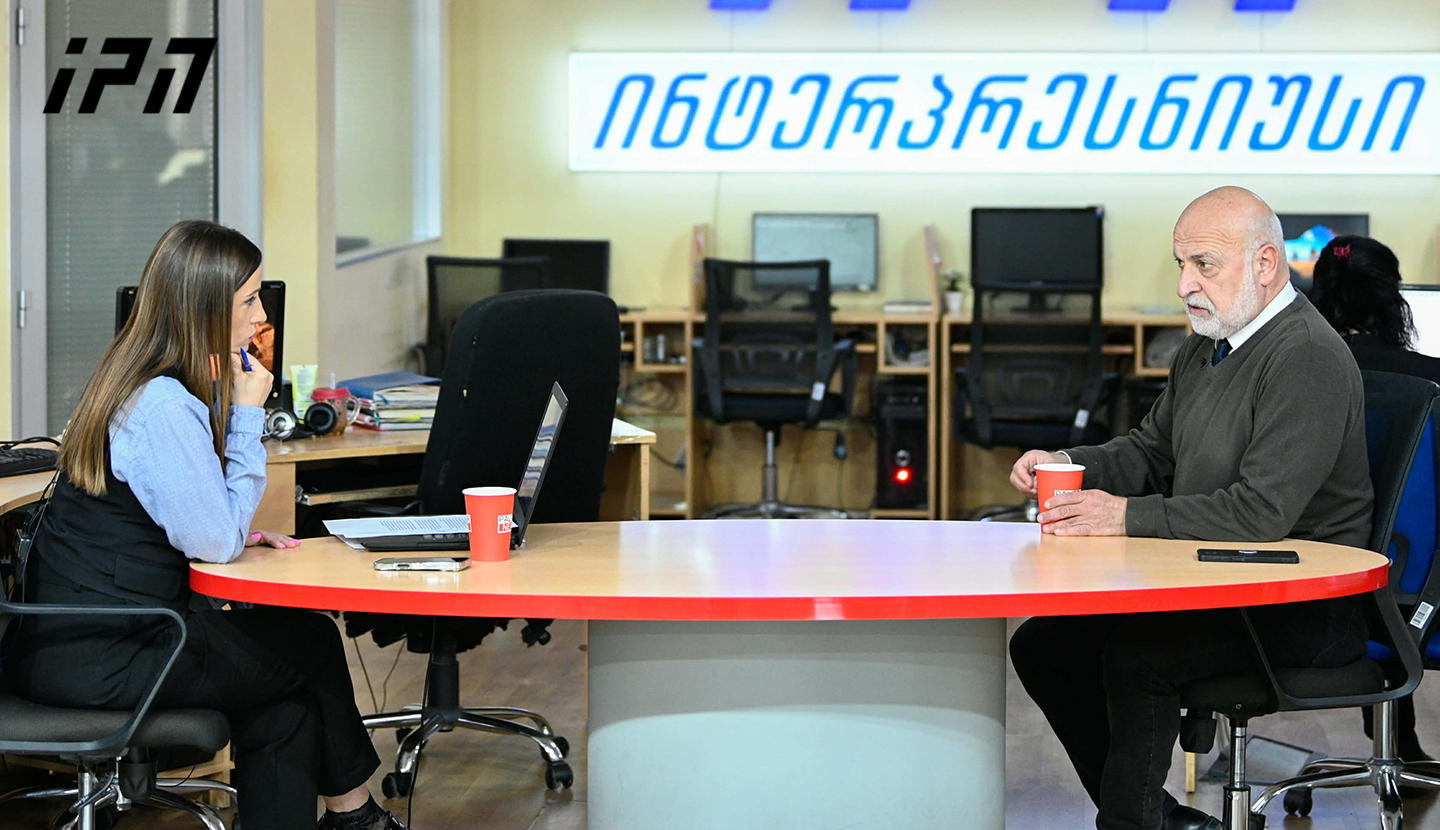
If they demand additional arguments from the British Ambassador, he might recall the "Georgian Dream" narratives about European and global war parties and the "deep state" — it would be better if they do not demand explanations from the ambassador in a strict, didactic tone, but instead try to build some bridges, restore the communication channel so that negotiations can take place on what conditions these sanctions can be lifted, — this was stated by diplomat Valeri Chechelashvili during his appearance on PalitraNews' "Day's Newsroom" program, as he assessed the summoning of the United Kingdom's Ambassador to Georgia, Gareth Ward, to the Ministry of Foreign Affairs in connection with the sanctioning of "Imedi" and "POSTV."
According to him, "no claims or loud statements from the Ministry of Foreign Affairs will change the British decision."
"The summoning of the ambassador is a sign that 'Georgian Dream' is genuinely bothered by the current situation. This is not an ordinary event; this is a very serious decision that will create problems not only for 'Imedi' and 'POSTV,' but also for a whole range of legal entities associated with them. As for demanding explanations, I think this was very well established in the British statement itself. If they demand additional arguments from the British Ambassador, he might recall 'Georgian Dream's' narratives regarding European and global war parties, as well as the 'deep state' and so on. It would be better if, at today's meeting, instead of demanding explanations from the ambassador in a strict, didactic tone, they try to build some bridges, restore the communication channel so that negotiations can take place on what conditions these sanctions can be lifted. I think this would be a more constructive approach. No claims or loud statements from the Ministry of Foreign Affairs will change the British decision.
I emotionally understand [Georgian Dream's] anger, because this is indeed a very serious decision that will create major problems not only for 'Imedi' and 'POSTV,' but also for the holdings and especially for 'Imedi.' I simply want to advise 'Georgian Dream' that they will not achieve anything with fights and claims against the British government. In response, they might sanction the BBC or some other channel for some reason. They will explain it with some reciprocity principle and so on. This will not be a serious decision. I advise them to try to defuse the difficult situation, and this can happen at this meeting. There is no sign of any compromises," — stated Chechelashvili.
Chechelashvili also "completely rules out" that "Georgian Dream" will decide to expel the British Ambassador.
"This would drive our already extremely low-level relations with Europeans and, in this case, with Great Britain into a dead end. Britain is a very serious geopolitical player. Here, some grudges, retaliatory measures... We really need to assess our capabilities in this regard. It would be better to analyze the problems because of which they were sanctioned. Promises should be given or readiness expressed to seek compromises so that these sanctions can be lifted after certain steps in the future. The cancellation of this decision will not happen instantly. For this, for example, the rhetoric [of 'Georgian Dream'] needs to change. It is known for accusing the global war party, as well as Great Britain, of inciting war and not contributing to peace. First, change this, and then the overall attitude toward the problems that caused this. 'What needs to be done for these sanctions to be lifted?' — this is exactly the question that should be asked today at the Ministry of Foreign Affairs," — stated Chechelashvili.
Furthermore, Chechelashvili commented on the statement by the President of the National Bank of Georgia, Natia Turnava, regarding the sanctioning of "Imedi" and "POSTV," in which she said that "commercial banks are obliged to act in accordance with the norms established by the Constitution and legislation of Georgia." In Chechelashvili's opinion, Turnava's statement "can be assessed as a call" for Georgian banks not to enforce British sanctions.
"Turnava is right when she says that these banks are legal entities registered in accordance with Georgia's legislation. It is also true that any bank, especially a large one, is a global player. Who needs a bank that, for example, cannot make international transfers? This is unimaginable. With this decision, this field of action has been particularly mined for our banks to a certain extent. The function of the National Bank is to help banks navigate this field in such a way that no financial explosion occurs, which would damage the banks and, among them, Georgia's economy.
We need to act very carefully so that these sanctions do not cause a cascading effect throughout the economy. Especially in this regard, we should be careful with the authority and reputation of our two main systemic banks, including in international relations," — stated Chechelashvili.
In addition, Chechelashvili commented on the statements by representatives of "Georgian Dream" claiming that Europe is interested in opening a second front in Georgia and involving our country in escalation with Russia. According to the diplomat, he has relations with all ambassadors and "nowhere, in no context, has anyone mentioned that Georgia should [open a second front]."
"What value would opening a second front against Russia have for Georgia, when Russian military bases are on our occupied territories? A theoretically declared second front by us would end in 2–3 days. It would bring no result to Ukraine or other countries. I have relations with all ambassadors; nowhere, in no context, has anyone mentioned that Georgia should [open a second front].
We are a candidate country that is obliged to adopt such legislation that is in line with European traditions, principles of cooperation, values, and so on. One important component is synchronization with the European Union's foreign policy and security decisions. No one demands 100% alignment, but the trend and dynamics of decisions should confirm that we take into account the foreign policy decisions of that organization and try to bring our policy in line with it. It would be possible to act somewhat flexibly due to our natural dependence on the Russian market and so on, but the dynamics of oil and petroleum product purchases from Russia, tourists, and flights are very demonstrative," — stated Valeri Chechelashvili.
He also discussed the bill introduced in the US Congress that envisages the preparation of a report on "Russian and Chinese intelligence assets in Georgia." According to him, "if this law is approved in Congress, intelligence services will be given corresponding tasks."
"Over the past 10–14 years, I do not recall a single case where our special services arrested foreign spies operating on Georgian territory — be it Russia, China, or any other country. This means either our State Security Service works very well, has recruited all spies on our territory and controls them, or — the second option — they operate so freely that they perform their functions and face no threat. For some reason, I think the second one is more likely, because it is unimaginable how, in such a turbulent world, in our geopolitical location, foreign intelligence forces from abroad do not operate on our territory.
This bothers the Americans too. I think, first and foremost, it bothers them in relation to China. As it seems, they handle things with Russia themselves in some way. However, the Russian factor must also be taken into account. If this law is approved in Congress, intelligence services will be given corresponding tasks. We should recall that Mamuka Mdinaradze was in the USA. Accordingly, we can assume that some communication channels exist between special services, and with their use, the report will be prepared in accordance with the requirements of this law. What this report will be like will largely depend on how our special services cooperate with the Americans. Given Mdinaradze's visit, hopefully this communication channel that probably emerged will not collapse but, on the contrary, will strengthen. Accordingly, this may also lay the foundation for mutual understanding with the USA. However, there are still two key words in the context of improving our relations with the USA: 'prisoners' and 'laws'," — stated Chechelashvili.