Estonian Ambassador: I will be leaving Tbilisi later this week - Does my departure reflect the current state of relations between Georgia and Estonia? Of course it does - I cannot hide that
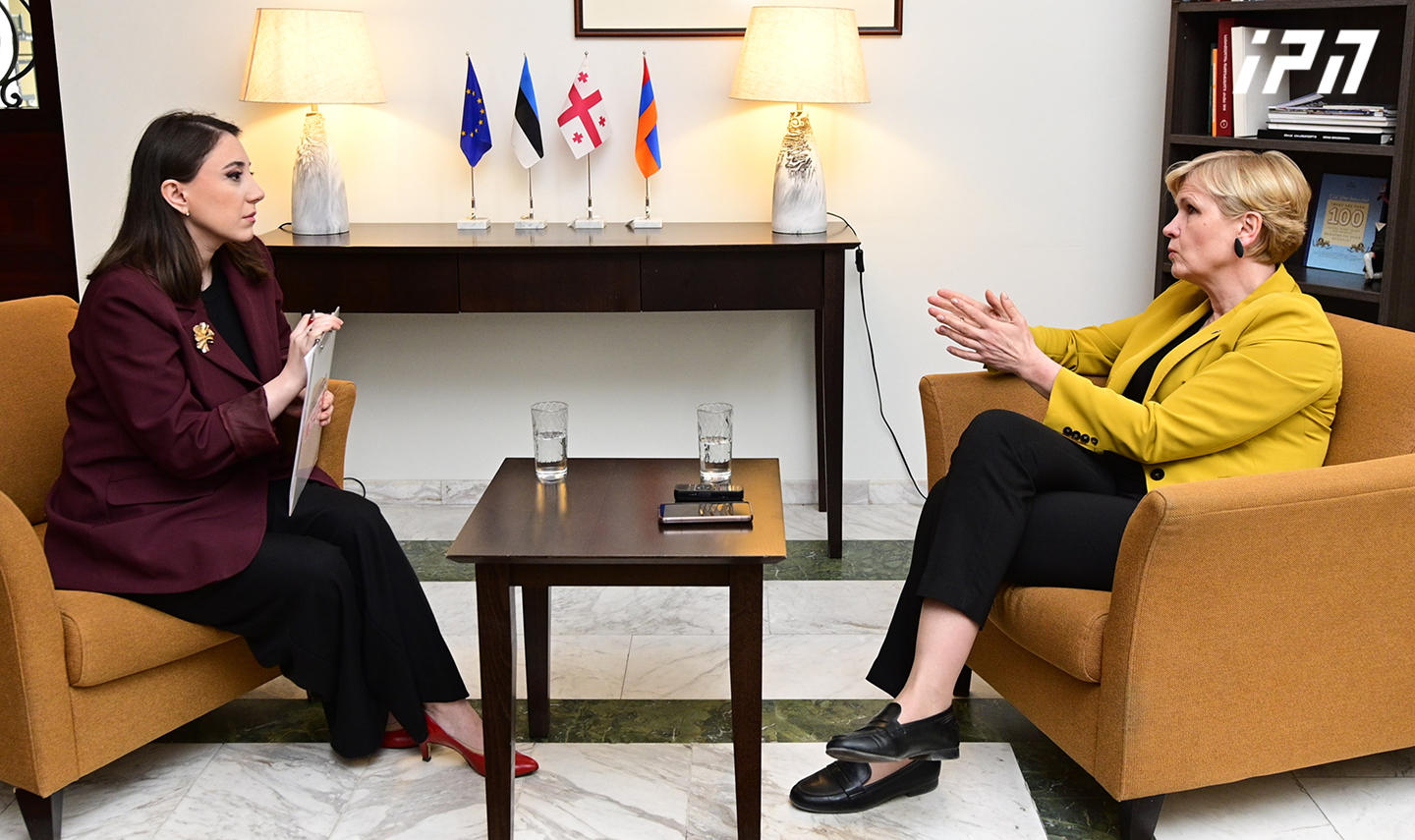
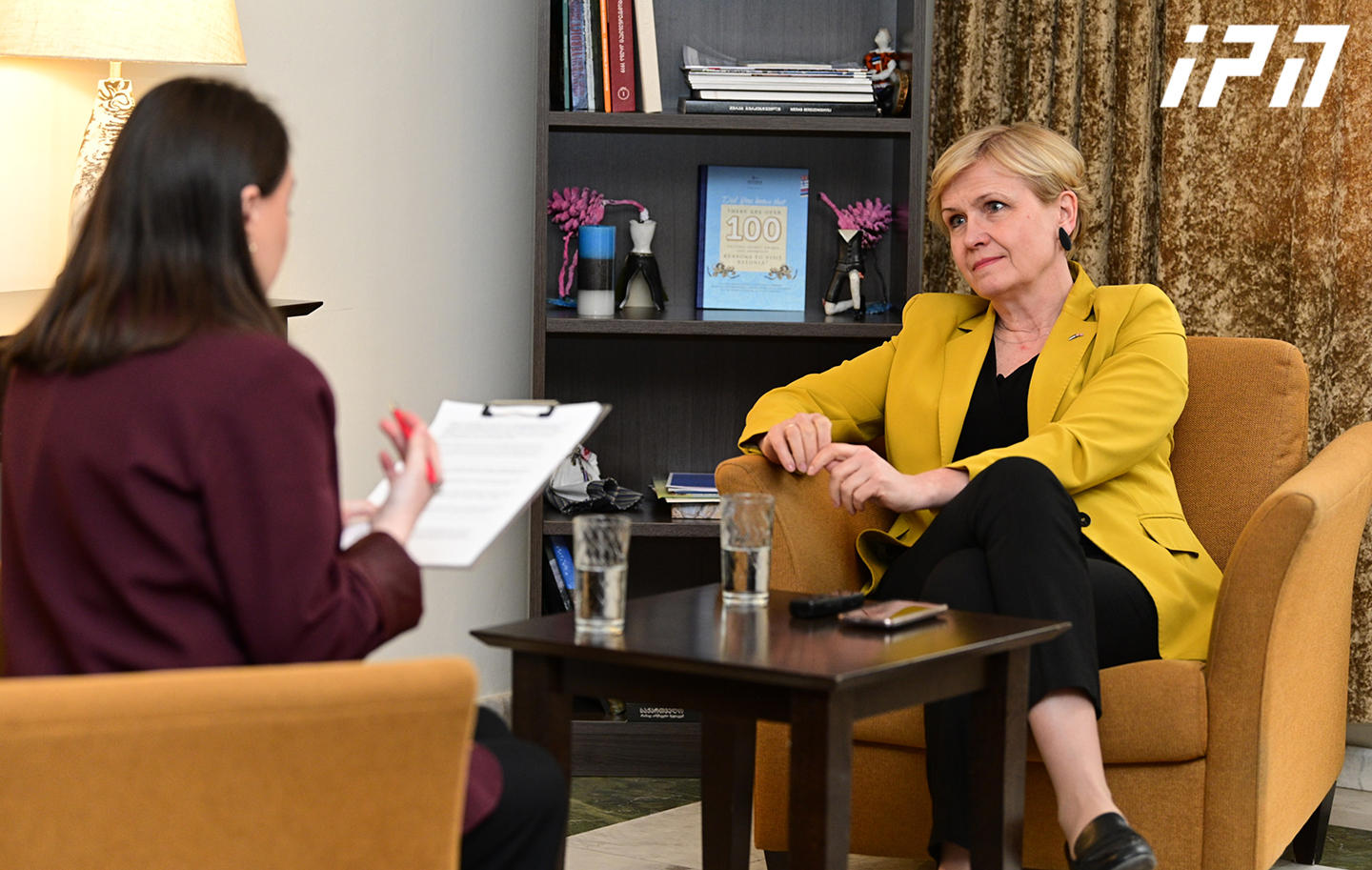
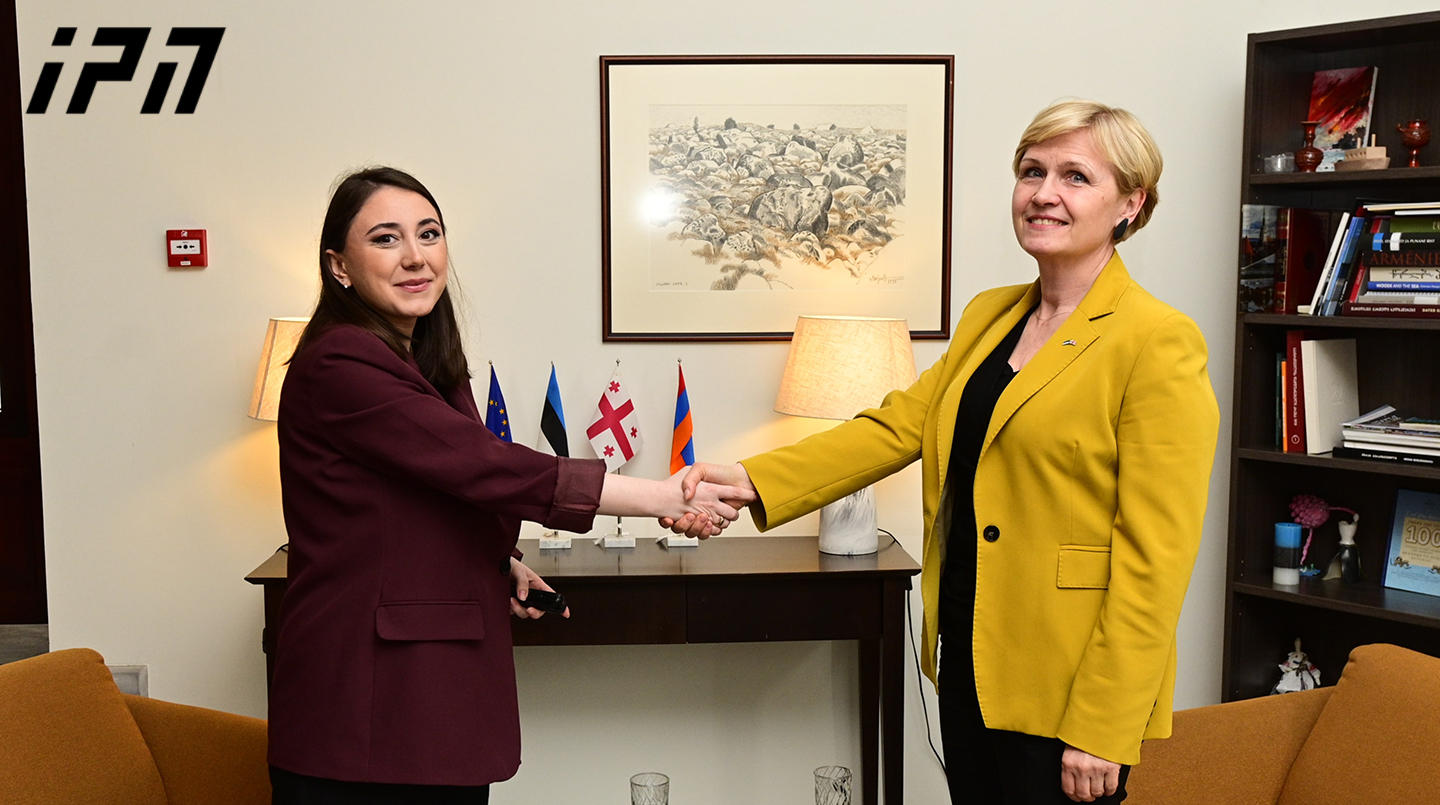
The Ambassador of the Republic of Estonia to Georgia, Marge Mardisalu-Kahar, is leaving Tbilisi. She will head Estonia’s diplomatic mission in Armenia, while the Estonian Embassy in Tbilisi will continue operating under the leadership of Estonia’s Chargé d’Affaires.
The ambassador does not hide that the decision to move from Georgia to Armenia reflects the current state of relations between Georgia and Estonia. A few days before her departure, in an exclusive interview with Interpressnews, the ambassador responds to the accusations voiced in recent times by the government of Georgian Dream against her personally and against Estonia, and shares her views on where Georgia stands today and why accusations toward official Tbilisi are being voiced so frequently…
Madam Ambassador, in a few days you will be leaving Georgia and moving to Armenia, so let us begin the interview by discussing the relevant decision made by the Government of Estonia. Until now, the residence of the Estonian Embassy was located in Tbilisi, from where you also covered Yerevan. Now, you will be based in Yerevan rather than Tbilisi. To provide more factual clarity on this matter, why was this decision made? The Estonian media names “the cooling of relations between the governments of Estonia and Georgia and the strengthening of contacts with Armenia” as the reason. To what extent is this the real reason or maybe you have another explanation?
I am about to leave this week, but let me start from the beginning. At the end of last year, Estonia government, took a decision to open five new embassies, one of them in Armenia, in Yerevan. To optimize the resources, a decision was made that it will be me going there and opening the embassy. This is the most important reason behind it. Our relations with Armenia are more and more frequent. We need someone on the ground. There is the practical need to open the embassy there. But, if you ask me whether the fact that I'm going also reflects the current state of Estonia and Georgian relations, then of course, it does. I cannot hide that. This is how diplomacy works. But let me also be very clear about one issue, which is that Estonia is not closing the embassy in Georgia. It's only me who is leaving. Embassy will stay here and will continue working. We have a very good team here, embassy will be led by Chargé d'affaires. If you look also at the diplomatic list in Tallinn then you see that Georgia has an embassy in Tallinn led by Chargé d'affaires. So, this is the state of play. Embassy will stay here. Embassy will continue working.
In recent times, both you personally and your country, Estonia, have become the subject of rather sharp criticism. However, let us first speak about you personally. The ruling party of Georgia reacted angrily to a photo you posted on social media with the Rector of Ilia State University, captioned: “We stand with Ilia State University.”Georgian Dream accuses you, on the one hand, of interfering in Georgia’s internal affairs and, on the other hand, of politicizing the education reform. The party also states that the planned reform of Georgia’s higher education system is largely based on the Estonian model. What would you say in response to Georgian Dream’s accusations against you, and to the claim that by criticizing the planned reform of Georgia’s higher education system you are effectively criticizing Estonia’s own higher education system?
First of all, we never interfere into internal affairs, this is never the intention. Talking to universities, meeting with university rectors, representatives of academic world, this is something that diplomats do everywhere. This is a normal part of diplomatic work. Also, Georgian diplomats in Tallinn do the same, they meet and we never put any obstacles to that. They are free to meet the academia. When it comes to the Estonian model in Georgian education, Estonia definitely contributed a lot to the educational reform. But just to explain a bit of a background how this reform experience sharing works in general. For example, Georgia has an interest towards Estonian experience in one or another sector, be it environment, be it education, be it agriculture. Based on that interest, we share our experience, we tell our story, point out our strengths and weaknesses. Then it's up to Georgia to choose and decide what part of this experience is useful for them, what part is not. It is never meant to be a directly taking over one country’s model. It cannot work that way. For that experience to be useful, it has to be adapted to local environment, local culture, local policies. There has been a huge interest in Georgia towards Estonian educational sector, be it in primary education, vocational education, higher education. There have been hundreds of Georgian students studying in Estonia. But what we see now, the educational environment in Georgia today is moving in the opposite direction. And it's not about the reforms. In Estonia, we also constantly reform the educational sector. And this is often sensitive because it touches everyone..This constant reforming is a normal thing to happen. We also have reduced the number of universities. But it's not about the quantity, it's not about the reform in itself. It's about the spirit. It's about the fundamental principles that educational reform is based on. Whether these are the democratic principles that are followed. Or do the academic institutions have their autonomy? What about academic freedom? What about Georgian educational system following the Bologna process, or European standards? In this sense, we see that the direction is the opposite in the Georgia, unfortunately.
The ruling party in Georgia claims that it is following the Estonian model when consolidating universities and, overall, reducing the number of faculties. Do you think this approach will not work in Georgia because the context has not been properly understood?
This is not Estonian model in this sense. It's not the spirit of Estonian model. The number of the faculties or universities is not so important, we have also reduced it. But the essence is, the fundamental principles upon which educational system is based on. And this is very different from what we have in Estonia, because we have academic freedom, autonomy of academic institutions and democratic standards in education.
Madam Ambassador, don't you see such kind of freedom in Georgia?
What we have seen, the reform is going towards different direction. And this has been also voiced by the European Union, the assessment that this is going in wrong direction.
Following your post in support of Ilia State University, you were summoned to the Ministry of Foreign Affairs of Georgia. Could you also tell us about the meeting held at the Foreign Ministry — what was the official position of Tbilisi, and accordingly, what was your response?
It was a closed door meeting. We had a calm conversation, a short one. Both sides presented their views, which were different, obviously, and that's it.
As for the accusations directed specifically at Estonia — “The Estonian government is pursuing a hostile policy toward Georgia,” — this is how the Speaker of the Georgian Parliament, Shalva Papuashvili, characterizes Georgian-Estonian relations. In addition to your critical stance on the education reform, he cites several other factors as grounds for this assessment — including the decision of the Estonian authorities to declare more than one hundred individuals affiliated with Georgia’s ruling party persona non grata, as well as the participation of Estonia’s Foreign Minister in a protest held in central Tbilisi. How would you describe the current state of relations between official Tbilisi and official Tallinn?
Again, let me start by looking back. In general, Estonia has been a very strong supporter of Georgia joining the European Union and NATO. This wish has been voiced by Georgia, it is also in the constitution of Georgia. Why we do that? Because of our own experience, of course - we have gained so much from it. We are also convinced that every country must have the right to choose their own foreign policy affiliations. No third country can have a veto here. We have also been one of those countries both in the EU and NATO, that has always advocated a more ambitious policy, more forward coming. We have also been disappointed often that the EU and NATO have not moved quickly enough on that path. Now the decision was taken that Georgia will have the candidate status. This is an historic opportunity, and Georgia has signed up to all those commitments that derive from the Association Agreement, plus DCFTA, the visa liberalization commitments and the candidate status. These are very concrete conditions. And, where are we today? Unfortunately, we see the democratic space shrinking, civil society, free media, opposition almost being shut down. And to put it very bluntly, the question whether we see Georgia joining the club of authoritarian countries, is there. I think this is the main reason, why our relations are where they are. And of course, it does not apply only to Estonia. The EU -Georgia relations have been effectively frozen already for almost two years. We also remember the last enlargement report from last autumn and EU stating that Georgia is the candidate country by name only, only on paper. So from where I see it, it's because of Georgia's current government’s actions that our relations are where they are.
I still should ask you, was the participation of Estonia’s Foreign Minister in the rally held on Rustaveli Avenue a wrong decision — an interference in Georgia’s domestic political affairs, as Georgian Dream claims? And if it were possible to turn back time, would you act differently today?
As I said already earlier, we never interfere into internal affairs of Georgia or any other country for that matter. When it comes to this particular visit, then this was as any other visit - ministers were coming here to get an understanding on what is actually happening in Georgia, how is the situation with the European integration? They had meetings across the board with the representatives of both governments and civil society. So, in this sense, this was part of it. And, again, we don't interfere, but based on our own historical background, we recognize the fight for freedom where we see it. Let's put it that way.
Over the past few years, the rhetoric of the Georgian Dream government toward the West, including the European Union, has changed sharply and significantly deteriorated. Terms such as “the global war party” and the “deep state” have appeared in the narrative, along with persistent accusations that the West seeks to drag Georgia into war. Moreover, representatives of Georgia’s ruling circles claim that the European Union has been stripped of its values and is heading toward the abyss. How do you explain the changed rhetoric of the Georgian authorities and, consequently, the deterioration of relations with the West? How can this “turn” be explained at a time when Georgia seemed closer than ever to its constitutionally declared goal of becoming a member of the European Union?
To be honest, it's impossible for me to explain, because I don't understand it. It's difficult to explain why government of a country where 80% of population supports the European Union, why do they choose at this very historical moment when Georgia finally, finally, finally has received the candidate country status, decides to stop the reforms. It is very difficult for me to explain also why Georgian Government has chosen to verbally attack European Union and its member states, accuse them in false claims such as the EU pushing Georgia into war, which, of course, is not true. EU is not a global war party, on the contrary. So this is very difficult for me to explain. For some reason, which I don't know, the government here has chosen a path towards authoritarianism
Let me also share another accusation that has been actively voiced within the ruling circles: that Estonia, as a Baltic country and Russia’s immediate neighbor, is interested in dragging Georgia into a war in order to avert a potential threat coming from Russia and somehow shift the focus onto Georgia…
Again, this is one of the false narratives that we hear. Estonia has sanctioned more than 100 people from Georgia. And we hear the accusations as if the reason for that was us wanting to push Georgia into war. This is not true. The sanctions have been imposed because of the democratic crackdown on the protests and because of the undemocratic actions of Georgian authorities. These have been the reasons for that, and I think it falls along the same logic.
Within Georgia’s opposition and expert circles, one often hears the assessment that Georgian Dream is a “pro-Russian government.” At the very least, the ruling party’s stance on a number of issues is described as a policy of not provoking Russia. Estonia itself is a direct neighbor of Russia and became a member of both the European Union and NATO in the same year. From this perspective — and also considering that more than 20% of Georgia’s territory is occupied by Russia — how would you assess the positioning of the Georgian government toward Russia?
Estonia has been a very staunch supporter of Georgia's territorial integrity. This is a principle that for Estonian government, for us, is extremely important. This is one of the core pillars of international rule-based order, territorial integrity and sovereignty. So, we are a very strong supporter when it comes to Georgia, and we have been always very vocal about it. We have also noted that Georgian Government, be it in the UN or OSCE, has voted the same way as we do when it comes to the questions related to Russian aggression against Ukraine, and we appreciate that. At the same time, we see those accusations of us pushing Georgia into war, which I’ve already explained, are far from true. We also see a very unpleasant kind of development of this narrative. I was really shocked when I saw, for instance, prior the elections in October 24, the election banners all over Tbilisi, portraying, on the one hand, demolished Ukrainian churches and schools next to flourishing Georgian settlements and cities and towns. For me, it was shocking to see. I think it shows this ambiguity where is Georgia with that question. Another aspect - we see Georgia's growing energy dependency on Russia. We hear the question what is actually happening at Kulevi port, what is happening with the shadow fleet on the Black Sea, and what is the role Georgia is playing in all that? All those questions are more and more in the air. This is something, we are very mindful about and carefully looking at. I would say, from Estonian perspective, for a candidate country, two most important criteria that we are looking at, which overlap, of course, also with the ones the European Union has, is the state of play in democratic reforms, whether the country that applies is democratic. And second one, whether it follows the EU's foreign and security policy line. And when it comes to Georgia, then I must say that Georgia is departing from both of them. I would say that whether you want it or not, but being or becoming an autocracy also has an impact what is your foreign policy orbit.
Regarding the Kulevi Oil Terminal, why is Georgia constantly suspected of helping Russia circumvent sanctions, when official Tbilisi periodically publishes statistical data on the volume of sanctioned cargo it has identified and turned back?
First, let me say, that the sanctions circumvention, supporting the Russian war machine is a very important topic for the European Union, for Estonia, for all of the Western countries. This is about raising the cost of aggression, which is very important. And what we see – sanctions work, sanctions against Russia work! Look at the Russian economy today. The question is not only about Georgia. Circumvention of sanction is a very broad topic, and the European Union is very serious about it. As I’ve mentioned, we have seen more and more articles, more and more questions being raised about Georgia's role in it. We also read that Kulevi port was discussed in the context of new package, 20thpackage which is still in the pipeline and of course, I have no liberty to discuss it. But the fact in itself, that it was discussed in this context shows that there must be some evidences behind it, those discussions are never based on rumors. This is a constant work that EU does, not only with Georgia, with all countries. The sanctions issue needs constantly being addressed. When it comes to the Russian shadow fleet, one thing is cut the support to the Russian war machine. Another issue is environmental. I was just shocked when in December 2024 two Russian tankers were split apart in the Black Sea because, as usually the shadow fleet tankers are very old ones. This is a very serious environmental and ecological problem that you might face, it might jeopardize the entire ecological balance.
It is clear that using the kind of rhetoric the ruling party employs toward what were once strategic partners carries a certain political and perhaps diplomatic cost. At the very least, we have heard the statement by the President of the European Commission, Ursula von der Leyen, that visa suspension could potentially be extended to the entire population if the authorities fail to address the problems. We understand that visa-free travel with the European Union is a right rather than a privilege. However, do you consider it fair for this right to be withdrawn from the population?
This is a very difficult question, because Estonian government, Estonians are the last ones that want to deprive Georgian people of visa free travel. We know how precious it is, we understand it. But we know from our still relatively fresh experience, more than 20 years back already, but we know very well that EU accession, that all the privileges that one country gets from the EU are conditional and they are merit based. It’s based on the principle of “More for more or less for less” -you do more, you get more, you don't deliver, those privileges will be taken away. This is an essence, the core of this policy. And when it comes to all the main pillars of EU-Georgia relations, be it candidate status, be it visa free, be it Association Agreement, be it DCFTA, none of this can be taken for granted, because they are all conditional. Georgia has signed up for so many commitments. Also, when it comes to the visa liberalization, when you look up the visa liberalization action plan for Georgia from the EU side, there are many components, starting from document security, border security, asylum up until the human rights. Across the aboard, all those very important aspects are covered, and Georgia has taken very concrete commitments. The EU is a big organization, like a big ship, it turns very slowly, and it creates the impression that the EU doesn't react. But from what I see, the ship is turning. And it really makes me sad, because at some point it will be probably very difficult to turn it back on the same course. So everything is conditional, this is simply how the EU works. Georgia is not the only enlargement country. We have 10 countries and now in recent days, we have heard also that Iceland is about to have a referendum about joining. It brings me back to those false accusations that the EU is falling apart economically. Today, the EU means stability. The EU means predictability. The enlargement track is one of the indicators that show how important the EU is that countries want to join.
And in this context, how would you respond to the Georgian government’s accusation that the European Union is using visa-free travel as a mechanism of blackmail?
No, it's completely wrong logic. It's a privilege, but it has to be earned, and the rules are there in place because also to protect the European Union countries, because they are the ones that are signing up to those. So, no, this is not true. The entire enlargement logic then would be blackmailing, which is absurd. 22 years, we will celebrate this May Estonia being the member of the European Union. I have seen the whole process. I joined the ministry mid 90s. It's not about blackmailing. All the rules are there for some reason. It's to preserve the democracy, preserve the security. Estonia has gained a lot from it.
I would also like to ask you about sanctions. A few days ago, we saw the United Kingdom’s decision to impose sanctions on two Georgian TV companies, Imedi TV and POSTV. How do you assess this issue? How well-founded is the sanctioning of Georgian television companies on the grounds of “spreading Russian disinformation”?
Of course, it's not up to me to comment on UK's sanctions. I'm not in a position to do that, but maybe just for general background. I think it's a logical course of action, media freedom is deteriorating on a rapid speed, and this is one of the results of that. And I would to some extent subscribe to your question, that the false narratives are often spread by Imedi and POSTV.
Estonia itself has sanctioned 102 Georgian officials. How likely is it that this list will be further expanded? And beyond visa restrictions, what types of sanctions might European countries consider at the individual level?
Again, difficult for me to say. Sanctions and the EU, it's a very complicated matter. As you probably know. There are several lines of action where sanctions can be applied. When it comes to the EU, it needs unanimity, which makes it tricky. And you know that EU 27 countries has not been able to introduce sanctions against Georgia. There are several member states that have done it on individual basis, but not the EU as such. When it comes to the Georgian domestic issues, the crackdown here, difficult for me to say, but nothing is excluded, of course.
Under a law adopted by Georgian Dream, the “systematic non-recognition” of the authorities and constitutional bodies becomes a criminal offense, punishable by 400 to 600 hours of community service or up to three years of imprisonment. In addition, the non-recognition of the government’s legitimacy will be considered an aggravating circumstance in criminal liability.How do you view the attempt to enforce recognition of legitimacy through strict legislative regulations? And how effective do you think this approach will be in practice?
I don't want to go into commenting all those different amendments, . By and large, all these recent amendments are very regrettable. They are, I think, another indicator of this systemic approach by current Georgian Government to shrink the democratic and civic space in Georgia, almost a non-existent. There can be no other assessment from my side than just to condemn it.
How do you see the future of non-governmental organizations and civil society in Georgia, in this environment?
I think we are all in the same position in this sense that we don't know, but it seems to me, at least especially with these last amendments, that objective is to minimize the space as much as possible. And this, of course, means that this is a big step away from the EU. That is for sure.
So, do you think that the Georgian authorities are driven by the motive to shrink the space for the non -governmental organizations, rather than their declared goal to ensure genuine transparency in the funding of organizations and foundations?
I don't know what the rationale behind all those decisions is, but as I said, it's going in opposite direction from what EU defines as democracy. To my knowledge, transparency was there before, before the all those laws were passed, starting from the grant law, or the so- called FARA law,, all the requirements were there. Estonia has been supporting the civil society organization here in very different areas for more than 20 years. And we have always been very transparent about it. We have been informing Georgian Government about whom we fund, how we fund, and this was all there before.
Let me remind you of the statement made by the Speaker of Parliament and maybe it will clear the context of my question:“Organizations re-registered from Georgia are carrying out false and fictitious registrations in Estonia. It appears that the Estonian authorities are facilitating efforts to circumvent Georgian legislation.”Is the registration of non-governmental organizations in Estonia an attempt to circumvent Georgian legislation?
Again, the entire logic is just so upside down compared to what it used to be also here in Georgia. Supporting civil society, supporting free media has been a long time priority for Estonia, and this has been the long time priority for the EU because supporting civil society is in the DNA of the European Union and Estonia. Without a strong civil society, there can be no strong democracy. Governments sometimes don't like it, and this is also the case in Estonia. Civil society sometimes criticizes it, but civil society is also there to advance the regional development, or small cities, different aspects of life. And Estonia has been supporting it. Estonia has been very transparent about it. Estonia has a strong democracy, we have a civil society that can operate freely, we don't control our civil society. Our civil society can also get funding from abroad, and we don't have problems with that. To say that Estonian government is conspiring against Georgia, or getting all the Georgian NGOs in some old shed in Tallinn is, of course, not true. Foreign civil society organizations as well as foreign individuals are free to register themselves in Estonia. We are a democratic country. We don't control it in that sense. This is how democracy works.
Since this is your last interview in Georgia as the Ambassador of Estonia, what will be your final message to the country and its population?
I would like to say that Georgia has always been an important country for Estonia. Georgia remains an important country for us. There is a great deal of friendship and affection between our peoples, and that will not disappear.
InterPressNews
Salome Abulashvili