Shalva Papuashvili: How seriously can we take it when Zelenskyy and Sandu, who have banned parties in their own countries, are telling us to withdraw the lawsuit? — And why is there no list of prisoners? Should Elisashvili be released? Is there a terrorist on that list?
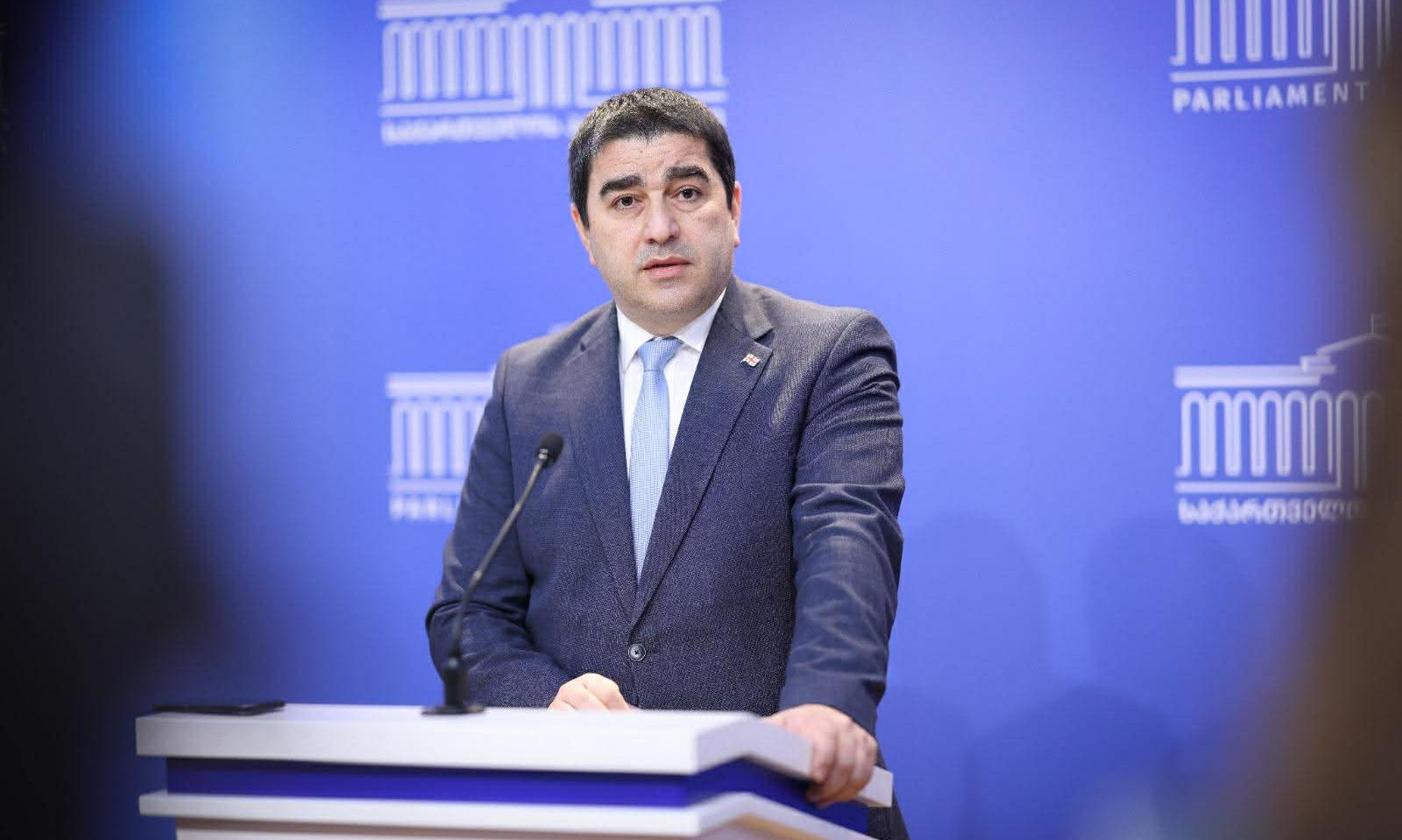
The context is that only a minority of OSCE participating States—24 out of 57, precisely those countries that stand out for their hostile policy toward Georgia—initiated this process. It is an absolutely extralegal document with the sole purpose of creating information noise—this is how Parliament Speaker Shalva Papuashvili assessed the conclusion of the “Moscow Mechanism.”
In addition, according to Papuashvili, one of the recommendations in the conclusion is to withdraw the lawsuit filed with the Constitutional Court regarding the unconstitutionality of several parties—a recommendation supported by Ukraine and Moldova, which, according to the Parliament Speaker, have banned 22 parties in Ukraine and 3 in Moldova in recent years.
“One of the recommendations is that those members of the Georgian Parliament who filed a lawsuit with the Constitutional Court regarding the unconstitutionality of several parties should withdraw that lawsuit. This recommendation was supported by Ukraine, which has banned 22 parties in the last three years, and by Moldova, which banned three parties just three days before the elections. Now tell me, how seriously can we take this when Zelenskyy and Sandu—people who have banned parties in their own countries—are telling us to withdraw the lawsuit from the Constitutional Court? Let me remind you that in Ukraine the government banned the parties first and then there was a court decision, while in Moldova two days before the elections the electoral commission was forced to ban two parties they did not like. So when Zelenskyy and Sandu are lecturing us and teaching us about parties, I think we should point them to their own door. This also shows how hypocritical the entire process is, which was clearly coordinated,” Papuashvili stated.
According to him, the coordination of the issue is also indicated by the fact that the 100-page conclusion was prepared by an expert linked to the Polish government.
“It turned out that the person who came here for two days had no professional connection to Georgia or knowledge about Georgia, was here for two days, and then wrote a 100-page document—that’s what we are told. Of course, it is hardly believable that this one person was competent enough to write a 100-page document on everything from freedom of expression to higher education reform in just a few days. Then they sent us this draft, to which we responded last Tuesday with a 100-page reply containing remarks and comments, and on Thursday the document came out unchanged directly to the session—which shows that he had not even read the comments related to it. This raises suspicion on one hand that this is a document that is a compilation of the desires and intentions that the initiating countries had toward Georgia, and they used this expert to give it some form. On the other hand, it turned out that this person is connected to the Polish government, is a person trusted by the Polish government, is funded by the Polish government, was nominated last year by the Polish government for a position at the UN. He is a member of the board of a research center under the Polish Ministry of Foreign Affairs and has received scholarships from them. We know what policy the Polish government has toward the Georgian people. The context is that only a minority of OSCE participating States—24 out of 57, precisely those countries that stand out for their hostile policy toward Georgia—initiated this process. Poland was the main initiator and coordinator, which deliberately did not participate in the vote so that its expert could become the rapporteur. The entire document is slander; they themselves admitted that it is based on rumors. This document has only one purpose: to create information noise. It is an absolutely extralegal document. There are issues that are self-evident and no one—let alone the Polish government—needs to remind us of them. Release the prisoners—why is there no list? I had hoped that perhaps a list would be attached; after all, it says ‘release the prisoners, especially politicians.’ You know what interests me: should Aleko Elisashvili be released? Is there a terrorist on that list? As soon as one name appears and they name one name and surname, they will see that there is evidence of crime in relation to everyone. All of this is a big fraud,” Papuashvili stated.