Giorgi Tumasiani: The visit of the U.S. State Department representative confirms that Washington’s attention to the region and our country has not decreased - communication with Georgian Dream’ is reduced, but as a country, we remain on the U.S. agenda
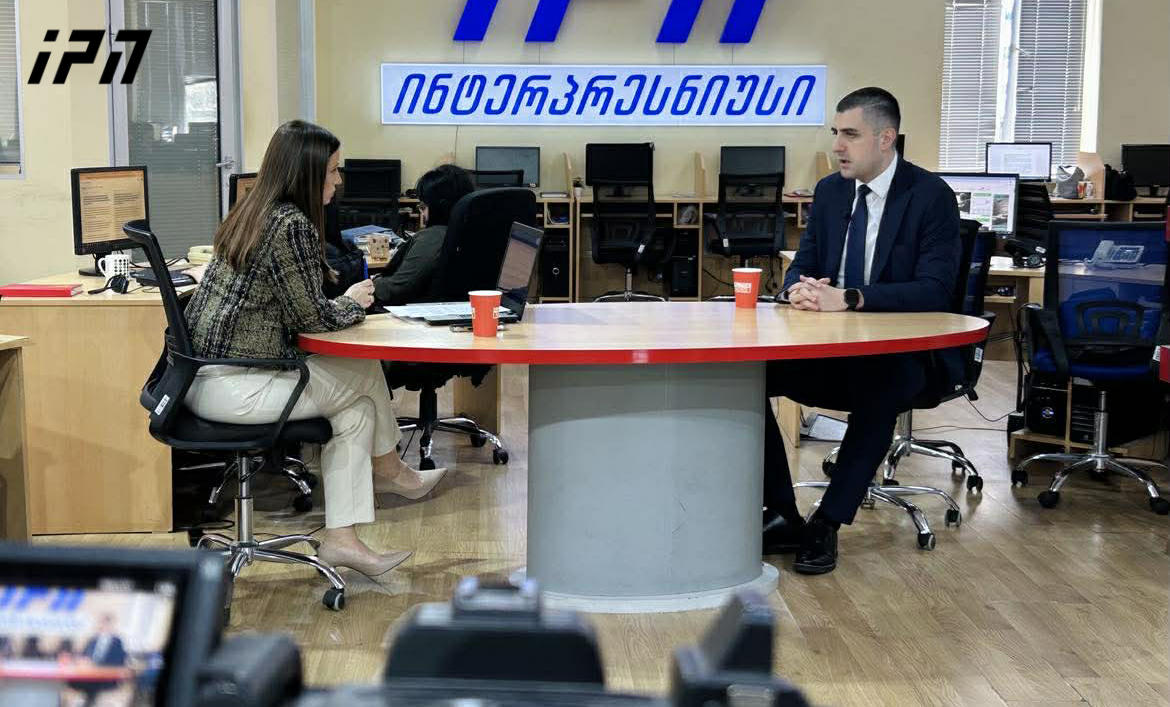
Speaking on the PalitraNews program Day’s Newsroom, Giorgi Tumasiani, a member of the initiative “For Georgia First”, commented on the upcoming hearing about Georgia at the Council of Europe Congress.
He said the report is both a warning sign of Georgia’s democratic backsliding and another step toward an isolationist foreign policy.
"The Council of Europe is a fundamental organization in Europe regarding human rights, and our country’s membership is, among other things, a first step toward European integration. It is unfortunate that today, as a result of the actions of ‘Georgian Dream,’ we are considered the most difficult country within this organization. This report, like several others, including the OSCE’s recent ‘Moscow Mechanism’ report, represents alarming steps: on one hand, toward democratic backsliding — which we call the entrenchment of authoritarianism and the targeted dismantling of democratic institutions in the country — and on the other hand, it is another step toward Georgia’s isolationist foreign policy.
It is clear that currently, the policy of ‘Georgian Dream’ is aimed at leaving us completely isolated, viewing the entire international system as hostile. For example, there is no sensitivity regarding Russia or Belarus, and leaving the Council of Europe has caused them no problems. On the contrary, we recall that Russia evaluated such actions quite positively. Today, we clearly see that ‘Georgian Dream’ wants to pursue a similar policy — total isolation — in which international findings, reports, and decisions are irrelevant to them; their decisions are based solely on retaining internal power and establishing an authoritarian regime, where political competition is limited and freedom of speech is restricted. Under authoritarianism, regime change or change of power is generally a difficult process worldwide — Belarus is an example. The danger is real. ‘Georgian Dream’ may satisfy its own interests by maintaining power, but in doing so, it makes Georgia extremely vulnerable, because without Western support, being left alone with Russia would make us not only under Russian influence but also vulnerable to other countries.
Georgia’s fate must be decided in Tbilisi and by our citizens. The problem today is that in the political spectrum and among much of society, there is an impression that this fate is decided not in Tbilisi but in Moscow. That is the root problem. Equating Russia and the West as if both are foreign powers is completely unacceptable. In the West are our partners and allies. Our goal is integration into the Euro-Atlantic space and the EU. This is obviously not their initiative. The policy of ‘Georgian Dream’ has been that foreign interference and financial influence are dangerous. For context, Bidzina Ivanishvili is considered a foreign influence, as he financed political activity in Georgia with money earned from Russia. Therefore, questions arise in this context. If they mean that only internal political processes should take place, then pressure on business and political parties eliminates the possibility of a competitive environment within the country. Their sources themselves, like Ivanishvili, were not internal, so it follows that they want to create an environment in Georgia where internal political platforms cannot emerge. Their decisions aim to block any political initiative, including labeling the opposition as radical, while they have practically eliminated the opposition spectrum and replaced it with their satellite parties. This is an attempt to create a fake opposition and dominate the political field. ‘Georgian Dream’ is leading the country toward authoritarianism, and the only solution must be the awakening of the Georgian people. Even the defeat of the Soviet Union did not rely on foreign support but on the struggle of the Georgian people."
Regarding the visit of the U.S. State Department representative to Georgia, Tumasiani noted that attempts by “Georgian Dream” to achieve a partial reset with Washington are evident.
"The attempts by ‘Georgian Dream’ to achieve a partial reset with Washington are clear and obvious. However, Washington’s attention to the region and our country has certainly not decreased. Communication with ‘Georgian Dream’ is reduced. I positively assess that, as a country, we remain on Washington’s agenda," Tumasiani said.