Teimuraz Papaskiri on the statement by Iran’s ambassador: Possibility of “Georgian Dream” influence and U.S. assistance implications
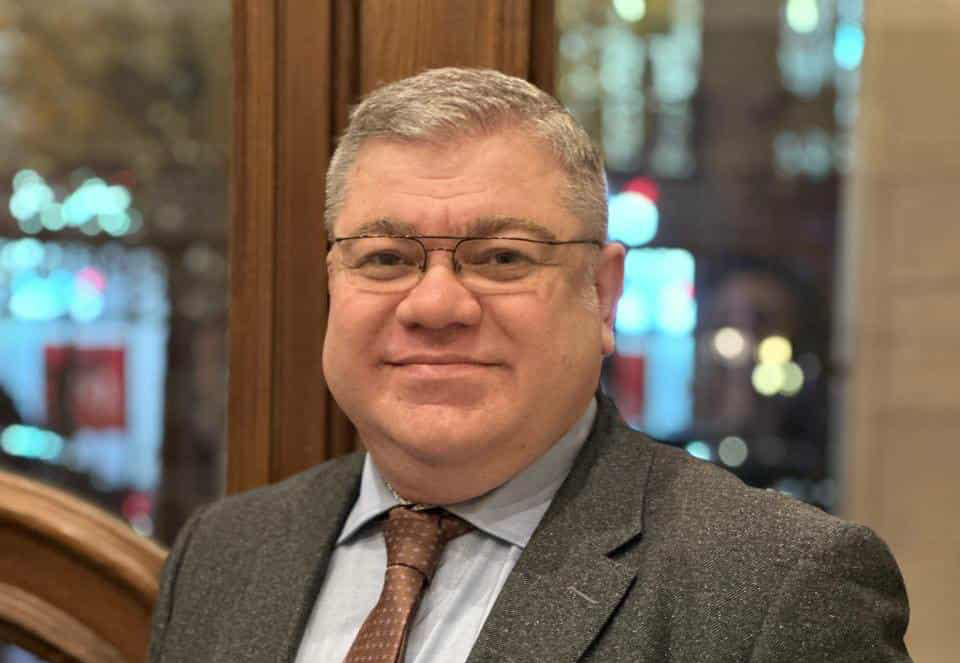
Teimuraz Papaskiri, representative of the “Coalition for Change,” commented on the statement made by Iran’s ambassador in Georgia, suggesting that he does not rule out the possibility that the statement was inspired by the ruling party, “Georgian Dream,” to cover itself and refuse U.S. assistance during a conflict with Iran.
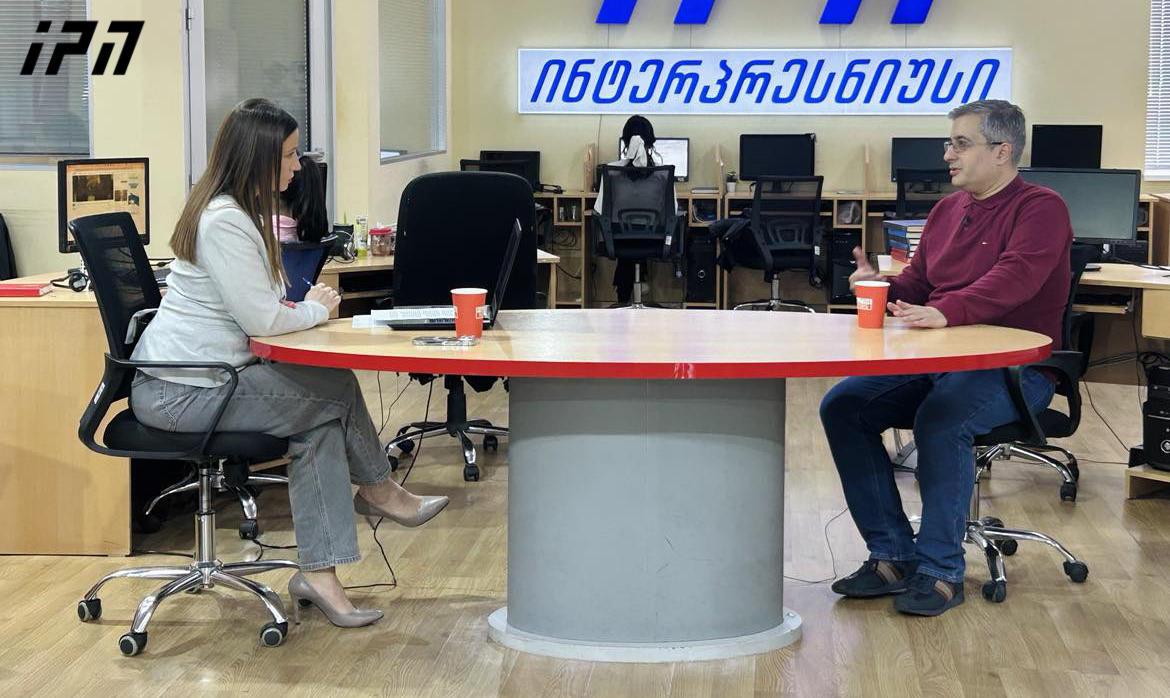
Speaking on the “Palitranews” program Day’s Newsroom, Papaskiri described the ambassador’s statement as non-diplomatic in tone, but clarified that this does not mean Iran is effectively declaring war on Georgia.
“Calling the ambassador’s statement a declaration of war is an exaggeration. It is true, however, that it was written in a rather undiplomatic manner. I do not rule out that it could have been inspired by ‘Georgian Dream’ to provide cover for refusing any form of U.S. assistance during a conflict with Iran,” Papaskiri said.
He added that even if the government summons the Iranian ambassador, the public will remain unaware of what is actually communicated. According to him, “Georgian Dream” is siding with Iran and Russia.
“Even if the Iranian ambassador is summoned, will we know what is said inside? In reality, there is a civilizational choice. The Georgian people made this choice long ago. Today, ‘Georgian Dream’ stands on the side of Iran and Russia. We see that these two countries are allies in every way. Iran supports Russia in the war with Ukraine, Russia supports Iran in its conflict with Israel. In such a situation, even if Georgia remains neutral, toward whom should this neutrality be directed? Logically, one should not be favorably neutral toward one’s enemy. Iran has been quite a significant partner for ‘Georgian Dream’ recently, with financial and somewhat illegal connections. Many questions arise. We know how many times Irakli Kobakhidze has visited Iran. This shows how aggressively ‘Georgian Dream’ tries to present itself as favorably disposed toward Iran,” Papaskiri stated.
He emphasized that Georgia will not be dragged into a war with Iran.
“‘Georgian Dream’ has positioned the country so that it has no normal allies left. In a global conflict like this, a side always has to be chosen. Today, the ruling elite has chosen Iran, Russia, and China. Perhaps they thought Western civilization is so weakened that it can do nothing. But no one asked Georgia to open a ‘second front’ in Ukraine. No one needs such a front,” Papaskiri said.
Papaskiri also commented on a recent phone call between U.S. Secretary of State and Prime Minister Irakli Kobakhidze, noting that the response apparently was not satisfactory:
“We do not know the exact content of the conversation, but it seems the response was not fully satisfactory. Otherwise, the Iranian ambassador’s statement would have been perceived differently, and ‘Georgian Dream’ would have reacted, not ignored it. The U.S. government remembers everyone who supports it and everyone who does not. Actions are taken accordingly,” he said.
He additionally discussed the opposition alliance’s planned “national mobilization campaign”, which includes protests in various Georgian cities and a large rally in Tbilisi on May 26. Papaskiri stated that these actions demonstrate a decline in support for “Georgian Dream”:
“This will not be a protest for the sake of protesting; it will involve new initiatives over two months to show that the protest momentum has not disappeared. Public support for ‘Georgian Dream’ has further declined,” he said.
Addressing claims that the opposition seeks unrest, Papaskiri stated that the opposition is fighting to preserve Georgia’s independence, which “Georgian Dream” is destroying.
“We do not plan a protest in the morning on May 26, so there is no risk of escalation. Whenever escalation occurs, it is the government’s fault—through harsh crackdowns, potential use of chemical agents, or excessive force. When a peaceful protest is dispersed violently, it is their responsibility, not the participants’,” Papaskiri said.
Finally, Papaskiri commented on a statement by the Russian intelligence service regarding the influence of Ecumenical Patriarch Bartholomew on the Georgian Orthodox Church. He stressed that foreign interference in the election of the Patriarch is unacceptable:
“The election of the Patriarch is the responsibility of the Holy Synod. There should be no external interference. We see that Russia is actively trying to promote a preferred candidate, which is a matter for all Georgians. If Russia supports a candidate, it is clear that this candidate will not be acceptable to the majority of the Georgian population. I believe the Synod members understand this well,” he said.