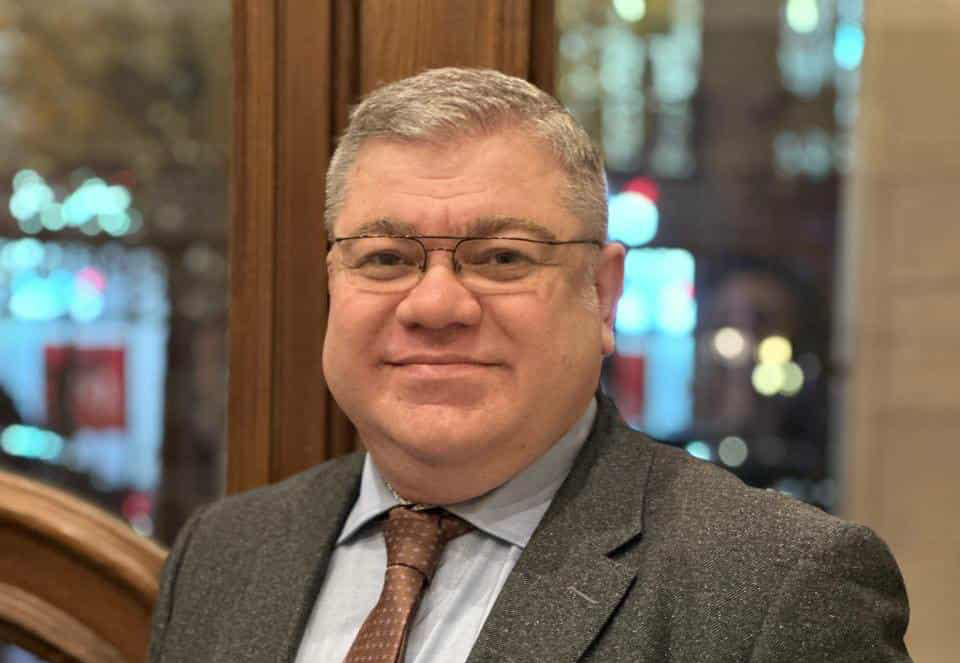
Giorgi Kacharava: The United States’ withdrawal from NATO would require the approval of the Senate and Congress, where I don’t think Trump would gain support. As for creating a new defense structure, they probably won’t go down that path either, as it is a very costly approach
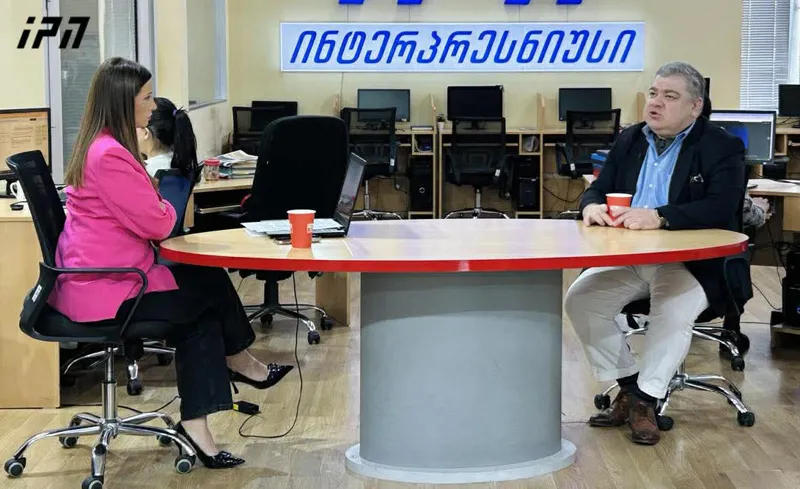
According to international relations and security expert Giorgi Kacharava, a statement made by the Iranian ambassador to Georgia regarding meetings held at the Ministry of Foreign Affairs on both March 31 and April 1 is threatening toward Georgia.
He also noted, in an appearance on “Palitranews” program “Day’s Newsroom,” that many circumstances confirm that the Iranian ambassador’s statement was directed specifically at Georgia.
“This was an absolutely undiplomatic gesture and statement. It was a direct threat toward the country. Why is this happening? There are several reasons. In my view, this is due to the general geopolitical situation in our region - not only in the South Caucasus, but also in neighboring areas. Accordingly, Iran perceives threats, including the growing role and influence of the United States in the region. This relates to Azerbaijan and its certain relations with the U.S., and to Armenia, which today has deepening relations with the U.S. It likely also relates to the call made on March 30 from Washington to Tbilisi, when Mr. Rubio spoke with Mr. Kobakhidze. The only thing we know for certain from the State Department representatives is that the conversation concerned security issues in the region and in Georgia. The security issues that interest the U.S. to the extent that Mr. Rubio would call Mr. Kobakhidze are the war ongoing in Iran and everything connected to it.
[Regarding statements from the Georgian Dream party that the Iranian ambassador did not mean Georgia] If the statement were not directed at Georgia and instead at the world and the international community, then it would have been made by the Iranian Ministry of Foreign Affairs at a higher level. When a statement is made by an ambassador, it concerns the country where that ambassador is accredited. Therefore, the ambassador’s statement primarily refers to the territory where he has jurisdiction - in other words, Georgia,” said Giorgi Kacharava.
As for what position Georgia should take in this situation, Kacharava explained that the Georgian government should not align with Russia and Iran.
“Unfortunately, we are more vulnerable than others in this region. Today we are in a very difficult situation as a country and as a government. We will have to balance between two major countries - Russia and Iran - which are weakened due to their geopolitical situation, wars, and confrontation with the West. In this balancing act, we as a country have very limited room to maneuver. We must approach the situation pragmatically. Pragmatism should be based on national interests. We cannot be a pro-Russian country because, over the past 30 years, this has been the major obstacle to Georgia’s independence, sovereignty, and even to what is happening in the occupied territories. For this reason, we cannot be pro-Russian. We also cannot be pro-Iran because, in terms of values, Georgia cannot share anything with the current Iranian regime. That leaves the West and the United States, which is exactly the direction most of Georgia’s population supports,” Kacharava stated.
He added that the current situation should serve as a lesson for Georgia to strengthen its own security.
“We must maintain balance. Our so-called red lines must be clearly defined - what we will never cross. That is the first step. The second step is that this should be a serious lesson for us, and we must take care of our own security seriously and institutionally. This means strengthening the army and intelligence services in response to international challenges,” he said.
Regarding developments in the Middle East and statements by Donald Trump about the U.S. potentially leaving NATO, Kacharava believes that a U.S. withdrawal from NATO is legally and practically impossible.
“Legally, the United States would need the approval of the Senate and Congress to withdraw from the alliance, and I do not think President Trump would gain such support - especially in an election period. So this is impossible. De facto, however, these ties could slow down and transform. As for creating a new defense structure, I do not think the current U.S. administration would pursue that, as it is a long-term and very costly process. It is possible that the U.S. will cooperate more closely in defense with certain countries than with others, but which countries those will be - if not Europe - is a major question mark,” he noted.
According to him, such countries could include Australia, Japan, South Korea, and even Saudi Arabia.