GYLA challenges in the Constitutional Court an Electoral Code regulation that prohibits opening polling stations in Georgian embassies and consulates abroad
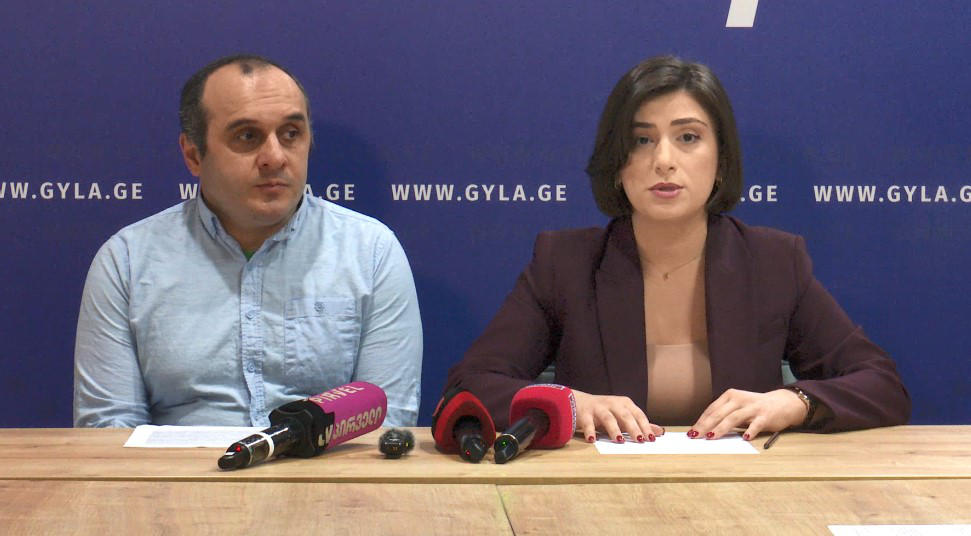
The Georgian Young Lawyers’ Association (GYLA) has filed a lawsuit in the Constitutional Court on behalf of Georgian emigrants living in France, GYLA Chairperson Tamar Oniani stated.
As she explained, the complaint challenges a new regulation in the Electoral Code that prohibits opening polling stations in Georgian embassies and consulates abroad.
“According to GYLA’s assessment, this prohibition contradicts the universal suffrage guaranteed by Article 24, Paragraph 1 of the Constitution of Georgia. The new regulation does not serve any legitimate constitutional aim. In practice, it creates artificial financial and social barriers—such as high travel costs, forced absence from work, and related pressures—which push hundreds of thousands of Georgian emigrants to effectively give up their right to participate in elections. It should be noted that the income earned by emigrants abroad is often critically important both for them and for their family members.
The practice of the Constitutional Court considers restrictions on the voting rights of Georgian citizens living abroad permissible only when the state genuinely lacks the resources to open polling stations in every city. At the same time, decades of experience with parliamentary elections have shown that, since the 1990s, polling stations have consistently been opened in Georgian embassies and consulates in other countries, and the state has always had both the material and human resources to ensure the free expression of voters’ will at these polling stations.
These premises fall under Georgian jurisdiction, not that of the host country, which means that Georgia’s electoral administration has full capacity to organize elections in a way that guarantees the free expression of voters’ will without interference from the host state. Despite this, ‘Georgian Dream’ justifies the new regulation as a means to prevent interference by foreign states in Georgian elections.
If the Constitutional Court declares the disputed norm unconstitutional, it will result in the reopening of polling stations in Georgian embassies and diplomatic missions abroad during elections. Thus, in terms of protecting electoral rights, the Constitutional Court remains the main domestic mechanism through which citizens can defend their constitutional rights.
At the same time, it is important to note that, especially in recent years, delays in reviewing cases of significant legal, social, and political importance have seriously undermined the effectiveness of the Constitutional Court as a mechanism for protecting human rights. Delays in cases that have a substantial impact on human rights cause irreparable harm to the very rights these lawsuits aim to protect,” said Tamar Oniani.
According to her, GYLA will not limit itself to this lawsuit and plans in the near future to continue strategic litigation on universal suffrage on behalf of another group of emigrants.
“Despite the fact that the complaint has been deemed admissible, for the second year now the Constitutional Court has not scheduled a substantive hearing regarding the so-called ‘Russian law.’ GYLA will not stop with this case and plans to continue strategic litigation on universal suffrage on behalf of another group of emigrants in the near future,” Tamar Oniani stated.