Lasha Beridze: If I had wanted to seize the Presidential Palace, I would not have started storming the building together with a world-famous opera singer over 70 years old
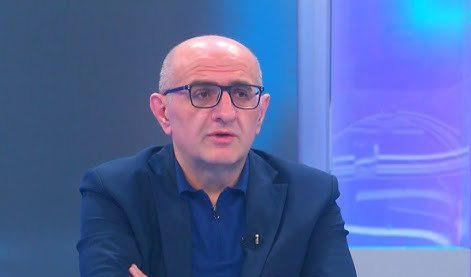
“If I had wanted to seize the Presidential Palace, I would not have started storming the building together with a world-famous opera singer over 70 years old,” said Lasha Beridze, one of the defendants in the case concerning the events of October 4, during a court hearing.
He gave testimony as a witness for the defense.
Beridze spoke about his profession, his life path, and the events of October 4.
“I am a soldier, not a politician, so I will focus on legal issues and allow you, as the judge, to deliver a legal verdict...
I am not a socially active person, and even before the adoption of the ‘Russian law’ I was not involved in protests. Even when I attended rallies, I used to feel like I was on the other side. I have attended a few rallies, but before October 4 I had never even been on a stage.
I have lived my life in such a way that I probably respect no one more than those who wear uniforms. The Georgian police have always been a source of pride for me, especially in how they have modernized... As for the difference — on April 9, the militia acted much more humanely and lawfully than parts of today’s police. At no rally did I feel hatred toward the police, but now I do, seeing masked officers beating people the age of their own children and attacking them...
Maybe I didn’t like that gas was used, but I understood that they were conducting crowd control operations. My objection was when people were being beaten and the police were just watching.
I truly do not understand what the prosecution means by organizing group violence. I went where people were gathering; I personally knew Paata Burchuladze. My only fear, based on previous protests, was that ‘titushky’ brought in by the police would start attacking demonstrators. So I saw my role as helping the rally.
You asked whether I was an organizer — I was an organizer of the People’s Assembly. I honestly believed the sound system and equipment belonged to the municipality. Before the proceedings I was cursing it, and only in court did I learn that it actually belonged to someone else.
I stood together with Mr. Paata Burchuladze. Before reaching the palace we had to overcome many obstacles. When we arrived, the atmosphere was quite aggressive. The fence was most likely already broken down; I did not give it much importance at the time. As soon as they saw Paata Burchuladze, an attack began on him. Everything happened within minutes. I had a natural instinct — I hope Paata Burchuladze will not be offended — he is an elderly man, and I thought he might get hurt. There were other elderly people too, including a well-known doctor.
I was looking for Paata Burchuladze; gas was moving in his direction. I went to move him away, and I stepped into the Presidential Palace yard. My motivation was only to help Paata Burchuladze — nothing else. I probably spent about a minute telling Mr. Paata to come out, and we left the palace yard.
He entered the palace yard — Your Honor, whatever decision you make is up to you, but no witness has testified against me saying that I organized or led any process. If I ever find myself in such a situation again — the same situation as then — if someone needs my help, I would do the same again...
At that moment I realized it was a provocation staged by the authorities, although I had no proof of it. I returned to Rustaveli Avenue, and at some point I also saw Murtaz Zodelava. To be honest, I didn’t know what I should do or what the right course of action was. I knew I would be arrested.
It became very clear that the destruction of the fence was artificially organized. Even the chief investigator does not know who broke the fence. If I had wanted to take the building, I would not have started storming it together with a world-famous opera singer over 70 years old.
That one man is guilty — the one who gives orders. We all know it, but the time will come — no matter how long I remain in captivity, I am not afraid of it — they will find the man who broke the fence and gave the order, and everyone will be punished.
At the time, police officers asked me things, and I didn’t pay attention: ‘Mr. Lasha, are you injured, are you feeling unwell?’ They asked me several times. I thought they were mocking me. We are not those kind of police officers who say we feel pain. When police officers came here, they all had the same message: ‘I felt pain.’ If a police officer feels pain from a protester’s swing, I do not respect such officers. I respect those who arrested me,” Beridze said.
According to him, he met Burchuladze and Zodelava at rallies.
“I did not know Irakli Nadiradze before October 4. I knew Irakli Shaishmelashvili from my previous life, but I have had no contact with him for about 20 years. I have never even sat at the same table with Paata Manjgaladze,” he said.
For the record, Murtaz Zodelava, Paata Burchuladze, and Irakli Nadiradze are charged under Article 19-222(2)(a) of the Criminal Code of Georgia, which refers to attempted seizure and blocking of strategic and particularly important facilities committed by a group. They are also charged under Article 225(1), which concerns organizing and leading group violence, and under Article 317, which refers to public calls for the violent overthrow of the constitutional order and state power, carrying a penalty of up to 9 years in prison.
Irakli Shaishmelashvili is charged under Article 317, which refers to public calls for the violent overthrow of the constitutional order or state power, carrying a penalty of up to 3 years in prison.
Lasha Beridze is charged under Article 19-222(2)(a), concerning attempted group seizure and blocking of strategic facilities, and also under Article 225(1), concerning organizing and leading group violence.
Irakli Chkvirkia, Nika Gventsadze, and Tornike Mkhedlishvili are charged under Article 19-222(2)(a) for attempted group seizure and blocking of strategic facilities, and also under Article 225(1) for organizing and leading group violence, carrying a penalty of 6 to 9 years in prison.
Guri Zhvania is charged under Article 225(2), which refers to participation in group violence.
Paata Manjgaladze is charged under Article 225(1), which refers to organizing group violence, carrying a penalty of 6 to 9 years in prison.