Office of Council of Europe Commissioner for Human Rights releases information on Michael O'Flaherty’s visit to Georgia
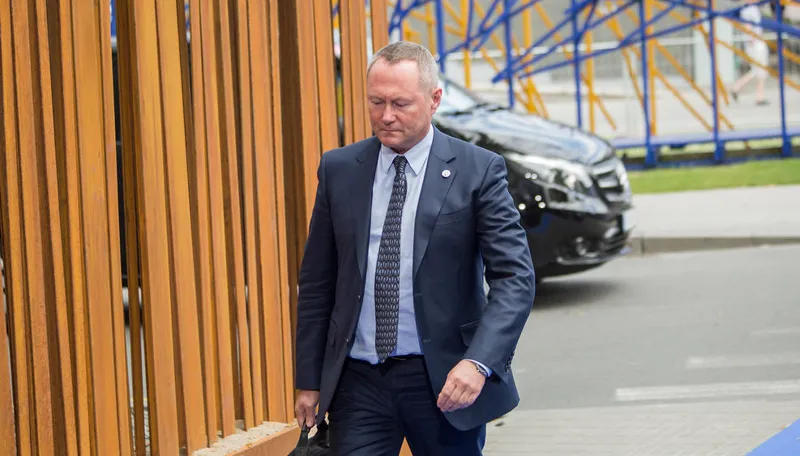
The Council of Europe Commissioner for Human Rights, Michael O'Flaherty, calls on the Georgian authorities to ensure accountability in law enforcement, repeal restrictive laws on "foreign influence" and maintain support for the rights of internally displaced persons.
The Office of the Council of Europe Commissioner for Human Rights issues a statement following Commissioner Michael O'Flaherty's visit to Georgia on 14-15 April.
“The Commissioner’s visit to Georgia focused on the continued lack of accountability of state agents for the violent dispersal of protests in 2024 and early 2025, the increasing restrictions on the rights to freedom of expression, peaceful assembly and association and on the human rights of persons in and displaced from the occupied territories of Abkhazia and Tskhinvali region/South Ossetia. He expresses his gratitude to the Georgian authorities for their cooperation and their availability at a high level. He commends the resilience of civil society, human rights defenders and journalists who continue to work within an increasingly restrictive environment,” the statement said.
According to the statement, during his visit to Georgia, the Council of Europe Commissioner for Human Rights discussed issues of accountability and rule of law.
“In his meetings, he reiterated his call for an independent and thorough inquiry into the use of water cannons containing chemical substances against protesters. He drew the authorities’ attention to the 2020 UN Human Rights Guidance on Less-Lethal Weapons in Law Enforcement and encourages them to integrate these in their guidance to law enforcement officers,” reads the statement.
The statement also spoke about the restrictions on democratic freedoms.
“Regarding increasingly restrictive legislation affecting the rights to freedom of expression, peaceful assembly and association, the Commissioner notes the cumulative impact of these laws and observes that the authorities have since adopted even more restrictive measures. New amendments to the Law on Assemblies and Demonstrations require that prior notification is given to the police if a demonstration is held where vehicles or persons are moving, empower police to change the venue or time of the demonstration if it threatens the unhindered movement of vehicles or persons, and even prohibit protesters from ‘blocking’ the pavement.
Changes to the Administrative Offences Code extend the 60-day detention periods introduced in February 2025 to other offences, such as wearing masks, blocking roads or erecting temporary structures during demonstrations, even when these offences are committed for the first time. New amendments to the Criminal Code introduce criminal sanctions liability of up to two years’ imprisonment for repeated protest-related administrative offences. The Commissioner expresses concern that these amendments significantly limit the right to freedom of peaceful assembly and seem to be incompatible with the principles of necessity and proportionality enshrined in the Convention," the Commissioner's office states.