Maka Bochorishvili: Speaking to Georgia in the language of blackmail is unacceptable; dialogue with the European Union must return to a normal framework - we have never refused dialogue and need no preconditions to talk to the EU
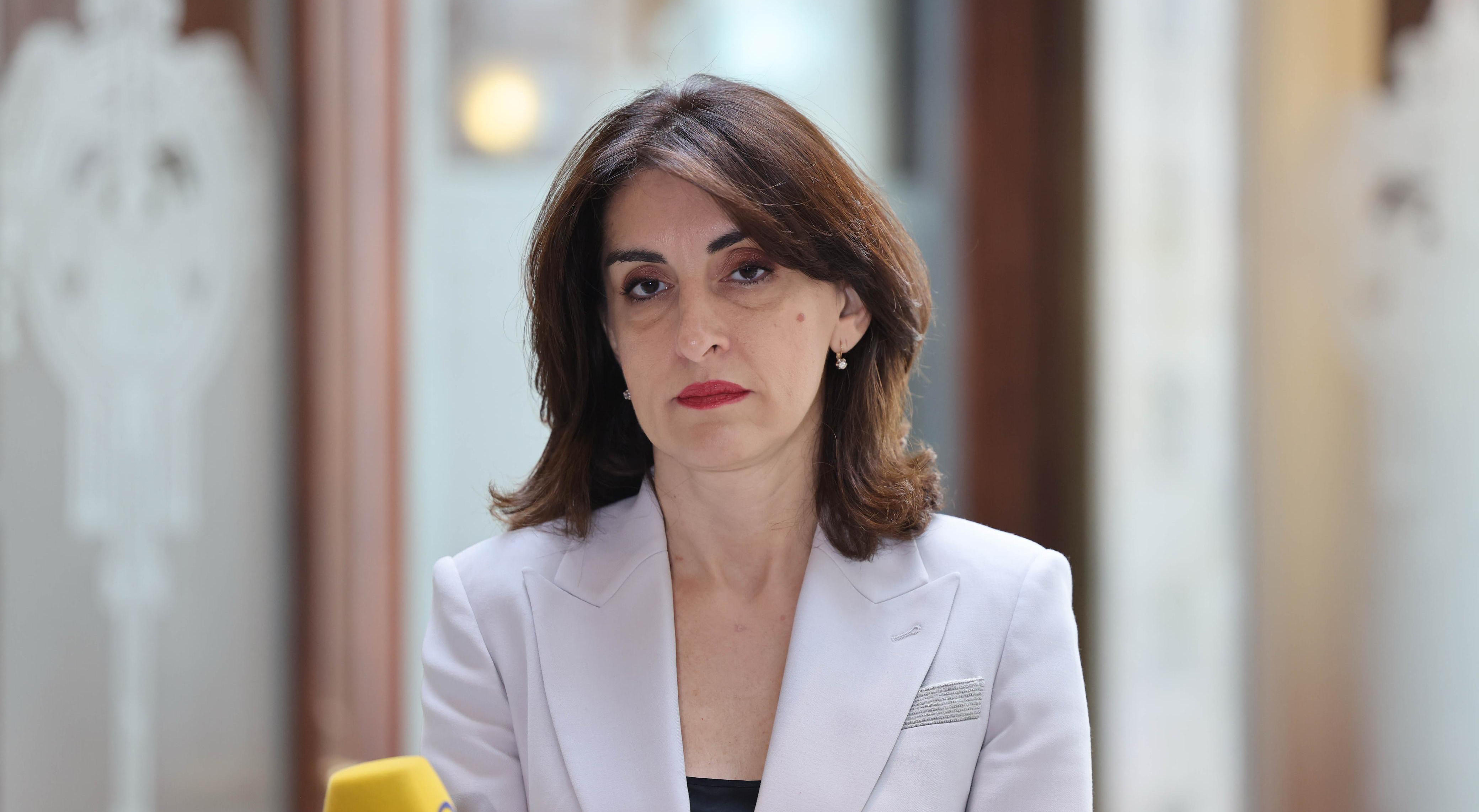
“Speaking to Georgia in the language of blackmail is unacceptable - dialogue between the European Union and Georgia must be restored to a normal framework,” said Georgia’s Vice Prime Minister and Minister of Foreign Affairs, Maka Bochorishvili, while discussing EU-Georgia relations, political developments in Hungary, and the issue of possible EU sanctions.
According to the minister, it is contradictory to talk about restoring dialogue while simultaneously using pressure mechanisms against Georgia.
“On the one hand, we talk about how dialogue between the EU and Georgia can be restored, and on the other hand, how mechanisms of blackmail can be used against Georgia. If we are talking about restoring dialogue, then we should not be discussing how to blackmail Georgia or its government,” she noted.
Bochorishvili stated that amid political changes in Hungary, attempts at pressure are indeed visible, although their implementation is limited.
“You may recall the Kulevi issue recently. We have seen many unfair steps toward Georgia. Nothing should be ruled out entirely, but today it is very difficult to find the necessary consensus among EU member states to advance such decisions,” she said.
The minister explained that despite the intentions of certain actors, a significant number of EU member states recognize the unfairness of current approaches toward Georgia.
She emphasized that Georgia’s priority is to normalize relations with the EU, which should happen without pressure or blackmail.
“It is better to focus on how EU-Georgia relations can return to a normal framework. This cannot be achieved through the language of blackmail,” she added.
Bochorishvili also pointed to inconsistencies between the EU’s declared principles and its rhetoric.
“I have in front of me a statement by the EU mission: ‘The European Union does not force anyone to become a member of its family.’ However, speaking in such threatening tones paints a different reality and creates a different perception in our society and political circles.
We have nothing to force - we can sit down voluntarily and discuss what our relationship needs.
Our position is very clear - we have not suspended dialogue, nor have we taken any steps that would justify such a decision by the EU. We have never refused dialogue. This was a decision made by the European Union. We clearly remember June 2024 - just a few months before the elections - when the EU ambassador explained the European Council’s decision by saying that the EU had suspended dialogue with Georgia and that the EU integration process had been halted. Later, the Prime Minister of Georgia made a statement in which you will not find a single sentence suggesting that we suspended the EU integration process. Yet that statement was interpreted in this way, and to this day speculation continues that we halted the integration process. In reality, even before that statement, the EU had already published its conclusions, which were interpreted by the EU ambassador as a suspension of dialogue and the integration process. Therefore, this dialogue and these relations have been suspended by EU bureaucracy,” Bochorishvili said.
Speaking on the program “Day’s Topic,” she also addressed her meeting with the EU Ambassador, Paweł Herczyński, and his remarks prior to the meeting.
“Steps and statements coming from Brussels, including the participation of the EU ambassador in certain events, have raised legitimate concerns both among Georgia’s political circles and the broader public. We are a society that clearly remembers where we come from and where we are going. Therefore, such statements were perceived as direct threats, and the concerns expressed by the Georgian government were entirely justified,” she said.
According to the minister, accusations of anti-European rhetoric are cynical when Georgia’s justified responses are labeled as such.
“Today we often hear accusations that Georgia or its political elite uses anti-European rhetoric. This argument is frequently used when discussing factors that hinder dialogue between Georgia and the EU. Such accusations are cynical when we see concrete actions taken against our country’s interests by certain actors, including key representatives of Brussels’ bureaucracy who themselves participate in such activities. Then our justified response is framed as anti-European rhetoric,” Bochorishvili stated.