Joint statement by co-chairs of Media Freedom Coalition - United Kingdom and Finland, supported by 14 other countries – “We are seeing troubling trends in Georgia“
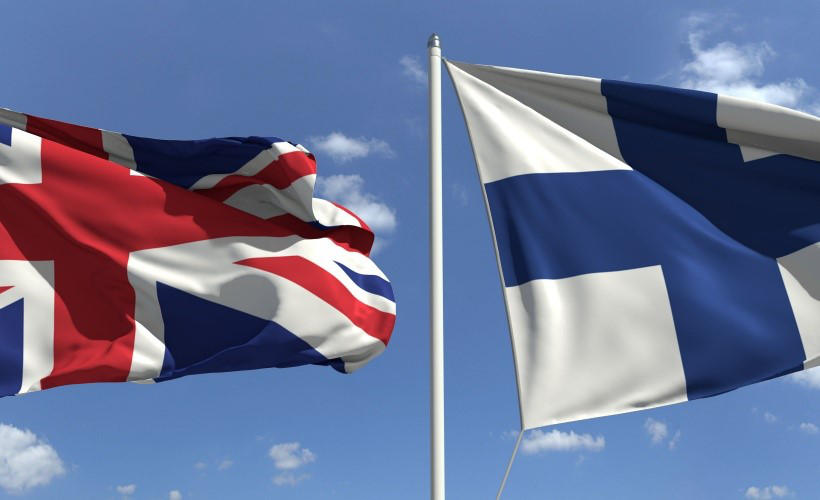
On the occasion of World Press Freedom Day, the co-chairs of the Media Freedom Coalition, the United Kingdom and Finland, have issued a joint statement.
The statement is supported by the following Media Freedom Coalition member states: Austria; Belgium; Denmark; Estonia; Germany; Iceland; Ireland; Latvia; Lithuania; Luxembourg; the Netherlands; Norway; Poland; Sweden.
The statement discusses the threats to media freedom and states that "we see troubling trends in Georgia."
“World Press Freedom Day, marked each year on 3 May, is a moment to celebrate journalism – but also to confront challenges. This year’s theme, “Shaping a Future at Peace,” could not be more relevant for Georgia. At a time when international peace feels fragile and democracy is under strain, we are proud to stand with those journalists who continue to speak truth to power, often at great personal risk.
A free, independent and pluralistic media is not a luxury. It is one of the foundations of peace, democracy and security. This is why the Media Freedom Coalition (MFC) exists. Co‑chaired by the United Kingdom and Finland, and bringing together 51 countries across six continents, the MFC works to defend media freedom and improve the safety of journalists worldwide. MFC member states work closely with journalists, civil society, legal experts and international organisations to strengthen legal protections, challenge impunity for crimes against journalists, and support coordinated international action.
This matters more than ever because today’s threats to media freedom are not limited to censorship alone. In an era of hybrid threats, information itself has become a battleground. Disinformation campaigns are often designed to exploit open societies, using the language and appearance of free media to confuse, divide, and distort democratic debate. Addressing these tactics is not an attack on free expression; it is a necessary step to defend it. By upholding basic standards of honesty and transparency, we help ensure that freedom of the press strengthens democracy rather than being weaponised against it.
Building societal resilience through media and digital literacy is essential. Finland, which has ranked first in the Media Literacy Index since 2017, shows that a cross‑sector, lifelong approach to media education can help citizens navigate complex information environments with confidence. Efforts to challenge disinformation are not about controlling opinion or limiting criticism; they are about protecting the integrity of the public information space. Without that distinction, deliberate falsehoods and covert influence can masquerade as journalism, undermining trust in all media and crowding out genuine reporting in the public interest.
In Georgia we see troubling trends. According to Reporters Without Borders (RSF), Georgia’s press freedom ranking has fallen dramatically, dropping from 77th place in 2022 to 135th in 2026 – one of the steepest declines. RSF categorises Georgia’s media environment as “difficult,” citing official interference, violence against journalists, and restrictive legislation that is shrinking the space for free expression. There are at least 50 journalists documented injured, beaten, detained or obstructed during demonstrations. These attacks are unacceptable. Journalists must be free to investigate, to report, and to question those in power without fear.
In the Moscow Mechanism report of the OSCE, the Sole Rapporteur highlights a pattern of violence during protests in Tbilisi and other Georgian cities during 2024-2025 protests, including against journalists.
In his recent report the Council of Europe Human Rights Commissioner notes the lack of accountability for allegations of unlawful arrests and excessive use of force against protesters and journalists during protest in 2024-2025, as well as increasingly restrictive legislation affecting the rights to freedom of expression, peaceful assembly, and association.
The case of Mzia Amaghlobeli powerfully symbolises what is at stake. Her arrest, treatment and imprisonment following protests in 2025 were condemned internationally as unjust and politically motivated. We call again for her release. Aim of imprisoning a journalist like Mzia Amaghlobeli is to intimidate an entire profession.
Freedom of expression and freedom of the media are enshrined in Article 19 of the Universal Declaration of Human Rights, which protects the right to think, speak, listen and write freely. These freedoms are essential foundations of any democratic society. Without them, citizens cannot make informed decisions, hold their governments to account, or debate the future of their country openly and safely.
On this World Press Freedom Day, we reaffirm our commitment to advocate for safety for journalists everywhere”, reads the statement.