Ekaterine Guntsadze: We are talking about a network connection that has never existed before, the “energy Middle Corridor” is the only safe alternative to traditional North–South routes
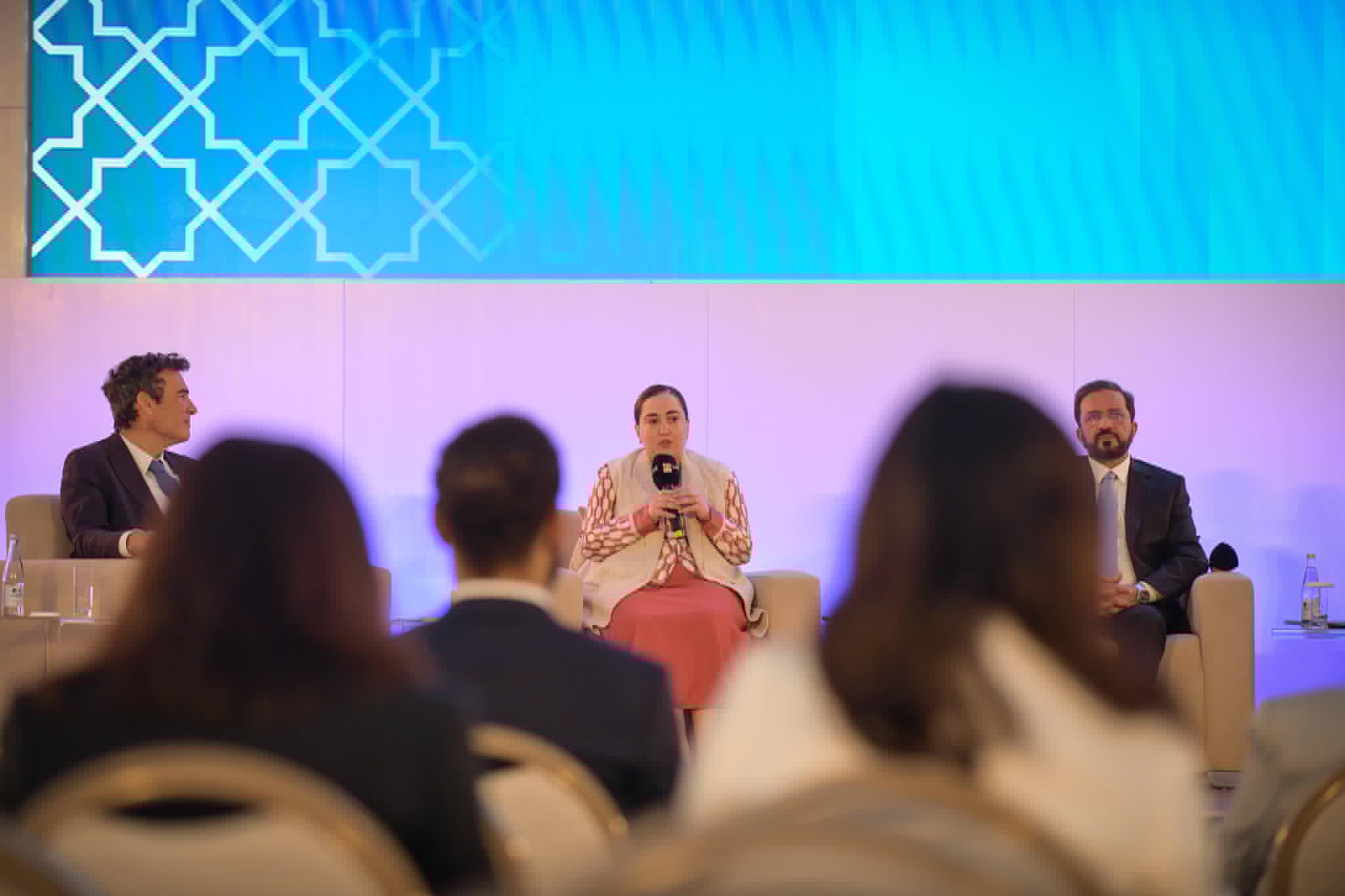
“We're talking about grid connectivity that has never existed before through submarine cables across the Caspian Sea and the Black Sea, where we are literally creating an energy middle corridor”, - the Deputy Minister of Finance, Ekaterine Guntsadze, said at the 59th Annual Meeting of the Asian Development Bank (ADB), during a panel discussion organized in partnership with the Financial Times and ADB, where the idea of a “super grid” was discussed.
The initiative envisions the creation of a pan-Asian energy “super grid,” which implies the interconnection of regional electricity systems and their integration with the European energy system.
As the “Interpressnews” correspondent reports from the meetings taking place in Samarkand, during the panel discussion the Deputy Minister emphasized that Georgia, as a link between Europe and Asia, can play an important role in the project. In this context, she highlighted the importance of the “Black Sea submarine cable” project.
“The current situation only confirms that more investment should be made in such types of projects. In many initiatives, supply and demand determine prices, and this is the most efficient mechanism; however, in the energy sector, energy security and energy independence are equally important factors, and they come at a relatively high ‘cost’,” - noted Ekaterine Guntsadze.
According to Deputy Minister of Finance, compared to traditional North–South routes, the “energy Middle Corridor” could become a secure alternative for energy supply.
“We're talking about grid connectivity that has never existed before through submarine cables across the Caspian Sea and the Black Sea, where we are literally creating an energy middle corridor. The Middle Corridor has been widely discussed as a road and rail connectivity route, but we are now actually discussing a new route, which is energy connectivity. Whether you call it the old Silk Road, the current Middle Corridor, or use the correct ADB terminology such as the Trans-Caspian route, this is something that has proven to be, at this point, as we speak, the only safe alternative to the very traditional north-south routes,” said Ekaterine Guntsadze.
The Asian Development Bank’s annual meetings are being hosted by Samarkand, Uzbekistan, from May 3 to 6. The main theme of this year’s meetings is: “Crossroads of Progress: Advancing the Region’s Connected Future.”
An InterPressNews reporter is on site and will cover the main issues related to the summit.