Tengiz Sharmanashvili: We are ready for more substantial relations with the United States - until now, the partnership lacked intensive practical expression, but discussions have begun on mutual interests as well
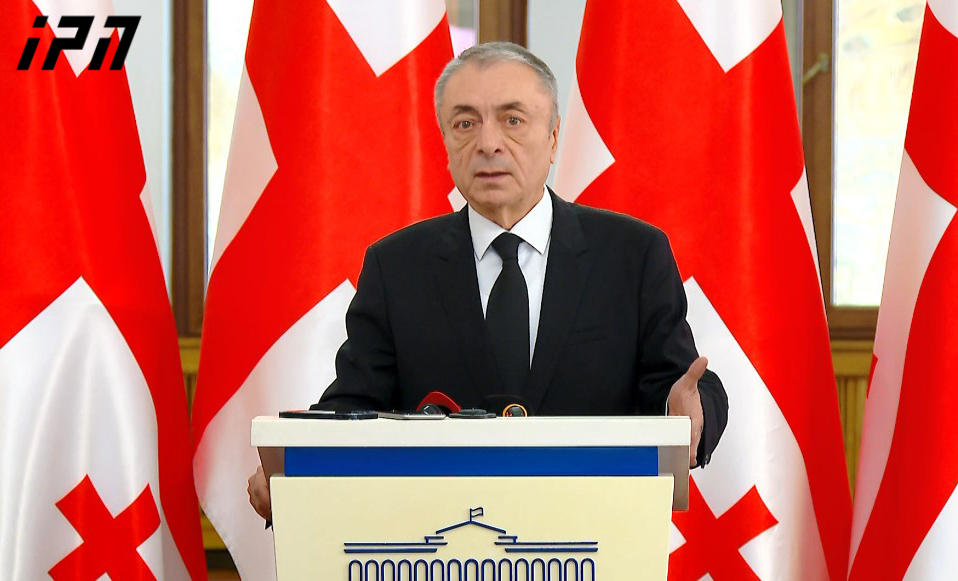
The Georgian side has long been saying that we are ready to take steps toward a genuine strategic partnership. We are prepared to move toward more substantial relations than we have had until now. Until now, there has been a partnership that was, to a greater or lesser extent, only on paper and never had intensive practical expression at any stage, said Georgian Dream MP Tengiz Sharmanashvili while commenting on a statement by the U.S. Embassy.
According to him, if there were no potential for resetting relations with the United States, Washington would not have recently intensified its engagement with Georgia.
“If that potential did not exist, the United States would not have started engaging so actively in these relations in recent months. It all began with our President’s initial meeting with the Secretary of State and the Vice President at an event. Subsequently, Marco Rubio’s phone call with the Prime Minister contributed significantly to the process. Further steps followed, including the announcement that the United States would establish a special working group to review all these issues in detail. You can already see the first results—the statement has been made and they have shown us their vision.
The opportunity lies in the following: the Georgian side has long been saying that we are ready to take steps toward a genuine strategic partnership. We are ready for more substantial relations than we have had until now. Until now, there was a partnership that existed more or less on paper and never had intensive practical expression at any stage. There was some political support and so on, but there was no real, tangible cooperation, even in the economic sphere.
Now discussions have begun in these areas as well, including investments and the consideration of mutual interests, and this cannot fail to generate positive feelings among all of us,” Sharmanashvili said.
Responding to a question regarding the part of the U.S. Embassy’s statement that referred to the opposition, Sharmanashvili said he was pleased that the U.S. administration had officially and directly delivered its message to the “local radicals,” but he believes the message was also intended for those “who encouraged these people to take this step [the boycott].”
“I have pointed many times toward the parliamentary chamber in front of you and said that 61 people should be sitting there. Now the opposition itself has begun talking about whether it was a mistake not to be sitting there as 61 members. Haven’t we been telling them this all along? They made that mistake from the very beginning when they chose a revolutionary path instead of preparing to change the government through elections. In politics, changing a government through elections is a gradual process, and that is the path they should have taken. That is the essence of a civilized country, and the Constitution requires it. Instead, the opposite happened. Not only did elected representatives refuse to take their seats and ignored their voters in the Georgian Parliament, but from the outset they were determined to claim that the government was illegitimate regardless of the outcome and to pursue a revolutionary course—and that is exactly what they did. They actively promoted this approach.
After that, the overwhelming majority of the radicals decided not only to refuse to take their seats in local councils after the local elections but not to participate in the elections at all. Do you think these attitudes and decisions were formed in Tbilisi? I can tell you they were not. Before the October 4 rally, a representative of the European Union, one of its spokespersons, publicly stated that they supported the October 4 rally aimed at overthrowing the government. Instead of encouraging them to participate in elections and pursue constitutional means of changing the political situation, they were facilitating these actions in advance.
So this mistake was not made here; it was made by those from whom these instructions originated. Now they find it difficult to admit it. What the United States is telling our opposition is also directed at those people, so that they understand they led these people into making this mistake. There is nothing new here, and I am pleased that the U.S. administration said this officially and openly to those it intended to address. It was directed straight at the local radicals, but I am convinced it was also meant for those who encouraged them to take this step,” Sharmanashvili said.
For reference, yesterday the U.S. Embassy in Georgia released information regarding statements made following meetings held by a U.S. State Department delegation with the Georgian government and leaders of opposition parties during its May 25–28 visit.
According to the embassy’s statement, delegation members said after meeting with the Georgian government that they had conveyed the Trump administration’s readiness to pursue a constructive, future-oriented relationship with Georgia.
According to the information released, the United States looks forward to working with the Georgian government on a partnership that will bring tangible benefits to both countries and fully realize the potential of bilateral relations.
As for the State Department delegation’s views following its meetings with leaders of Georgian opposition parties, delegation members stated that political stability and genuine opposition representation are among the factors that make Georgia a reliable partner for American investment, security cooperation, and a long-term strategic partnership.