Sergey Lavrov - There was a completely obvious and open attempt by the West to distance Georgia from Russia
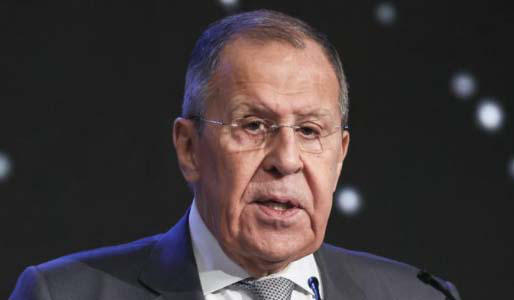
The West has never hidden that it wants to deprive our neighbors of the benefits they have gained from cooperation with Russia and force them to pay the price for the provocation that the West has always been preparing and is still preparing - namely, to weaken Russia and, at best, to disintegrate it, - Russian Foreign Minister Sergey Lavrov said in an interview with Russian media.
In this context, he spoke about Ukraine and noted that Europe will not support any settlement of the conflict that would in any way remove the "Nazi regime of Zelensky" from its control, or whoever might replace it in the future.
“And Georgia - there was the same attempt, a completely obvious and open attempt to distance Georgia from Russia. Condoleezza Rice (then US Secretary of State) arrived there, as well as other representatives of the United States.
Shortly before the war in South Ossetia, in April 2008, a Russia-NATO summit was held in Bucharest. There, at a separate NATO summit, a decision was made: Ukraine and Georgia will become members of NATO. When President Vladimir Putin asked at the Russia-NATO meeting: “Why did you do this?” - vague explanations were given. It is quite clear that after that, Mr. Mikheil Saakashvili decided that everything was permissible because Georgia would become a member of NATO, and he approved the aggression in South Ossetia, including the attack on Russian peacekeepers and, of course, the numerous victims that this aggression caused among the civilian population,” Lavrov noted.
According to him, a special EU commission was also created, which confirmed that it was Saakashvili who started this war.
“However, for all the others who still accuse us of the ‘occupation’ of South Ossetia and Abkhazia, this seems to mean nothing,” Lavrov noted.
According to him, in the opinion of the Europeans, there was no attack on “South Ossetia” and Russia simply occupied part of Georgia, Abkhazia and “South Ossetia,” and “they are still leaving here.”