Interior Ministry develops new legislative package aimed at strengthening migration management and state security
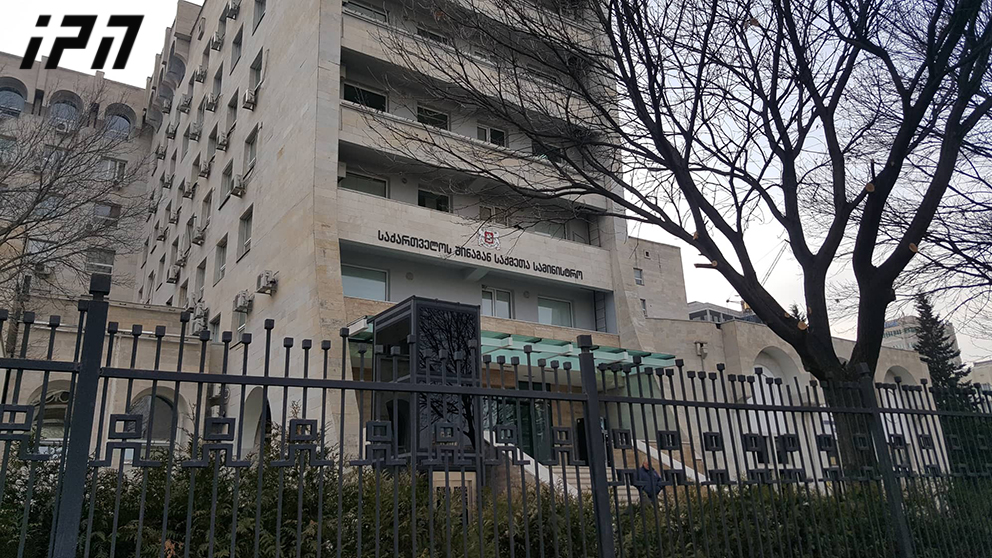
According to the Georgian Ministry of Internal Affairs, the agency has prepared a new large-scale package of legislative amendments designed to create more effective mechanisms for managing migration processes and strengthening state security.
The draft amendments, prepared by the Ministry, concern the Law on the Legal Status of Aliens and Stateless Persons and related legislation.
According to the Ministry, the current legal framework does not provide detailed regulations regarding foreign students. In practice, there have been cases where foreign nationals are formally enrolled in universities but their actual participation in the educational process cannot be verified.
Under the proposed amendments, additional requirements will be introduced for the admission of foreign students to higher education and vocational institutions. These requirements include the submission of an internationally recognized language certificate and/or passing a foreign-language or state-language examination organized by the National Assessment and Examinations Center (NAEC).
The Ministry stated that these measures will prevent students from enrolling in foreign-language programs without possessing the necessary language skills. In addition, the Georgian government will establish maximum quotas for the admission of foreign students at educational institutions.
Educational institutions will also be required to record information in a unified information system regarding foreign students' admission eligibility, enrollment, suspension, termination or restoration of student status, mobility, graduation, and other relevant matters. Authorized state agencies will have access to this system.
Administrative liability will be introduced for educational institutions that violate foreign student registration requirements. Possible sanctions may include fines, restrictions on admitting foreign students, and revocation of institutional authorization.
The legislative package also addresses study-related residence permits. Such permits would be issued only to adult individuals enrolled in authorized higher education or vocational institutions.
The amendments would establish grounds for terminating a foreign student's legal stay in Georgia, including revoking a residence permit if the student fails to meet academic requirements, violates employment conditions, or is not physically present in Georgia for the period required by law.
The proposed changes also regulate residence permits issued on the basis of marriage between a Georgian citizen and a foreign national.
A new category of residence permit — a residence permit for the spouse of a Georgian citizen — would be introduced and issued prior to obtaining permanent residence status.
Before such a permit is granted, the authenticity of the marriage would be verified by a specially established commission.
Under the amendments, entering into a sham marriage between a Georgian citizen and a foreign national for the purpose of obtaining Georgian citizenship, a residence permit, or another legal basis for staying in Georgia would become a criminal offense.
Potential penalties would include:Deportation of the foreign national and a ban on re-entering Georgia for a period of two to ten years;A fine;House arrest for one to two years; orImprisonment for up to two years.Additional migration enforcement measures
The legislative package also provides for the possibility of replacing the remaining portion of a foreign inmate's prison sentence with deportation from Georgia and a ban on re-entry, subject to conditions established by Georgian law.
To strengthen efforts against illegal migration and improve prevention and enforcement measures, the proposed amendments would grant the Migration Department of the Ministry of Internal Affairs of Georgia authority to conduct operational and investigative activities.
The package also introduces significant changes to judicial proceedings, including: Shorter deadlines for appealing court decisions;Accelerated timelines for case consideration; andIn certain cases, the possibility of examining cases without oral hearings.
According to the Ministry, the legislative package was prepared in close coordination with the Ministry of Justice of Georgia and the Ministry of Education, Science and Youth of Georgia.
The Ministry stated that the proposed amendments respond to contemporary migration challenges and are intended to create a more effective, transparent, and secure system for regulating the stay of foreign nationals in Georgia.