Paata Tsagareishvili: If we had brought in the Chinese side for Anaklia, it would have been impossible for European banks to come in - These two systems could not have cooperated - With the new model, China will no longer be involved - the state has turned in the right direction
When the state moves the [Anaklia Deep Sea Port project] into an intensive construction phase for dredging and breakwater construction, it will be sufficient for donor organizations and financial institutions to consider the Anaklia project as bankable.
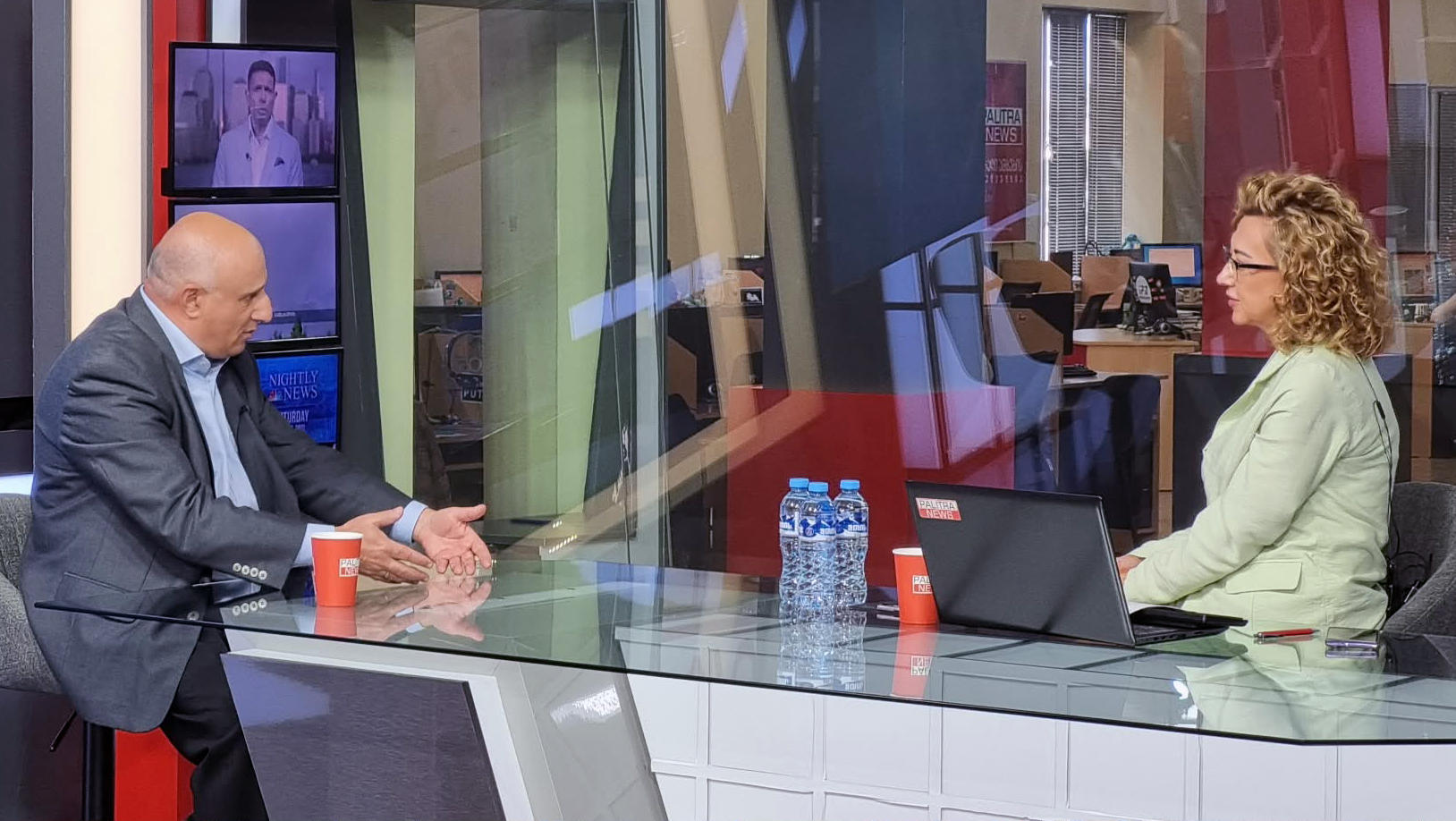
“If we had brought in the Chinese side, it would have been impossible for European banks to come in. These two systems could not have cooperated with each other,” said Paata Tsagareishvili, head of the Transport Corridor Research Center, during an appearance on PalitraNews’ program “The Case,” while discussing the new so-called “Landlord” model for the development of the Anaklia Deep Sea Port project.
As Tsagareishvili noted, the first phase of the project has already begun, but it requires greater intensity and strengthening. As a result, in about two years, it will become a bankable project.
“We published information about the ‘Landlord’ model on March 30, 2025, and stated that it was the most suitable model — we emphasized this. The Anaklia Port project consists of approximately four phases:
Dredging and breakwater construction;
The landside part, where terminals, berths, and crane equipment must be placed;
To enable traffic to the Anaklia Port, the landside infrastructure — meaning the railway and road components — must be arranged;
We will necessarily need to invest financial resources so that when cargo flows arrive, we can redirect them to the railway. This will require strengthening the Khobi to Samtredia railway direction.
Currently, the existing railway track is designed for roughly 5 million tons. When the additional cargo flow from Anaklia is added, major capital repairs, signaling systems, and systemic changes will be required in that direction. However, the most important thing now is the first phase — dredging and breakwater construction.
When the state shifts this dredging and breakwater construction into an intensive building phase, it will be enough for donor organizations and financial institutions to consider the Anaklia project as bankable. This will already unlock the second phase and the next step. As soon as the banking sector sees that the first phase — dredging and breakwater construction — is proceeding successfully and on schedule (we are talking about around $152 million), it will become realistic to provide financial resources to the state...
If we had brought in the Chinese side, it would have been impossible for European banks to come in. These two subsystems could not have cooperated with each other. The positive aspect of this ‘Landlord’ model is that China will no longer be involved. Once it is built, we can then lease the terminal. At this stage, it will not be. Therefore, this is a bankable project.
In practice, the first phase has already started. It needs intensity, strengthening, and synchronization with the third stage. In about two years, we can say that the banking sector will consider this project bankable.”
“Today we have three ports: Poti, Batumi, and Kulevi. In total, these three ports handle 15 to 17 million tons of cargo turnover. I believe this is very little. The combined cargo turnover of all three ports does not even reach the average level of a Turkish port. In my opinion, this model is a turning point, and the fact that the state has turned in the right direction is clear,” Tsagareishvili stated.
For information: Minister of Economy and Sustainable Development Mariam Kvritivishvili announced that the construction of the Anaklia Deep Sea Port will be carried out using the Landlord model, which means the state will retain 100% ownership of the port. According to her, the terminals (for both dry and container cargo) will be leased to international partners.
According to Kvritivishvili, the Anaklia Port will receive its first vessel in 2029.