Lasha Tugushi: The situation is alarming - having so many political prisoners is a losing game for the government - from the standpoint of international relations as well, this is a very serious, even devastating, fact
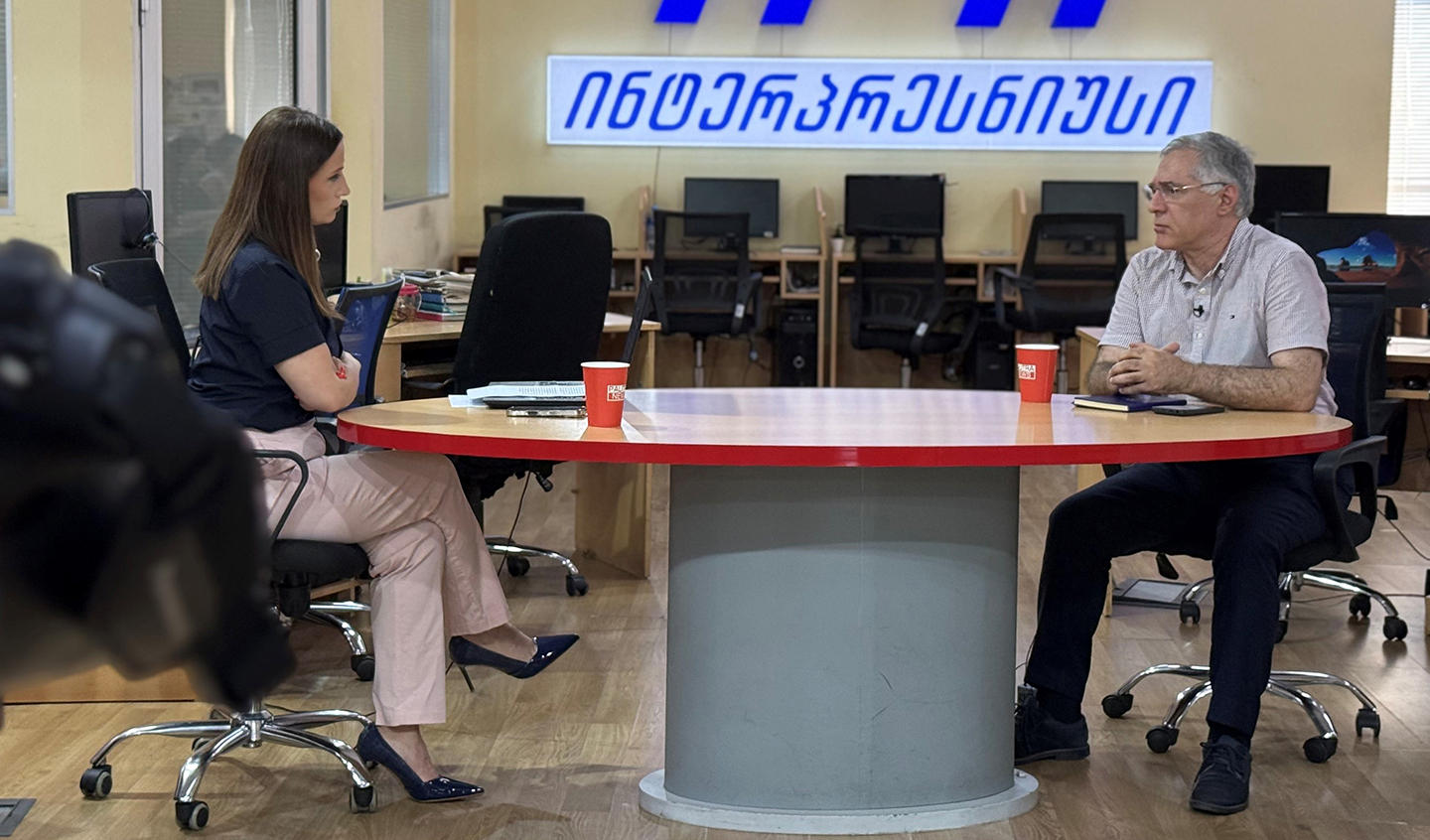
“The situation is alarming. It is a very serious problem for the country when we have so many political prisoners and prisoners of conscience, which further aggravates the situation,” Lasha Tugushi, head of the Liberal Academy, said while assessing a report by Transparency International Georgia, according to which the number of political prisoners in Georgia stands at 90.
Speaking on PalitraNews’ “Day Newsroom” program, Lasha Tugushi said this was a strategically lost game for the government, including in its relations with the democratic world.
“The examples cited by Transparency International Georgia are very serious. For example, Ms. Mzia Amaghlobeli and Elene Khoshtaria meet all the criteria. From the standpoint of international relations, this is a very serious, even devastating, fact, and we are seeing the effects of it. I do not think anyone in the West has any doubts. The West is very important to us. Nor do I think that many people in Georgia have doubts, including those who appear on television and say the opposite. They also understand that this is not the case, but what can they do?! I doubt that Georgian Dream supporters actually believe this absurdity or have confidence in the judicial process, regardless of what they say. I do not think that a rationally thinking person can fail to understand that there are political motives here,” Lasha Tugushi said.
In his assessment, the issue of political prisoners is actually weakening Georgian Dream, and this regime will inevitably be defeated after a certain period of time.
“After some time, this type of governance will inevitably come to an end. I believe that authoritarianism cannot survive for long in a country called Georgia. If we thought that this style of governance was a Georgian model, my way of life and that of many citizens of this country would be different. They assess it as a strategically lost game because the mistakes made by Georgian Dream will not simply be forgotten. They mistakenly think that they will start relations with the West from a new, clean slate. Their calculation is: ‘I am not a good guy, but accept me as I am and let me play the role I want.’ This is not the will of the majority of Georgian citizens, because we do not want to live under authoritarianism. Therefore, it is a strategically lost game, including in relation to the democratic world. The key question is what you want to achieve. If you want to peacefully conclude matters, consolidate your power, and be this kind of authoritarian, undemocratic, hybrid, incomprehensible entity on the European continent, then this is a strategically lost game. It is impossible for such a system to become established here,” Tugushi said.
He also spoke about the so-called sabotage case, saying that the government’s goal was to have an opposition that it could easily control.
“The government’s interest is to have a controllable opposition, to keep it in its pocket, and to have a quasi-political system where there is no real opposition. This is a model of authoritarian rule. Formally, something exists on paper, but in reality, we do not have a diverse political spectrum or political parties. There is no political competition, and Georgian citizens will not have the opportunity to choose. They think that they are the only ones and that no one else exists. As a rule, political forces have an ideological framework, but these people are incomprehensible. To this day, I have not understood what their views are, except that a small group wants to hold power and remain permanently in a position where they control something. How they govern and how they see the future is absolutely vague and incomprehensible. Another characteristic is the search for enemies everywhere. The whole world is swarming with enemies in their view; they see nothing else. They have no friends or partners — there is an enemy everywhere. Strange psychological types of people are in power today,” Lasha Tugushi said.
At the same time, he said that amid the current political situation, he could not advise party leaders whether it was better to remain in the country or leave it.
“It may not be fleeing; it may, for example, be temporarily stepping away. But even if we use that term, it is a serious dilemma. It is very difficult to advise a person when you do not know whether they should leave or stay. It is an extremely difficult matter to advise someone to go to prison for 12 or 13 years. I find it difficult to answer, although both lines of reasoning are understandable. Overall, this is one of the very serious episodes of tragic mistakes in the direction these people are taking. It is no joke to send someone to prison for such a long period, especially when that person is not merely a political leader. This is not a game. It will have very serious consequences. From the standpoint of strategic calculation, I do not think it is wise. I am certain that society will not give up. If they imprison part of the political opposition, take another reckless step, or abolish specific parties, this will ultimately make the situation even worse. The result will still be the same. Georgia will not accept the rules of this game. It needs a pluralistic democracy, many different parties, not abolished parties and imprisoned political leaders,” Tugushi said.
In his assessment, the opposition is currently in a difficult situation because “they have still been unable to decide whether they are uniting or not.” He believes that the opposition spectrum should find common ground and focus on a common goal.
“Apparently, in Georgia it is difficult for so many parties to sit at the same table and form a close alliance to achieve certain goals. In this case, we are talking about a plan to change the government and come to power. They are unable to play by such rules. Therefore, on the other hand, there must be coordination and cooperation. If they confront one another instead of joining forces to achieve their goals, it is bad for everyone, because by fighting among themselves, they defeat themselves and nothing changes. They lack hard work. In my view, this is the opposition’s main critical weakness: they are operating on a different plane, settling matters among themselves. It is an entirely incomprehensible process of sorting out relationships that has been going on for years,” Lasha Tugushi said.
He believes that Georgian Dream will not create an ideal environment for political parties.
“It is in the government’s interest for the opposition to be divided and to tear each other apart. I do not think Georgian Dream will ever create a fair environment for elections here. I do not see any alternative to elections, but I also do not see any formula under which Georgian Dream would create a fair electoral environment. I do not know what could force them to create such conditions. So what are you left with? Either you stay outside and wait for something to fall from the sky, or you fight under such difficult conditions. Some people manage to win under difficult conditions. The question that remains is whether we have the strength to win in a difficult environment. I would compare it to the example of Hungary, where an opposition party won under extremely difficult conditions,” Tugushi said.
As for whether the boycott “was justified,” Tugushi believes that if the opposition had united in the elections, it could easily have won Tbilisi and other major cities.
“I say this based on the sociological surveys we saw at the time. The opposition had such a significant advantage over the ruling party that the opportunity was right there for the taking. But then we turned against one another: some went one way, others another. It simply required reaching out, hard work, and a struggle, but the opportunity was very real. Was that the right thing to do? In my view, it is very bad that there is still no clarity or decisiveness on this matter. This is seriously damaging the situation. The last 40 days will not be enough to change anything in the elections. Preparations for the elections should begin now if they intend to participate. I do not know what they are waiting for, from outside or inside the country — they need to make up their minds,” Lasha Tugushi said.