Tengiz Sharmanashvili on Irakli Gharibashvili’s new charge: Our responsibility is not to cover up such a crime and to expose what is happening
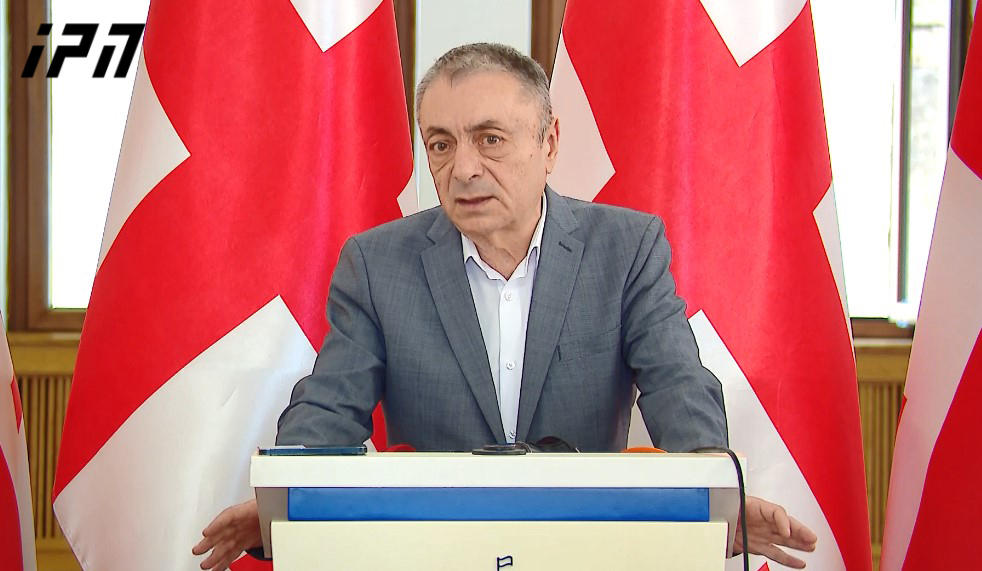
Our responsibility is not to cover up such a crime and to expose what is happening – our difference from other authorities is that, despite the fact that we may suffer politically, we will not cover up any criminal offence! – this was stated by “Georgian Dream” deputy Tengiz Sharmanashvili in response to a question asked in connection with the new charge against former Prime Minister Irakli Gharibashvili.
According to Sharmanashvili, when former politicians do not admit a crime, they as a rule justify the bringing of charges by political persecution.
Sharmanashvili also noted that “in Georgia the criminal process is based on the principle of adversarial proceedings and the parties can argue during the court session.”
“When relatives speak about this [the political persecution of Irakli Gharibashvili], you should not get angry in any case. It is not surprising that a spouse, a brother, a parent, a family member stands by their own until the end. At such a time I do not get angry at anyone either. When they do not admit a crime, afterwards this has to be justified somehow. Former politicians as a rule justify this by saying that this is political persecution. They have no other justification. This is not surprising for me. In this part there is nothing new for me,” Tengiz Sharmanashvili stated.
On 24 August a new charge was brought against the former Prime Minister of Georgia, Irakli Gharibashvili, who is in detention. According to the General Prosecutor’s Office, the case concerns a corruption crime – specifically the taking of a particularly large amount of money. For the said crime the law provides for a penalty of deprivation of liberty from 11 to 15 years.
According to the Prosecutor’s Office, within the framework of the purchase of medical equipment and inventory needed by the Ministry of Defence, Irakli Gharibashvili himself took 750,000 lari in cash as a bribe; in total, the state suffered property damage of 6,985,255 lari and the public interest was substantially violated.
The Tbilisi City Court will today consider the imposition of a restrictive measure on the former Prime Minister of Georgia, Irakli Gharibashvili.