Shalva Papuashvili: We also fund the Council of Europe; money from Georgian citizens went to Strasbourg and came back to Bakhmaro to Armaz Akhvlediani—it will be a scandal if the Council of Europe becomes embroiled in a violation of the law
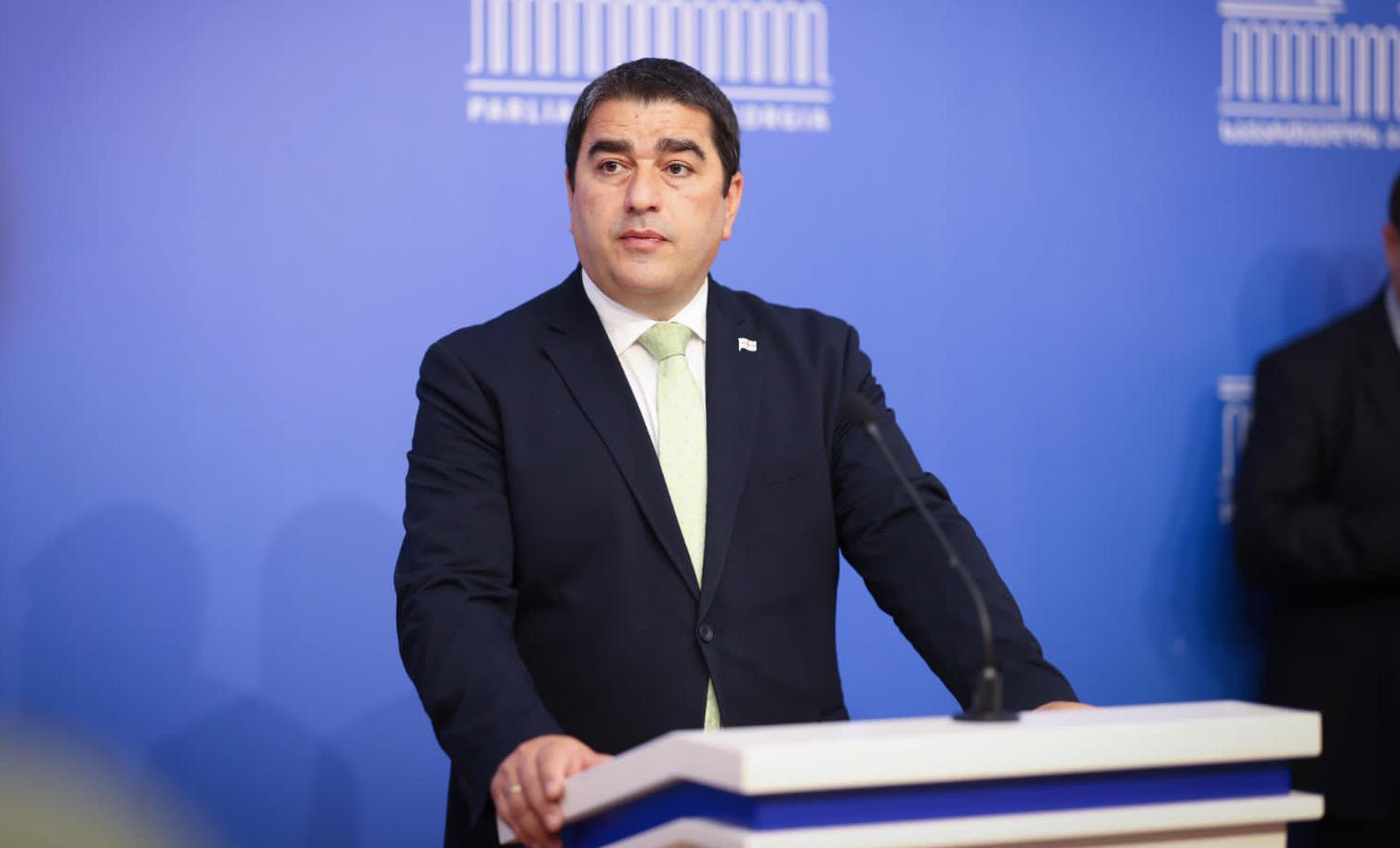
We are a member state of the Council of Europe, and we contribute to its funding; money from Georgian citizens went to Strasbourg and returned to Bakhmaro to fund a United National Movement politician. That is why we do not want Georgians' money spent on the radical projects of the National Movement. Good fruit cannot grow from poisonous seeds; a radical cannot raise a patriot! What you hear publicly from Armaz Akhvlediani is likely what is being said internally! Parliament Speaker Shalva Papuashvili made this statement regarding the Tbilisi School of Political Studies—which operates under the auspices of the Council of Europe and is led by politician Armaz Akhvlediani.
According to Papuashvili, the meetings held in Bakhmaro under the auspices of the Tbilisi School of Political Studies may have taken place in circumvention of the Law on Grants, a matter currently under investigation by the State Audit Office. Papuashvili also stated today that if it turns out the Council of Europe was violating the law in a member state and attempting to circumvent it, this would be a catastrophic scandal for the Council of Europe's local office. We witnessed an admission that this was funded directly from abroad. We saw the Government Administration’s position—stating that no one had applied to them for a grant—and the Council of Europe media office’s clarification that it was not a grant. So, what was it? We might well be dealing with the very scenario we discussed earlier.
When we were adopting the Law on Grants, the initial draft included a requirement that all foreign expenditures—including direct spending by organizations—obtain government approval. Subsequently, embassies requested an exemption, arguing that public diplomacy is part of an embassy's core activities. For instance, if France wishes to showcase French culture or cuisine to Georgia, or if the German ambassador wants to introduce Tbilisi residents to German architecture within the city, these actions entail costs that should not require government consent. The final version of the law reflected this: direct expenditures do not require government approval. However, we emphasized at the time that this provision applied to activities directly undertaken by the embassy or organization itself, and we hoped it would not be exploited to circumvent the rules.
Regarding the Bakhmaro meeting, I suspect that we might be dealing with the circumvention of Georgian legislation. Rumors circulated that schemes to bypass the law had been devised. While the Council of Europe had previously awarded a grant for a project led by radical politician Armaz Akhvlediani, clarifications indicate that no grant was actually issued; instead, the local Council of Europe office directly hired the hotel and bus, covered catering costs, and paid the experts and speakers itself. If this is indeed the case, we are dealing with an attempt to circumvent the law. Given our lack of trust, the law contains a provision stating that if an agreement is labeled as a service contract rather than a grant, yet is essentially a grant, it constitutes a sham transaction and will be classified as a grant.
This clumsy attempt to circumvent the law has all the makings of a disaster and a scandal should the local Council of Europe office become implicated. If the Council of Europe violates the law in a member state and attempts to bypass it, it would be a catastrophic scandal for the organization's local office. The Audit Office exists precisely to investigate such matters," stated Shalva Papuashvili.