Archil Gorduladze: The Venice Commission’s opinion is worth nothing; no one asks the Venice Commission what the political environment in the country is like; its role is to assess laws from a legal perspective, but it has ventured into political assessments
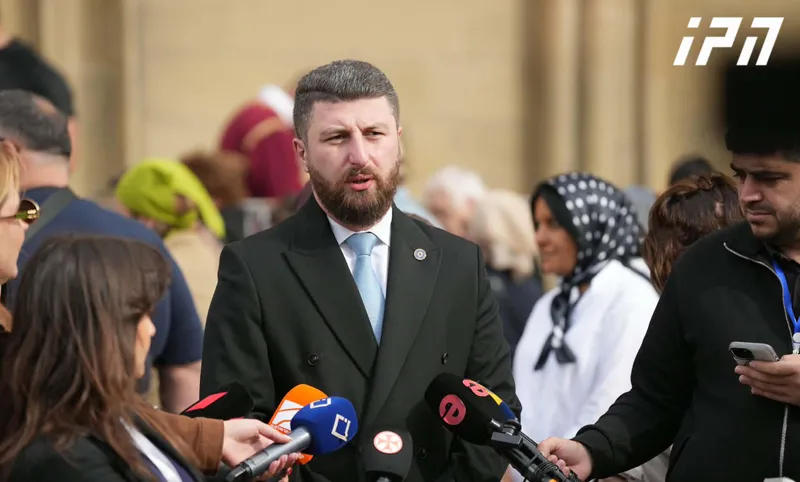
“The Venice Commission’s opinion is worth nothing. Its opinion is not legal in nature; rather, it is a useful tool for political purposes in the eyes of certain people,” Archil Gorduladze, Chair of the Parliamentary Legal Affairs Committee, told journalists, commenting on the opinion published by the Venice Commission.
According to Gorduladze, the Venice Commission’s role is to provide a legal assessment of a specific law or a set of laws, and “no one asks it what the political landscape or environment in the country is like.”
“Regarding the Venice Commission, we can point to the position of President Trump’s administration, which withdrew from this relationship altogether. They describe the Venice Commission as a waste of time. Unfortunately, judging by our own reality, its purpose is not to produce legal opinions. Instead, the opinion contains nothing but political assessments, including this one.
“Not a single legal issue is identified in the opinion. It serves solely as a basis for political speculation, once again giving the United National Movement an opportunity to make political insinuations.
“The same opinion claims that Parliament failed to ensure the participation of interested parties, meaning those directly affected by the law. This is an absolute lie. All committee meetings are open, and everyone has the opportunity to attend and express their position during the proceedings.
“The real issue here - and what is astonishing - is the claim that we should have consulted Captain Gigauri and [Nino] Lomjaria on their draft laws and obtained their prior approval. It is explicitly stated in black and white that we did not obtain their prior consent. This is comparable to suggesting that, before adopting legislation against organized crime or drug trafficking, we should first consult individuals involved in organized crime and drug dealers.
“The Venice Commission has reached this level of absurdity. Accordingly, its opinion is worth nothing. It is being used exclusively by media outlets controlled by the collective United National Movement and by the so-called politicians and political operatives behind them.
“No one asks the Venice Commission what the political landscape or environment in the country is like, for one simple reason: its role is to assess specific laws or legislative packages from a legal perspective. However, it has moved directly into political assessments that are entirely in line with statements made by every member of the collective United National Movement, including those concerning the so-called ‘International Transparency’ party organization led by Captain Gigauri, which is subject to the jurisdiction of a foreign country.
“When they tell us - including in this very opinion - that they drafted it based on the specific nature of our country, this once again highlights their bias. The law is the same in Georgia, Germany, France and every other Council of Europe member state. Nevertheless, they issue opinions specifically concerning Georgia rather than approaching the matter from a general legal perspective. This demonstrates that their opinion is not legal in nature but rather a convenient instrument for political purposes in the eyes of certain people.
“We know very well that such opinions carry no weight for Georgian society. The Venice Commission once enjoyed a strong reputation, and we have cooperated with it on numerous occasions. However, it has stepped outside the legal framework and exceeded its mandate, becoming nothing more than a political instrument,” Gorduladze said.
For reference, the Venice Commission has published an opinion on amendments adopted in March 2026 to the Law on Grants, the Law on Political Associations of Citizens, the Criminal Code and other related legislation.
The Venice Commission considers that these laws do not serve the purpose of protecting and strengthening Georgia’s sovereignty and political parties against foreign influence and external interference. Instead, according to the Commission, they impose disproportionate and unnecessary restrictions on the fundamental rights and political freedoms of Georgian citizens, particularly the freedoms of association and expression, and hinder the formation and continued existence of political opposition.