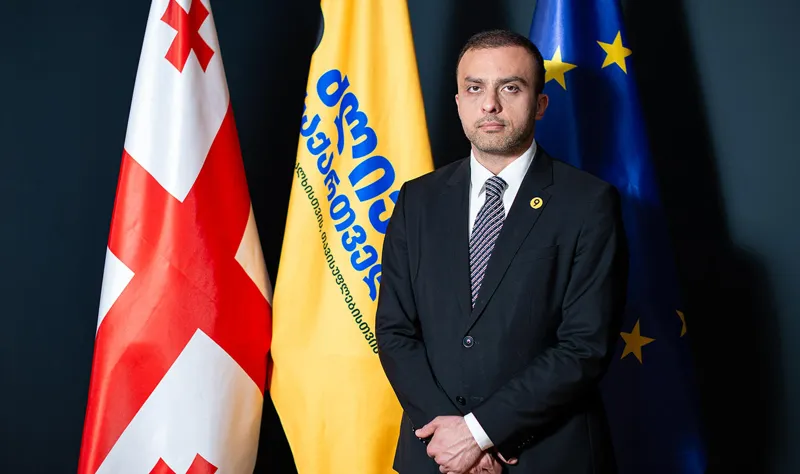
Hubert Knirsch: Parties are less and less able to talk to each other and different individuals make different contributions to this development
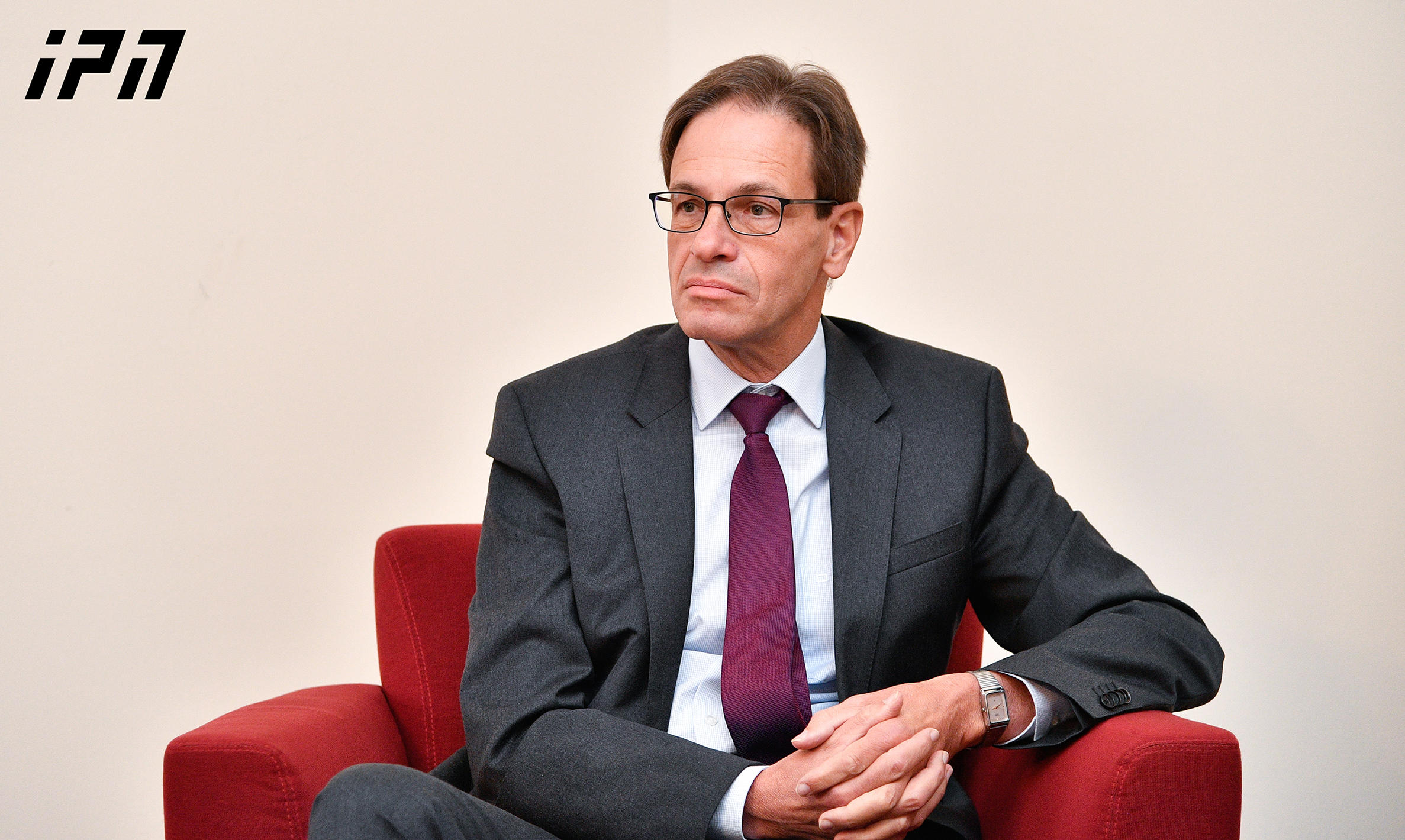
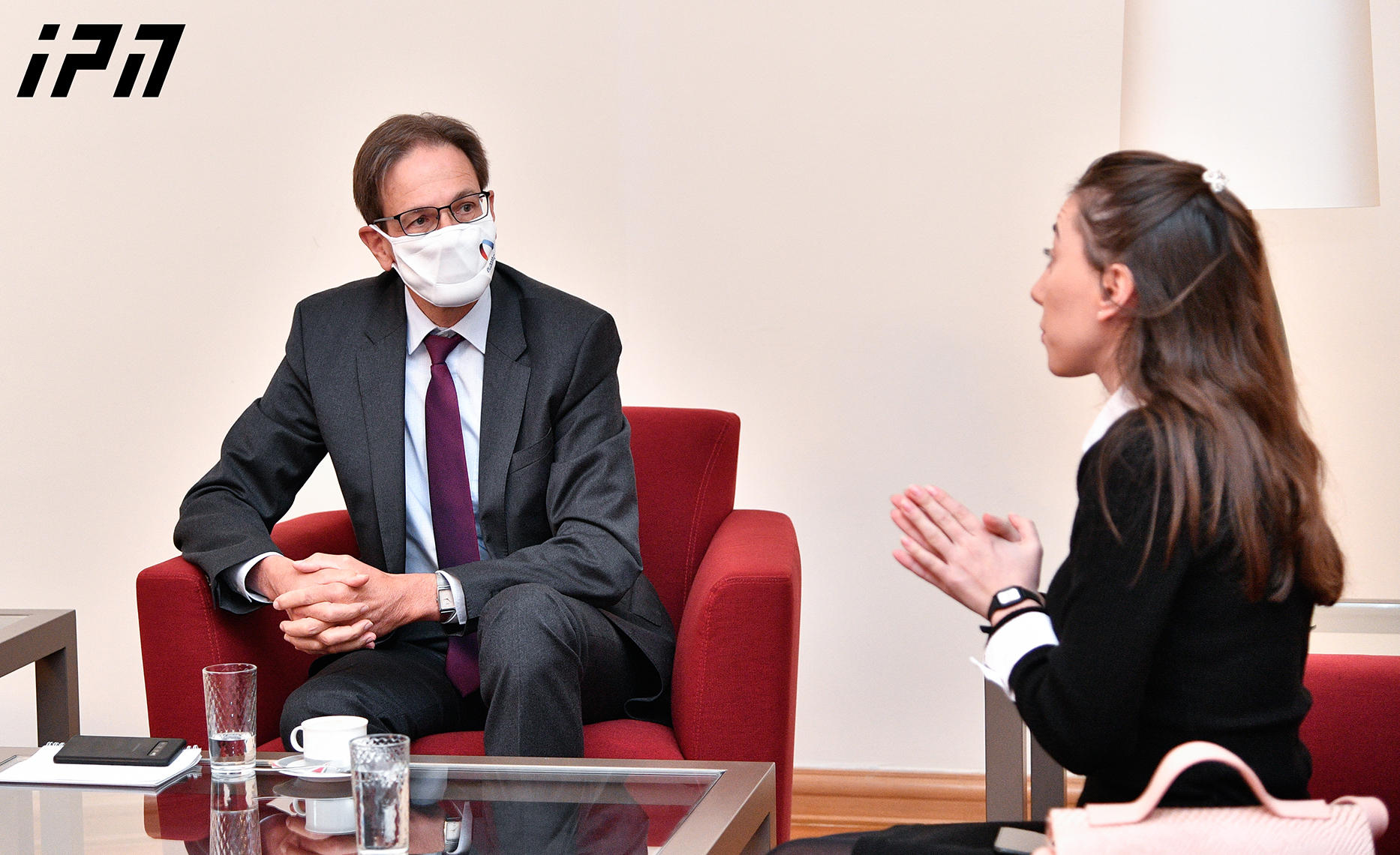
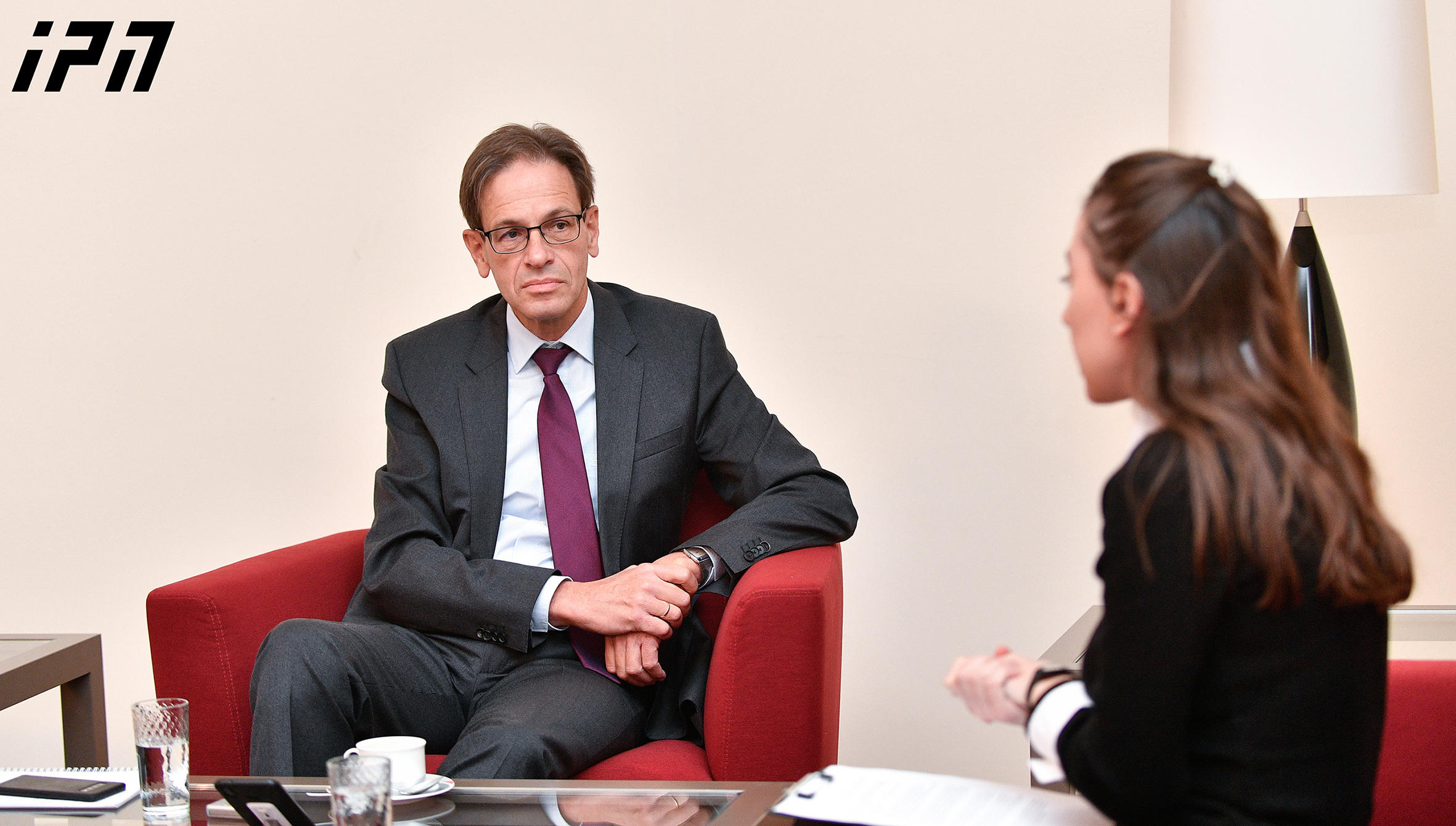
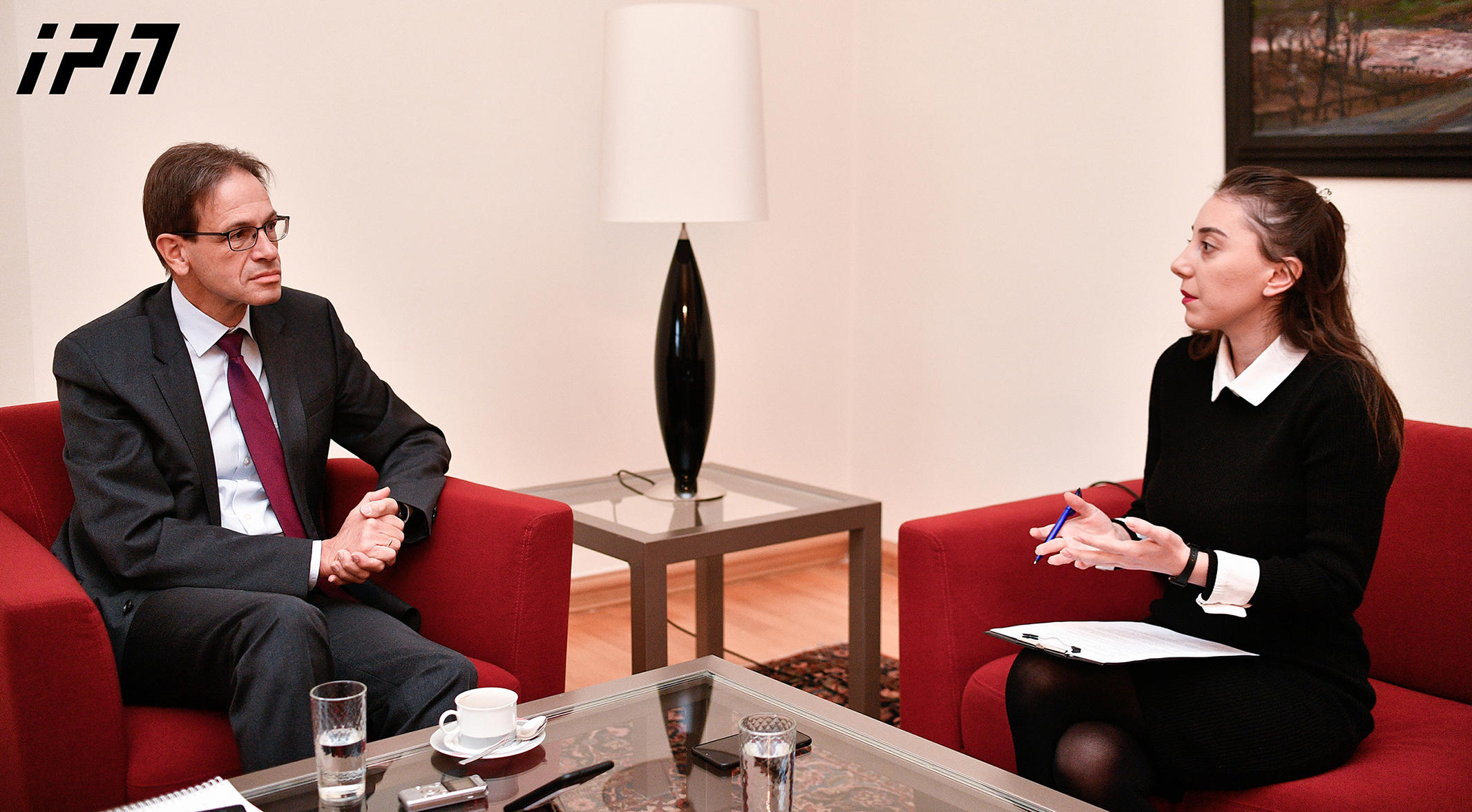
The time when only politics is talked about and the parties are talking about themselves and each other should be limited, they should start discussing the country's more pressing issues, because Georgia has no time to lose, - German Ambassador to Georgia Hubert Knirsch told InterPressNews. Why the German Ambassador does not take part in the talks between the government and the opposition, how he assesses the ongoing processes in the region and the official visit of the US Secretary of State - the Ambassador discusses the listed and other topical issues in detail...
- What do you consider the biggest challenge facing the country today? And how do you assess the effectiveness of the Georgian government in dealing with these challenges?
- It is very good that we start talking about the big challenges of the country. The most immediate challenge, of course, is the Covid pandemic. We see that the number of infected people in Georgia has increased greatly in recent weeks, while still in the summer Georgia was among the countries least affected by the pandemic. Now the number of infected people is the same as in the EU countries with the highest rates of infection. We see that the health care system is under some pressure. I think this is the most immediate challenge and I am confident that additional measures are being taken to help the country to handle it. The biggest challenge is the economic and social development of Georgia, and here it is important that everything not just continue as usual, but that Georgia uses all its economic potential in order for every person capable of work to be involved in productive and useful activities. Georgia must harness its full economic potential and become a country that stops and reverses its demographic decline, becomes so attractive that Georgians return from abroad, and the Georgian nation becomes more numerous.
- Of course, the pandemic is a challenge not only for Georgia, but for the whole world, but I would like to ask you about the challenges facing the country in the political context. Diplomats often use the word polarization to assess the political situation in Georgia. Who do you think is responsible for creating a polarized situation, and in your opinion, did the polarized situation deepen with the October 31 parliamentary elections?
- We call polarization a phenomenon that places a heavy burden on democratic development in Georgia. We see that parties are less and less able to talk to each other, that they are not cooperating, considering each other as enemies instead of being partners in the democratic process. I think we cannot blame individual for this, but different individuals make different contributions to this development. It is more of a process that has its own dynamics that many seem to not even want, but this process takes place almost automatically if it is not stopped. Maybe it's a bit of a fault that Georgians are proud people and love to speak clearly and confidently. These are noble qualities, but in a democracy, they should be used more moderately. I think that these elections did not contribute to polarization, because these elections were held on the basis of a new electoral system, which was adopted unanimously on the basis of dialogue between all parties, i.e. a consensus was reached. It was an electoral system that allowed significantly more parties to enter parliament. This is an effect that opposes polarization and, most importantly, the share of mandates of opposition parties has increased significantly. I think this will be a more pluralistic and balanced parliament, which reflects quite well the political currents in Georgia.
- I will continue the topic of elections, I have heard many times from the diplomatic corps, the international community, including you, that the 2020 parliamentary elections would be a kind of indicator on the path to democracy for Georgia. Do you think the election results makes you say that we passed this test?
- Any election is a test of democracy. This election has brought progress in party pluralism, and in my opinion, we have also made progress in the form of the election campaign. I think there was less controversy than I remember during the 2018 presidential election, also, there were fewer cases of violence, although we still had a number of such sad facts. Now a new test begins, because the test does not end with the election, no less a challenge is working in Parliament. Georgia has amended its constitution, introduced a fully parliamentary system, and now the parties have to come to terms with this and take on their role in this parliamentary system and use it.
- You assessed the pre-election environment and mentioned that there were fewer violations in the pre-election process, but it would be interesting to see your assessment of Election Day. We heard a comment from the U.S. Department of State highlighting some of the irregularities observed on Election Day. As far as is known, embassies were also involved in the monitoring process. From your observations, how did the election day go?
- We had a peaceful Election Day as a whole, this was confirmed by diplomats, observers of international organizations, parliamentarians, OSCE observers. I was very impressed by how many people are actively involved in the elections in Georgia - the election administration alone had 40 thousand employees, thousands of observers, media representatives, party representatives were present at the polling stations, which testifies to very high democratic activism, but it also leads to the situation where the polling stations are in turbulent condition with excessive activates for many hours.
- You underlined the fact that as a result of the constitutional amendments, 9 parties were able to cross the threshold and enter the parliament, but we also see that these parties are not using their opportunities and the situation is in a deadlock. Do you think that parties should use this opportunity, even though they consider the elections to be rigged?
- The parties had very high expectations regarding their results in the elections, to sum up the expectations of all the parties together, it turned out to be much more than 100 percent, but all these expectations were not met. However, whoever puts his/her candidacy in the elections takes responsibility, s/he offers something to his/her voters and takes on responsibilities, and I think in the post-election days it has become clearer to all politicians that they can not escape this responsibility. We talked about the challenges that Georgia is facing. Georgia has no time to lose. It cannot be said that "elections can be better in the future and then I will take part in the political process". Now everyone must work to make the situation in the country better and the country to cope with the challenges.
- Two rounds of talks have already taken place between the opposition and the government, but their positions cannot be brought closer, their views are radical not only regarding the process, but also about the desired results. What would be your specific advice to the parties, so that they can converge their positions and the country does not waste more time?
- These negotiations are a good way to talk about the future and take some important steps. I think there will be suggestions on how to improve the election legislation so that the results of the next elections are recognized by all parties. Negotiations are also good to talk about what the relationship should be like between the majority and the smaller parties in the next parliament, how the smaller parties and factions should have more voice in parliament. Parliamentary work means the redistribution of power in favor of substantive discussions.
- But the parties involved in the dialogue do not say that they are talking about future plans and everything you have listed. It is clear from their statements that there is one topic on the negotiating table - will the elections be held again?
- I think it is very good that these negotiations are being held. When negotiations are going on, it means that we are not in a deadlock, at least at this stage we have not reached the end yet. If the conversation is only about the past, it turns out that the parties are just wasting time with each other. It is important that the topics covered are kept within the law. The constitution exists in the country not to invent something new in every new political situation, but to stay within its framework and find a solution there.
- We remember that you were actively involved in the previous negotiations between the government and the opposition, which were related to the constitutional changes regarding the electoral system, how active are you now in the current processes?
- The talks are now led by the US Ambassador, Kelly Degnan and the Head of the EU Delegation, Carl Hartzell. In diplomacy we say that the group should always be as big as necessary, but at the same time as small as possible. I think it is a very good group to conduct these negotiations. I am observing these negotiations together with other ambassadors of the EU member states, I unequivocally support it and also, we have meetings with various politicians involved in the negotiations in order to facilitate the progress.
- I would like to ask you about the situation in the region, there was a war between the two neighboring countries, which ended with an agreement and the deployment of Russian peacekeepers on our southern border, one should also take note of the role of Turkey. What threats and opportunities do you think the changes in the region pose to Georgia?
- Of course, we are glad that the ongoing hostilities have stopped in recent weeks, soldiers and civilians are no longer dying. At the same time, it is clear that in this conflict, which has been going on for decades, no way to a final solution has been found, no peaceful solution has been reached. The various parties to this conflict face an urgent challenge to find such a peaceful solution, and here the international community must help them. Assistance in this case is provided especially by the Minsk Group, of which Germany is a member, and we want to work actively with other members on this issue. Part of this peace solution must also be the search for ways about how the national minority can live peacefully in this country in the Caucasus, and if this solution can be found, it will have a positive impact on the whole region.
- Given the current situation in the region and the country, the visit of the United States Secretary of State was an important message. How would you, as a representative of the country that supports the strengthening of Georgia's Euro-Atlantic ties, evaluate this visit? What meaningful messages did you see in Mike Pompeo's statements?
- I am glad that the US Secretary of State visited Georgia. He clearly stated that this visit is an expression of support for Georgia. It was the same during the visits of the first persons of Germany in the past years, when the President of Germany visited Georgia a year ago, and the Chancellor of Germany two years ago. The Western partners show that they see well how important Georgia is in the Caucasus and in the Eastern European region in general, and how important the development is to a well-functioning, well-developed market economy, to a well-functioning democracy, and to other countries in the region. I also see this visit as an encouragement for the work done by all of us in Georgia.
- We often hear statements that Georgia is a strategic partner, an important pillar, that Georgia is taking important steps towards democracy and the implementation of the Association Agreement. Do you think that the efforts made by Georgia are enough for it to achieve its ultimate goal of joining the European Union and NATO?
- Georgia has done a lot in recent years. Georgian legislation has been adjusted with European legislation in many areas, and I am confident that this issue will be one of the main parts of its agenda for the future Parliament. It is important not only to implement the laws, but also to establish agencies. Agencies that will ensure the implementation and oversight of these laws. In addition, the economic and social development that we have already discussed is important, as well as the development of physical ties with the EU, such as transport links. It is necessary to reduce the gap between the level of development of the EU and Georgia and to strengthen economic cooperation and ties in order to facilitate further integration.
- You mentioned the steps taken in the past years, now you cannot see these efforts being as active as they were before?
- I said that Georgia has done a lot in the past and that this topic will definitely be a major issue on the agenda of the future Parliament, so I look forward to further progress in terms of both legislation and real development in the country. The time when only politics is talked about and the parties talk about themselves and each other should be limited and they should start discussing the more pressing issues of the country, because Georgia does not have time to lose.
Salome Abulashvili
"InterPressNews"