David Kramer: “A political crisis in a stalemate is not good for Georgia and there’s only one party that’s going to be happy with this, and that’s the party in Moscow”
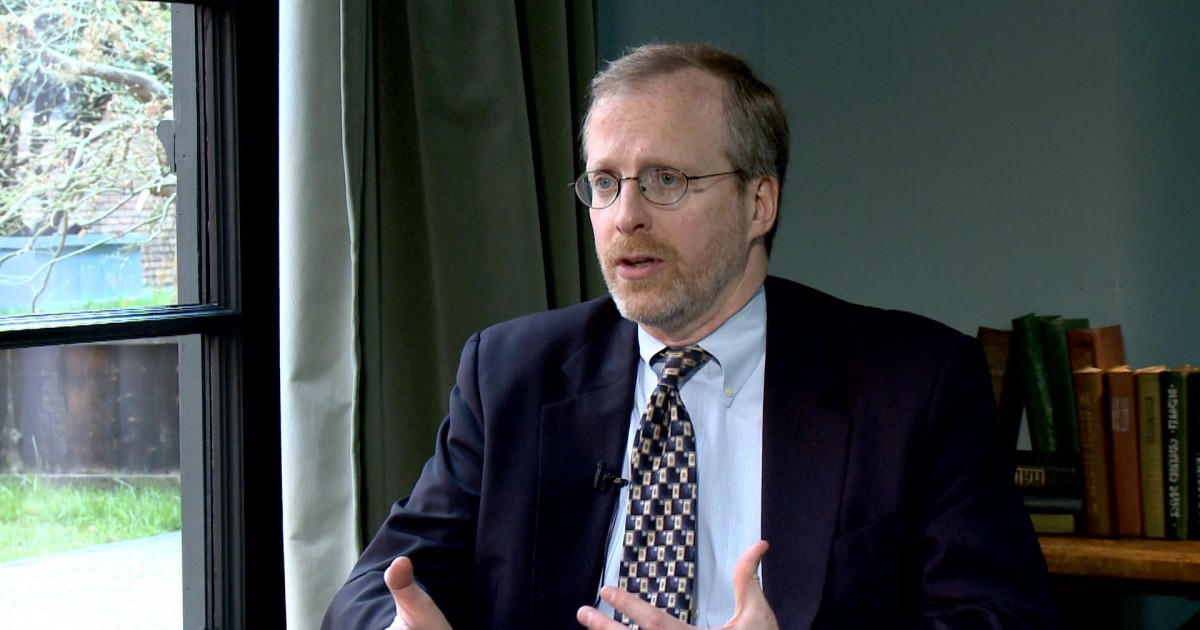
Due to the difficult political situation in the region, as well as the ongoing difficult processes in the country, Georgia faces many challenges. How does the international community, the West, view the current events in Georgia - especially the political crisis in the country, the question marks that arose after the October 31 parliamentary elections, and what solution does it see from this difficult situation? Besides, what impact could important processes of the world have on the country, including the incoming administration in the United States and the confirmation of NATO's continued open door policy? David Kramer, the former US Assistant Secretary of State for Democracy and Human Rights, spoke to Interpressnews/Georgian Journal exclusively about all this.
- More than a month has passed since the 2020 parliamentary elections. First of all, how do you assess this election, during which, reportedly, there was a lot of irregularities and miscalculations? We also know that the Central Election Commission did not receive complaints regarding this...
- I think the parliamentary elections were quite problematic. I know the Georgian Dream and Government sides are trying to portray them in the best possible light and they have picked certain parts of the international observer assessments that reflect positively. But of course, the opposition has a totally different view and there are also other observers, both domestic and international, who share the criticism that the elections were far from perfect and in fact present some real problems that include boosting the percentage for the GD. The opposition has said they would not take the seats in new parliament, unless there are new elections and replacement of a Central Election Commission Chair, and so, we are kind of in a stalemate in Georgia, which is very unfortunate. I don’t see much interest in compromising on the GD side and I think in order to resolve this crisis – and I think it is a crisis – both sides need to find areas to compromise.
- You said the GD is reluctant to compromise. Why?
- It seems that they are focused on moving ahead, they are ignoring the opposition’s complaints, they have not shown much interest in holding new elections. I know there has also been a proposal to conduct a plebiscite to ask the voters whether they want to have a new election. The problem with that, of course, is that you are asking Georgian voters possibly to go to the polls 4 times within a year – you had the first round on October 31, second round a few weeks later, then if you have a plebiscite and then if the result of a plebiscite is to have a new election, you are asking a lot of Georgian voters within the span of a year. So I think the Government is determined to move ahead, the result could be a one-party parliament, which is not a healthy development for Georgia, and does not reflect well on Georgia’s image in the international community. So I hope that there will be some resolution.
But the problems, of course, go beyond just the election, with some of the institutions, the judiciary and other things that also need to be addressed, and now we also see and this is a further indication of a lack of interest in compromising from the GD and Government side, the possibility of renewed cases against some people in the opposition and within the media and that’s not an encouraging development.
- Do you think those things are connected to each other?
- I do. I think this is the response from the government and from GD that if you keep pressing, then we will reopen investigations and pursue matters in the courts and that’s not the way to resolve the crisis. So I hope that there will be some recognition that both sides need to move toward the middle, because a political crisis in a stalemate is not good for Georgia and there’s only one party that’s going to be happy with this, and that’s the party in Moscow. So I hope that every player in Georgia understands that they need to find some resolution to this and do it fairly quickly.
- Despite the initial wave of protests after the elections, did you expect that the opposition would maintain its position on not entering the parliament for so long?
- I think the situation in Georgia, like it is here in the US, is very polarized. I think there are very strong positions on both sides. I am a little surprised that the opposition has stayed united, because of a rather diverse opposition, they were obviously not very united in the lead-up of the election, but they have stayed united in the aftermath of the election, so that part surprised me a little bit. But I think it’s a reflection of how polarized the situation is and to some degree how personalized the situation is, because you have the figures of Bidzina Ivanishvili, Mikheil Saakashvili playing fairly prominent roles even though neither one of them was really on the ballot, but behind the scenes they play fairly significant roles.
- Do you think that no other figure has any importance in reality in Georgian politics except them?
- I think other people are important, and I don’t mean to suggest that only those individuals are who matter. In fact, I think for Georgia’s sake it’s critically important that other people step up and play critical roles in this situation. But it does seem nevertheless that these two individuals tend to drown out a lot of the roles of other players. Look, in the United States Donald Trump drowns out everyone else in the Republican Party, so it’s not a phenomenon unique to Georgia, it happens here in the US as well.
- How do you imagine the ways to solve the crisis, that despite the ambassadors' attempts to mediate, the opposition and the ruling party can not reach an agreement, and the first session of the new parliament should be held soon - on December 11?
- I do think that the ambassadors are trying, I think they need to recognize that the elections were problematic, I know that there had been some commentary from diplomatic officials that Georgia has had difficult elections for the past 30 years, and essentially, they are saying: “So, what’s one more?” Well, we shouldn’t resign ourselves to yet another bad election if that is the assessment that people have. At the end of the day, this crisis has to be resolved by Georgians, not by any players in the international community. I don’t think the situation was helped by the Secretary of State Pompeo’s visit now 2 weeks ago, to Georgia, when he arrived in the middle of the rounds of the election, and he only met with the Government and Patriarch and a few civil society representatives, but refused to meet with the opposition – I think that was a terrible signal. I think Pompeo’s visit was a real missed opportunity where he could have helped all sides to come together and worked together towards compromise. So I think his visit was very unhelpful, frankly. But I think the US Ambassador can play a rather constructive role as can the Ambassadors from the EU.
- Some people in Georgia where confused about what the purpose of the visit was, some of them explained it as an attempt to show Russia that the US is still interested in the region, given that the Kremlin now has troops in all three countries of South Caucasus…
- I don’t understand what the purpose of this visit was either, frankly. It may almost seem like he had a schedule gap between trips to Europe and the Middle East and decided to drop in on Georgia. Again, in the middle of a political crisis and in between the rounds of election, I think it was a bad decision on his part. If he had met with all the key players, that would have been one thing. He also didn’t do any public events, he didn’t come out and explain what US interests are in Georgia, and you know, if you look at the other parts of his trip, he went to Turkey and was only in Istanbul and met only religious leaders, didn’t meet with any government officials, had asked the government leaders to actually go from Ankara to Istanbul to meet with him. You know, Pompeo is not my favorite Secretary and his visit to Tbilisi didn’t increase my estimation of him, I think he handled it badly and I hope the new Biden administration will approach relations with Georgia in a more professional and constructive manner.
- You already mentioned it, but really, how damaging will Georgia's one-party parliament be in the eyes of the West - in your opinion, will it have an impact on EU and NATO integration, which is Georgia's declared course?
- One-party parliaments are usually not described as democracies. So if Georgia is going to wind up with one-party parliament that will reflect badly on Georgia’s democratic progress, which I think has been substantial over the years. I think Georgia has done a lot to enhance its membership application in both NATO and EU. To some extent Georgia has done more to contribute to NATO operations than some existing NATO member states. For the EU, Georgia signed the deep and comprehensive free trade agreement, visa liberation agreements 6-7 years ago and has been making good progress there. But in the West we tend not to think of democracies having just a one-party parliament. Even in Russia there’s more than one party in the Duma, though I’m not going to pretend that that means the Russian parliament and Russia are a democracy, they are not, obviously. But I think, that’s something that will be a problem and that should be further reason why GD and the Government strike some compromise, so that there is a necessary debate and back and forth and frankly, I think, GD should grant chairmanship of some committees of parliament to the opposition to demonstrate that they are serious about trying to work together for the good of the country as a whole.
- During the post-election period, during one of the protests, the government used water cannons as a precaution against people who had not even gathered in front of the Central Election Commission. If you were to observe these events, how much do you think it is necessary or justified to use such a method at that moment? Do you think that after June 20, 2019, such actions by the government are like repeating a precedent, becoming a dangerous pattern?
- That incident, as I understand it, under Georgian law the authorities are supposed to give a warning before using water cannons or any similar methods against the crowds, and as far as I understand, there were no such warnings and a number of people were injured in that situation. I don’t think it was a right way to respond, I know the government and GD would argue that these people were about to seize the building, I’m not sure there’s real evidence of that. It underscores however the need for the opposition to be able to exercise the right to protest, to demonstrate – it should do so peacefully. At the same time, there’s a responsibility on the part of the government and on GD officials to exercise restraint in dealing with protests and dealing with the demonstrators. The government to some extent has an added burden and responsibility to ensure a peaceful environment while at the same time recognize the right of the opposition and of civil society for that matter to protest. If journalists report on things and expose cases of fraud or abuse or corruption, they should not be attacked for doing so. A free press is critical to any country’s democracy, and Government officials, GD and the opposition need to recognize and appreciate the role of a free press.
- Given that after the end of the Nagorno-Karabakh conflict, the Russian Federation already has its own forces in all three countries in the South Caucasus region, what problems or challenges do you see for Georgia in the next few months or years in this regard?
- The renewed fighting between Azerbaijan and Armenia in the fall was not a good development for both these countries and people who live in the region. It was not a good development for Georgia – it added to instability in the South Caucasus and the result is the deployment of nearly 2 000 Russian peacekeeping troops to the Nagorno-Karabakh region. This will add pressure on Georgia for transport of equipment and possibly even personnel to the region through Georgia and it means that there will be a stronger Russian military presence. At the same time when 20% of Georgian territory is occupied by Russian forces, and Georgia has asked for those Russian forces to leave but Russia, of course, is not doing so. So having an increase of the Russian military presence in the region I don’t think is a good development. That said, somebody had to do something to bring to the end the fighting, so the fact that Russia was able to negotiate truce is a good thing because it meant an end to killing of people, a number of civilians in addition to military forces on both sides were being killed. So it’s not entirely bad what happened, at least the fighting stopped. It also has caused a crisis in Armenia, because there is pressure on Prime Minister Pashinyan to resign over the whole situation. So, it’s added to instability throughout the entire South Caucasus.
- One of the main problems that concerns part of the population, of the political or other spectrum in Georgia is the view that there is a strong Russian influence in the Georgian government. Do you agree with this view and on what basis? In your opinion, how can such doubts, which have been formed and maintained for some time, be dispelled, except for the verbal conversation about the declared Western course in Georgia?
- This has been reflected in a number of statements and resolutions that have been drafted by the US Congress, growing concern about the current government’s relationship with Moscow, about Mr. Ivanishvili’s relationship with Moscow and his business interests there. At the same time, Georgia as a country and as a population remains strongly pro-Western. Yes, there was one pro-Russian party that got across 1% threshold, but at the same time, the country as a whole remains strongly supportive of joining NATO and the EU and I think views Russia as an ongoing threat. So, I think that the government needs to be very mindful that its future lies with the West with integration into Euro-Atlantic institutions. At the same time, those institutions have the responsibility to help Georgia move in a more constructive, positive, more pro-Western direction. But I think that the government should understand that people are paying close attention to what’s happening there. Even with all the challenges here in the US there are members of Congress who follow the situation in Georgia closely, there are people in the think-tank and analytical community who follow closely, and I think recognize that Georgia needs to deepen its relation with the West. It will always border Russia, that’s a reality, but improving relations with Moscow is not likely to redound to Georgia’s benefit.
- It is interesting that for some time, quite critical messages were coming from the West, particularly from the European Parliament and the US Congress, towards the Georgian government. There was talk about the problems of the judiciary, political prisoners, the failure to support the projects such as the Anaklia deep-water port project. For several months now, this criticism has diminished. According to some experts, the rhetoric has softened since the March 8 agreement, while others attribute it to the active work of the Georgian Dream lobby. In your opinion, why did the criticism of Georgia from the West decrease, when in fact, not many positive changes have taken place in the country?
- In part it’s because of distraction of our own election, of our own political crisis. So I think the ability of certain members of Congress to focus on what’s happening in Georgia has been decreased, but people in Georgia should not mistake that for ignoring what’s happening there. There is an active Georgian Caucus in the US Congress, Congressman Kinzinger is part of that, he remains outspoken about what’s happening in Georgia. So, there may be something to the idea that there is the influence of lobbyists working on behalf of GD, but I don’t that should be mistaken for reducing the level of attention and criticism. It’s still of interest. For all of my criticism of Pompeo’s trip, the fact that he went there, usually should be a good sign that the US Secretary of State visited Georgia. Vice President Mike Pence visited in 2017 and had a very good visit. So I would suspect that after January 20th with the Biden administration, we are likely to see renewed attention on Georgia. The other point I would make is that the entire region, the Eurasia region has been in turmoil – you look at the situation in Belarus after the election there, we just talked about the South Caucasus, between Armenia and Azerbaijan, Moldova just had the presidential election, Ukraine always occupies attention and then of course, there is Russia itself. So, there’s a lot happening in the region and I think after our politics settle down, after January 20th we are likely to see more attention being paid to what’s happening in Georgia.
- Do you think that with the arrival of the new Joe Biden administration in the United States, Georgia will have a chance to further intensify relations with the United States and further advance the issues in the West, such as, on one hand, possible integration into NATO and, on the other hand, the occupied territories?
- I think there is going to be more attention being paid. Let me salute the efforts of George Kent who works in the State Department on Georgia, as well as Armenia and Azerbaijan, Ukraine, Moldova, Belarus. I think Kelly Degnan is doing a good job as a new Ambassador there, we haven’t had an Ambassador in Georgia for nearly 2 years after Ian Kelly left. I expect we’ll see more attention, but it will depend on positions that aere filled in the State Department and National Security Council, under Tony Blinken, who’s the nominee for a Secretary of State. So we may not have a clarity on that for a little while but yes, I think there’ll be more attention focused on the region as a whole. Keep in mind that, I already mentioned Mike Pence’s visit, no US President since George Bush has visited Georgia. So I hope that it might be a possibility that President Biden, when he takes office, would consider a trip to Georgia at some point during his administration, as well as to other countries in the region to show US strong interest.
- There are experts and diplomats who say that Georgia is ready for NATO membership. We recently saw a new report prepared by a group of experts appointed by the NATO Secretary General: "NATO 2030: Together for a New Era". The document states that NATO should seek to expand and strengthen its partnership with Ukraine and Georgia, as vulnerable democracies seeking to join the Alliance and under constant pressure from Russia, both internally and externally. Would you assess this as a real step forward with a renewed NATO-Georgia substantial package? In your opinion, is the time slowly coming for us to really see Georgia in the alliance?
- I certainly support keeping the door open to NATO. It will be 13 years next year since NATO in 2008 at the Bucharest Summit declared that Ukraine and Georgia will become members of NATO. I think that there is some understandable frustration in Georgia at what it perceives as a lack of progress towards that move. I think the Secretary General, Jens Stoltenberg, has indicated he is keeping the door open, the US will, I think and the challenge will be convincing some European countries that such a move is in the interest of NATO, is in the interest of European security and stability. I think there will be a support for this. But this is a reminder that both Georgia and Ukraine need to stay on a democratic path, need to undertake all the necessary reforms, not in just the military and security sector, but politically and economically, as well. And of course, Georgia is dealing with a terrible crisis with a coronavirus pandemic, as are many other countries. So, there are a lot of challenges, for sure, but staying on a democratic path is one of the best arguments Georgia can make for future membership in NATO and I hope Biden administration will strongly support that possibility.
Eka Abashidze