Toomas Hendrik Ilves: You don’t need to put up the EU flags all over the place if you really don’t share the values of the European Union
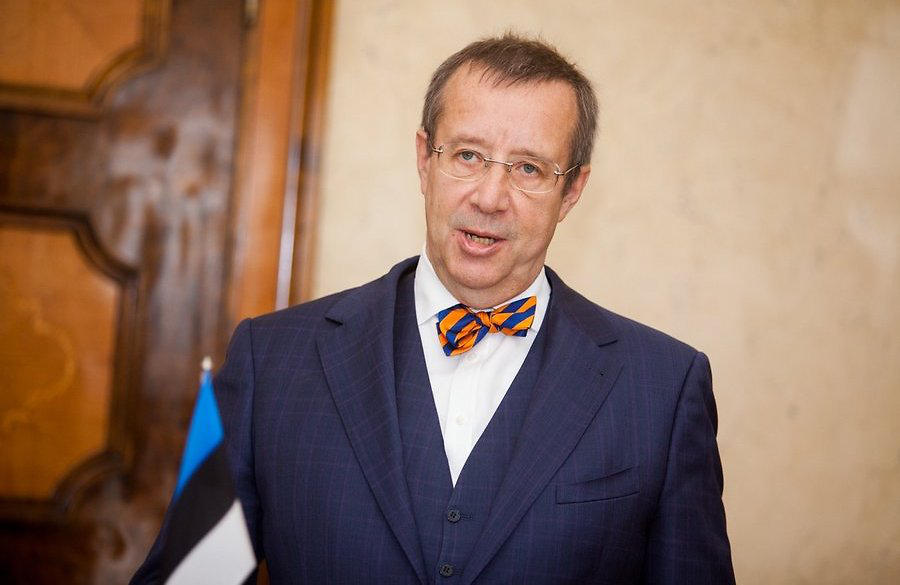
Former Estonian President Toomas Hendrik Ilves was one of the presidents who arrived in Georgia during the August 2008 war to show solidarity to the country. Even today, Ilves responds in detail to the current events in Georgia.
The former President of Estonia spoke to InterpressNews in an exclusive interview about the current developments in Georgia and his perspective on the West's attitude towards these events.
- Mr. Ilves, we usually hear about your comments and tweets about Georgian developments. To start off, would you share what is the fact, factor, or characteristic of Georgian occurrences that bothers and concerns you the most now?
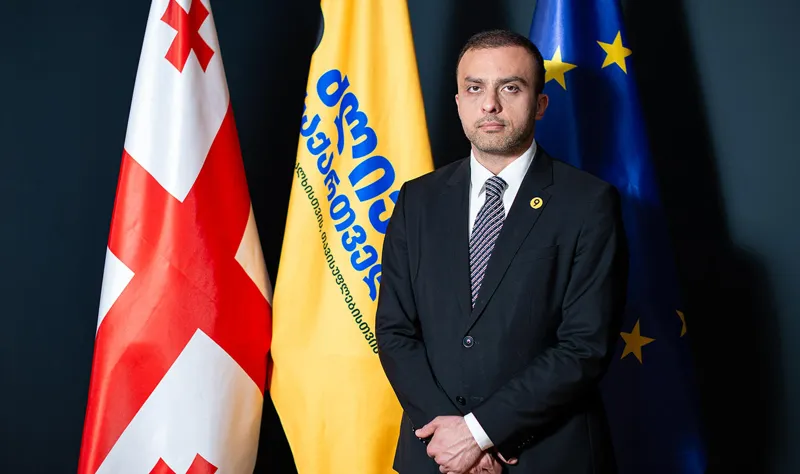
- Well, I would say, I mean, if you want to be the part of the West then you behave like you’re part of the West, you don’t throw the opposition in jail. It’s pretty basic, I mean that’s about as basic as you can get, as in terms of what defines the West commitment to liberal democratic values, which include free and fair elections, respect for rule of law and human rights. And so, I don’t know, why isn’t Russia part of the West? Because they don’t have free and fair elections, they don’t have rule of law and they don’t have respect for human rights. Russia isn’t saying: “Oh, we want to be the part of the West”, in fact, they reject those things – they reject free and fair elections, human rights, and respect for rule of law. So I mean if you want to be part of the West, from which if you share those values you have a claim to join the EU and to join NATO – good! If you don’t, well, then don’t bother! You know, you don’t need to put up the EU flags all over the place if you really don’t share the values of the European Union.
- Are you suggesting that Georgia now resembles Russia with the only difference in messages they send?
- I don’t say “resemble”, I mean that with the behavior like we’ve seen you don’t really have a claim to be part of the EU West.
- In February, you tweeted: "Don't go this route, Sakartvelo. There are too many people and countries in Europe and the West that would be all too glad to write you off", - but I guess the route, without compromise, still continues. What exactly is this route in your eyes? What is the direction - is it further away from the West: EU, NATO, US and closer, or even towards to the Russian Federation?
- I don’t know about that. I mean all I can say is that, you know, I was worried already 15 years ago about enlargement fatigue in the EU and NATO, saying “Ah, we don’t want to take them anymore, it’s too much”. The weight to overcome enlargement fatigue is by doing a better job and to move, I mean, to constantly be moving toward doing reforms, becoming more democratic and all those things. And what I sense in much of Europe is this feeling: “Look, they’ve had all this time, and, you know, it’s not happening, we don’t really have to worry about that anymore. I mean, why bother? Let them do their thing – they want to be one of those countries, fine, why do we have to exert the effort to do anything if they are not willing to do with themselves?” because basically reforms are risks and if you look at the countries that were successful at reforming, governments kept falling, because reforms are things that are risky and there is no guarantee you are going to stay in power, which is also one reason why you don’t go after you political opponents, even Richard Nixon said once, long ago, I mean, even Richard Nixon, that there is only one rule in politics in democracies, which is that whoever’s on the top now, will not be on the top in the future. This is a lesson that is forgotten by the parties that behave badly, be it the Republican party in the US today, which forgets that lesson of their own President, that “if you do bad things to your opponents when they’re in opposition, they will do bad things to you”. And that what keeps democratic countries that are genuinely democratic, it keeps them from doing bad things, because you know that if you are in power, later you won’t be in power. So, anyway, the point is that people are tired and they look at this and they go: “Pff, why bother?!” I mean, the number of people who are out there supporting Georgia in the West, it’s not that great anymore.
- Do you think there’s a kind of tendency for Georgian leaders to forget that after a while, they will not be in power anymore?
- Well, maybe they think they will stay in power, I don’t know, but you do not put opposition leaders in jail - that is what Yanukovich did, and so you do not do that, that is what happened in Ukraine. So, you don’t really want to do those kind of things.
- You mentioned fatigue in EU, which was also discussed by the Members of the European Parliament yesterday. For example, Viola Von Cramon said that Georgia is as far away from the membership as we can imagine. Meanwhile, the ruling party always mentions that they are planning on applying for the EU membership in 2024. What is your take - is it realistic that Georgia would be ready to comply with every condition needed for the EU membership by 2024, or is it too unrealistic from the GD to talk about this?
- If you are starting today, in that major changes and improve democracy, rule of law, and so forth, go ahead. I think what they were saying, and I agree with this, is that if you keep on in this way, forget it! And you can just change, I mean countries change, they make dramatic progress when they do change. But this is the route you are taking which is not the change, then I would say, well, that’s kind of silly. And if you say, “Ok, now we’ve decided that we really do want to be the members, we are going to apply for 2024, and in order to do that, we have to do this, this, this, and this, and we will now do it” and you do it... That’s basically what we did, In Estonia – we were not on track to be invited to the EU for a long, long time. As I came as the Foreign Minister and said: “Look, we have to do this” and basically at the time, this was 1996, the Prime Minister basically said: “That’s all Foreign Policy stuff, so don’t bother me with domestic stuff, you do your foreign policy”. Well, I didn’t tell him that in fact it’s all domestic about getting in, right? So, I had the sort of the foreign ministers saying :”Ok, go ahead, do what you need to do” and I started to do the things that we needed to do, which turned out all to be domestic, but that was Ok, because it was always like: “Well, we need to do this to join the European Union”. Look, we were not on track and in fact, we were among the first to be invited to begin the negotiations - I guess it meant that we worked real hard. You don’t get in automatically, you don’t get in by saying: “Oh, we are European, we have to get in” – no, doesn’t work that way. I mean there are countries that have been waiting for a long, long time.
If you have been on the inside, it’s been a very tough battle, it’s not easy. What I’m trying to say is that if you have a bigger goal, which is to be a member of the European community with all of the benefits that come from that, then you have to undertake serious reforms and you have to accept that people will not always understand or like them in the beginning.
- European Parliament Members already warned suspending EU financial assistance to Georgia. For several months, the tone was not this strict. I also have heard from many of our friends and partners that no one wants to punish Georgia in any way...
- No one is going to punish Georgia. They will simply give up. It’s not...
- I mean, should we expect even tougher measures, such as placing sanctions or anything else?
- I don’t think so, I don’t know. You know, what you have to understand is that you are not that important. Yes, you are not that important. Let me clarify that: I mean, the point is that you are not the center of attention. There are many things that are in the center of attention right now – Georgia is not one of them, and if a country goes bad, if it does things that Europeans think: “Well”... they are not going to place sanctions - when I say you are not that important, I mean that requires an effort: “Oh, what we are going to do?” You know, it’s like: “Yeah, just forget about it”. I mean, they don’t really think much about Tajikistan either. Do you want to be like Tajikistan? No, but by acting in the way that right now the country’s acting, it’s kind of: “Pff, Yeah, uh, who cares”.
- A lot of people in Georgia discuss whose fault it was that the agreement was not reached with the mediation of Mr. Cristian Danielsson. Some blame it on the ruling party, while others point out to the opposition. Do you think either one is at least a little more responsible for what happened? You are a former President of Estonia - for instance, if you faced the situation like that, would you do everything in your power to reach an agreement, even in case the opposition was not as constructive as you hoped?
- I don’t know the internal workings enough to comment. It’s more that if you want to accomplish something for the country, then everyone concedes a little bit.
- What way out do you see now, for a consensus to be reached – do you have your steady opinion about so-called political prisoners and the possibility of snap elections?
- I don’t know the internal, you have to figure out yourself how to do things. That would entail making dramatic improvements in the quality of democracy in the country.
Besides, one belief is that now the US might engage in mediation more. Do you think that would be needed?
- The US has so much more on its plate right now. Yes, you are not the center of the world – right now there is a crisis in Ukraine, there is a health crisis, there is China, you are not on the radar.
- Yesterday you responded to the silence of Georgia on the issue of Ukraine. You tweeted: "How do you expect to have your own Russian occupation condemned by the world community when you utter not a peep when your neighbor is threatened?" After it, there was a statement. But do you have any assumption why Georgian Government leaders didn’t express their solidarity to Ukrainians in the first days?
- I have no idea. I don’t know, it has been eight years so it’s kind of a long time of being quiet, so I don’t know how you overcome that. But the point is that, I know that people there are literally on the same sea as you are, right? I mean that it’s not as far away place, it’s not like alright, maybe Georgia is not going to make a statement on Myanmar because it is far away. But I mean Ukraine is right there, they suffer the same fate and if you don’t say anything, it like: “What the?... Is that you are so egotistical that people who share the same threat and the same fate, both have been invaded, there is no support?” I mean this means that “Ok, you only care about yourself”. If you only care about yourself, why should anyone care about you?
- Russian Journalist Vladimir Pozner, who had stated that Abkhazia will never be Georgia’, visited country a few days ago…
- The rule of law means that the rules apply the same to everybody. You don’t have one set of rules for one set of people and another set of rules for another set of people.
- This moment made a lot of people recall the moment when Sergey Gavrilov took the Parliament Speaker's seat in Tbilisi. How would you assess the fact that someone with this kind of messages about Georgian territories is let in the country to party, and, that happens again after June 20, 2019 developments?
- I don’t know, it’s your country, whatever you decide to do, go ahead. I mean if you want to do that, it looks weird, but what can I say? It’s your decision.
- Surrounded by COVID-19 pandemic, economic decay, political crisis, etc., Georgia and its people face a lot of problems altogether. What would you like to say to the people of Georgia – what would your message be in these difficult times?
- The whole world has pandemic, economic problems, political crisis, you are not the center of the world, everyone has to deal with their own country.
There was a period, 15-16 or 17 years after the end of communism, when the US was deeply engaged in trying to help, but … 2008 war, we flew down in Georgia in 208 because we had to make a dramatic statement in order for the West to care. That made them care. But already Georgia didn’t matter anymore in 2008. Why did I push so hard in the 1990’s for Estonia to join the EU and NATO was that I felt already then that the window of opportunity, not just for joining, but the window of opportunity for having West care would not last, and it didn’t last. The countries that didn’t make the major efforts in the 1990’s are all suffering now being outside the EU and NATO. We all started from the same place – Estonia, Georgia, Ukraine, we were all in the same place in 1991. We are in very different places now. We had to work very hard, we had Governments changing, we had people, sort of, who decided to try major reforms that were hated, because they privatized things, because they did economic reforms. So, here we are – it’s 30 years after the end of communism, countries are in very different places based on whether they wanted to something or not. The interest of the West lasted 10, 12 -13 years, there is still obvious a ort of interest but it’s not the overwhelming thing that this is our historical opportunity to change the world, this is looking from sort of Washington or Brussels. Who feels that way anymore? It’s more like: “Well, it was our historical opportunity, and it’s really great to have Estonia and Poland and Hungary in the EU, we used our historical opportunity, and if you didn’t use your historical opportunity... Well, that was a historical opportunity and you didn’t use it, right?”
- Do you think that we just couldn’t use our opportunity and now the EU fatigue will last for a very long time?
- No, I mean fatigue comes because of nothing happening on your side. I mean it’s like what, how it 2021 differ from 2017 when it comes to EU and Georgia? It’s not any different. I mean if Georgia suddenly says: “Ok, now we are going to do this!” and you do this, then it becomes interesting. But if you are saying “we are European and we have these EU flags everywhere we go but we don’t really do anything that is European, then it’s like ok, well, it is kind of funny. It is kind of funny from my point of view, to see all those EU flags there, what connection is there between what Georgia does and what the EU is? Why are there the EU flags? We don’t have the EU flags in Estonia, we have them on government building, ministry, but if I go to my local government here, there’s no EU flag anywhere.
Eka Abashidze
InterpressNews