President of EBRD: Strengthening judicial independence is key to improving Georgia’s investment climate
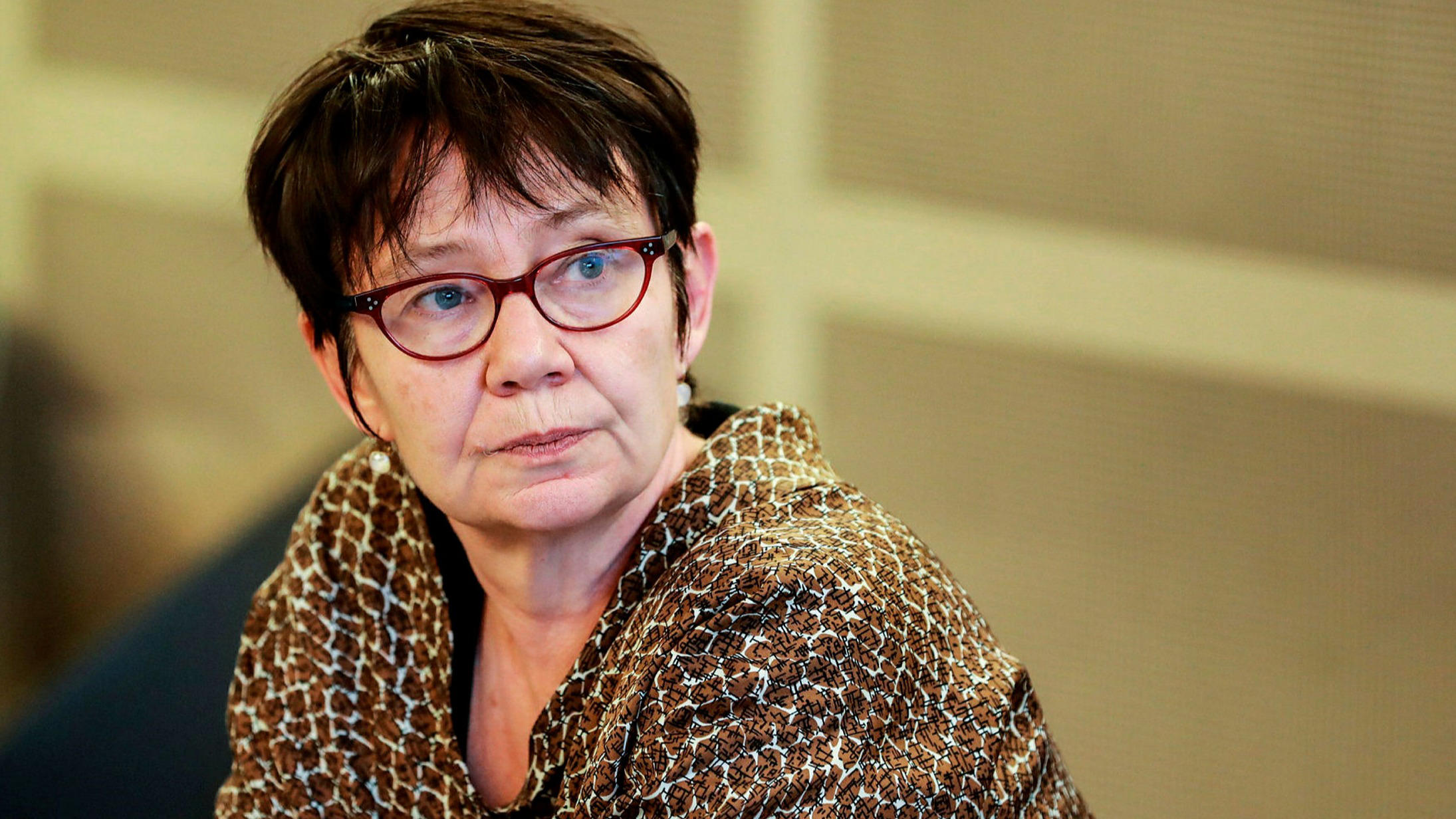
President of the European Bank for Reconstruction and Development (EBRD) Odile Renaud-Basso will tour the Caucasus from 12 to 16 September, visiting Azerbaijan, Georgia and Armenia.
This is President Renaud-Basso’s first in-person visit to the region since assuming office in late 2020. In Tbilisi, the EBRD President will hold meetings with Georgia’s political leadership, diplomats, regional heads of international financial institutions, heads of business associations and existing business partners from the private sector, including local banks.
The main issues to be discussed will be renewable energy, infrastructural development, reforms and financial sustainability. “Interpressnews” interviewed the President of the European Bank for Reconstruction and Development on these specific issues.
- Madame Renaud Basso, Russian military aggression in Ukraine turned world trade upside down. The war also restricted Georgia's access to supply markets. The government's official position is that it will not impose sanctions on Russia and is still importing various resources from the aggressor country. What do you think of that policy and how well is the country responding to the current economic challenges?
Let me speak about the Bank’s position. From day one of Russia’s full-scale invasion of Ukraine on 24 February, we strongly condemned the Russian aggression and declared our unwavering support to Ukraine and its people.
Furthermore, in April, in response to the Russian invasion of Ukraine, our shareholders, decided to suspend Russia’s and Belarus’ access to EBRD resources. The Bank has closed its offices in Moscow and in Minsk. The EBRD will continue to stand by Ukraine.
In Georgia, we have observed that the economic growth has been higher than expected due to unexpected short-term factors including higher net inflow of money transfers from Russia, and higher than expected income generated from tourism. But we will be focusing on ensuring the medium and long-term resilience of Georgia by supporting local financial institutions, small and medium-sized enterprises, sustainable infrastructure, but also by increased investment in the renewable energy.
- An independent and transparent judicial system is necessary to develop the investment climate and correspondingly, the private sector of the country. The need for judicial reform in Georgia is discussed in the recommendations of the European Commission. U.S. Department of State writes that there is a lack of confidence in the judicial sector’s ability to adjudicate commercial cases independently. How would you assess the efficiency of Georgia's court system and what you think should be changed in this regard to make the investment environment more stable?
Strengthening judicial independence, accountability and capacity as well as increasing efficiency in the court system are key to improving Georgia’s investment climate. Other areas to improve in order to support further reform implementation are public administration (including e-government efforts), public procurement, the efficient operationalization of the insolvency resolution regime and corporate governance standards, in particular for state-owned enterprises.
The EBRD welcomes Georgia’s efforts to align with EU norms and regulations as part of a convergence process aiming towards ultimate membership. We are helping Georgia through direct policy dialogue, support through the Investor Council, technical cooperation projects, and targeted investments to make further improvements to the investment environment.
- Since starting the war, demand for an alternative trade corridor linking Asia and Europe, which also passes through Georgia, is on the rise. Unfortunately, transport infrastructure and logistics are in an unenviable state in the country - the efficiency of ports and transport services, the quality of roads and the connectivity of airports are the main problems. What needs to be changed in this respect so that country's transit corridor can meet the growing demand and is Georgia capable of being a trade link between two continents in the near future?
It is true that international carriers are increasingly looking to diversify their transit routes, with demand for transport through the middle corridor increasing significantly. Development of the middle corridor could indeed open new trade opportunities for the Caucasus and for Central Asia. It would increase growth potential of countries along the corridor and support development of logistics and transport hubs in the Caucasus.
We are supporting the Georgian government to turn the country into a regional logistics hub through increased intra-regional connectivity. For instance, the Bank is providing support to the Maritime Transport Agency to develop and implement a Port Community System. We are also supporting digitalisation of Georgian Railway and improvement of its business-relevant e-services. We also stand ready to invest in the enhancement of the country’s sustainable infrastructure.
EBRD is also actively supporting its clients, private or sovereign, involved in linking Central Asia to the Caucasus. Be it a storage facility, near Baku, port infrastructure in Georgia, or railways in Kazakhstan
- Energy efficiency and the development of renewables are one of the main strategic objectives of the EBRD's activities in Georgia. However, apart from hydroelectricity, there are hardly any other sources of renewable energy in the country so far and the government can’t overcome the challenges successfully. In addition, there are frozen hydro projects too – the Nenskra HPP project has been delayed to 2025 and the fate of the Namakhvani HPP remains unclear. In your view, what is the major problem in this sector and what should be changed in the government's future policy?
- We are here to help Georgia build a green, low carbon and resilient economy through investments and policy dialogue and we are currently investing with a number of domestic and international private investors in a variety of renewable projects. At the policy level, among other projects, we have helped Georgia develop its energy efficiency legislation. Our work contributed to an estimated 9% decrease in the energy intensity of Georgia’s GDP, which is now well below world and regional averages.
With regards to Namakhvani HPP, we would like to stress that the EBRD was not involved at any stage of this project. As for our experience, we can speak only for the EBRD. All our projects are subject to thorough due diligence which goes well beyond mere business considerations. Our projects also have to pass a multi-layered vetting and approval process before final sign-off by our shareholders, i.e. the governments owning the EBRD.
Our involvement does not stop there: our Environmental and Social Department consistently engages in careful monitoring, and investigation. It also remains responsive to all stakeholders until the completion of the project. Our mechanisms are constantly evolving, and we are confident that they are up to the standard to address any environmental, social, and public disclosure concerns in timely manner in both, larger and smaller projects.
Therefore, we are set to continue to explore the opportunities to invest in renewables, be it small and medium-sized hydro, solar, or wind power plants. For instance, we are currently working on investing in the construction of a wind power plant in Ruisi.
- Businesses are complaining about labor shortages in the country, demanding more intervention from the government and improving the regulatory framework. What should be done to enhance the dialogue between government and the business community? What is the role of the Investor Council in this process?
We understand that labour force skills are out of step with the evolving needs of businesses, which is becoming one of the main obstacles facing the private sector competitiveness. To improve workforce skills, weaknesses in the education system must be addressed and skills mismatches eliminated by strengthening national technical and vocational education and training, among others. Addressing other persistent inclusion issues, such as gender disparities and regional differences, will also help address the grievances of the business communities.
One of the mechanisms that we provide to address these issues through is the Investment Council, a platform for public-private dialogue to identify businesses’ and investors’ key challenges, and delivering the necessary reforms to address them. Together with the UK Good Governance Fund, we are working through the Council to connect the business community with key political decision makers, and to work towards the improvement of the business and investment climate in Georgia.
- The EBRD notes that access to finance for small and medium-sized companies in Georgia is difficult and that the main factor is high interest rates. How can we improve access to financing for banks, and what is the role of the National Bank or the government in that process?
We are currently supporting SME access to finance via targeted micro, small and medium-enterprise credit lines for our partner banks. Through our partner institutions, we are providing affordable local currency financing, and targeted programmes for the underserved segments such as women, youth, and remote regions.
We encourage the national bank and the government to pursue agenda for development of non-bank financial sector and more sophisticated financial products such as leasing, and factoring reform, capital markets, guarantee schemes, and etc. We are actively engaged at the policy level to help with these initiatives.
- And Finally, what do you see as the solution for dollarization problem in Georgia?
We are committed to developing local currency and capital markets. Where possible, we aim to utilize local currency financing. From 2016 to 2021, nearly 75 per cent of our financing of support of local SMEs was provided in Georgian Laris..
Kakhi Chakvetadze
InterPressNews