EU celebrates family connections: discover the photo contest winner from Georgia!
Natela Grigalashvili is the winner of the Family Connections Photo Contest for Georgia, with her project “The Final Days of Georgian Nomads” rewarded at a gala awards event announcing the winners of the EUNEIGHBOURS EAST - FOTOFESTIWAL photo contest on Friday 31 March 2023 at the Tbilisi Photography & Multimedia Museum, EU Delegation to Georgia reports.
According to the press release, the photo contest, funded by the European Union, invited professional photographers from the six Eastern Partnership countries - Armenia, Azerbaijan, Belarus, Georgia, the Republic of Moldova and Ukraine - to enter a set of photographs around the theme of Family Connections, with one photographer from each country winning a prize of €1,000.
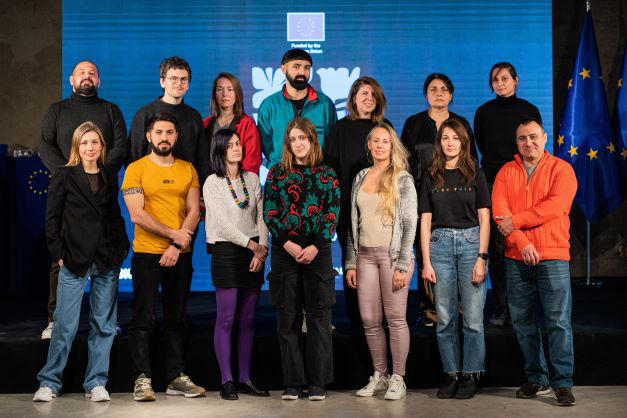
The gala awards event was hosted by Pawel Herczynski, Ambassador of the European Union to Georgia and Nestan Nizharadze, the co-founder of Tbilisi Photography & Multimedia Museum, and attended by local celebrities, and media, bloggers and influencers from across the region.
Presenting the awards, Ambassador Pawel Herczynski said: "Through this photo contest, we are proud to showcase the EU's commitment to fostering cultural exchange and promoting the power of photography as a tool for reflection and change. The theme of Family and family connections highlight the importance of our shared values and the role Family plays in shaping our societies. Congratulations to all the photographers for their creative and inspiring interpretations."
According to the press release, the photo competition sought personal interpretations around the theme of ‘family connections’: how does family connect us to our roots, culture, traditions, attitudes and future? Which connections define a family and make us belong? How do these connections adapt to changing worlds, technology, conflict, love and loss?
As the information reads, Georgian winner Natela Grigalashvili is a freelance documentary photographer based in Tbilisi, working mainly on long-term documentary projects in rural areas of the country. Her winning project, “The Final Days of Georgian Nomads”, examines the lives of nomad families in mountainous Adjara.
This is how Natela Grigalashvili describes her award-winning project: “Mountainous Adjara is one of the most unique regions of Georgia, an area where the traditions and old ways of life have been preserved to this day. The isolation and alienation of the inhabitants of this mountainous area has been an ongoing issue for a long time, and the past decades have been especially challenging. The difficult social and economic situation in the country has hindered its development and the integration of its inhabitants with the rest of the country.
For years, the inhabitants of Adjara have been unable to access proper education, health care and many other services. Villages often experienced electricity shortages and during harsh winters they were usually cut off from the outside world. Due to the absence of basic living conditions, many Adjarian villages are now empty. Many families have become eco migrants as they were forced to move to other regions of Georgia or abroad, mostly to Turkey. Khulo and Ghorjomi Gorge are the highest settlements of the Autonomous Republic of Adjara. There are 18 different villages of various sizes in the Gorge. Because of their small population, some of these villages only have elementary schools and high school students have to attend schools in other villages. The roads between these villages are damaged and the infrastructure is faulty.
Almost all of the inhabitants of these villages are Muslim, and there are mosques in every large village. The residents are mostly cattle breeders, but due to the lack of pastures, cattle owners take their herds to the mountains in the summer and stay there until late autumn. Nomadic Adjarians have to move several times a year. But despite this, most of the men still have to work in Turkey, holding seasonal jobs for additional income. Because of this difficult situation, this mountainous region is slowly emptying and its unique tradition and lifestyle is being forgotten.”
"Natela was one of three shortlisted photographers from Georgia. The other two were Ekaterine Kolesnikova (Morning Comes Too Soon) and Tako Robakidze (Peacekeepers).
The six winners were chosen by team of five top international judges from a total of more than 400 initial applications, narrowed down to a shortlist of 18 photographers – three from each country – who were all invited to the awards event in Tbilisi.
The other national winners are Nazik Armenakyan (Armenia), Orkhan Azimov (Azerbaijan), Pasha Kritchko (Belarus), Katerina Shosheva (Moldova), and Marysia Myanovska (Ukraine).
The gala awards event was attended by the EU Ambassador to Georgia, as well as photographers, media, content creators and influencers from Armenia, Azerbaijan, Georgia, Belarus, Moldova and Ukraine.
The day before the awards ceremony, on 30 March, the shortlisted photographers took part in a masterclass with the international judges of the competition.
The contest was organised by the EU NEIGHBOURS EAST programme, in partnership with Polish Fotofestiwal.
BACKGROUND INFORMATION:
About Natela Grigalashvili
Natela Grigalashvili is a freelance documentary photographer based in Tbilisi, Georgia. In the past, Grigalashvili worked as a photo reporter as well as a film operator. At the beginning of her career, she used to shoot with black-and-white film but for more than a decade Grigalashvili has been taking colour photographs with a digital camera. She now mainly works on long-term documentary projects in the rural areas of Georgia, focusing on the lives and issues of people living in villages and provincial cities. While working on a photo series, Grigalashvili focuses on the story which is told by the image.
Family Connections
The theme of the photo contest is ‘Family Connections’, with photographers invited to submit a series of 8-20 photographs expressing their artistic, social and personal interpretation of the theme.
The last three years have, like rarely before, exposed the importance and the fragility of family connections. Covid-imposed social distancing brought suffering and isolation, and transformed many connections, but intensified others. In the last year, the whole world has seen war tearing families apart, but also how many have opened their family homes to refugees.
Family connections remain central to our lives and our society, but how does our family connect us to our roots, culture, traditions, attitudes and future? Which connections define a family and make us belong? How do these connections adapt to changing worlds, technology, conflict, love and loss?
A wider communication campaign around the theme of ‘Family Connections’ was launched on 15 March across all EU NEIGHBOURS east channels, giving deeper context to the photo contest. This EU campaign celebrates families through highlighting the work of the EU-funded regional progamme EU for Gender Equality on engaged fatherhood, features inspirational stories about families and an AI social media quiz on family values.
The judges
The winners was decided by an international jury of five judges:
Lars Boering: Director of the European Journalism Center foundation (EJC) and founder of Triggertale.com, a platform for visual communication and storytelling.
Emma Bowkett: Director of Photography at the FT Weekend Magazine and a curator focussed on lens-based arts and contemporary visual culture.Arianna Rinaldo: Freelance professional working with photography at a wide range. She is the former artistic director of Cortona On The Move, an international photo festival of visual narrative.
Karolina Gembara: Photographer and researcher. Her work revolves around issues like home, belonging, migration, changing lands and identities.
Milica Saracevic: Press and strategic communication officer at the European Commission.
About EU NEIGHBOURS east
EU NEIGHBOURS EAST is an EU-funded regional communication programme that aims to enhance the EU’s communication in the region, improve public understanding of the European Union and its policies, and build resilience against disinformation.
Apart from managing the EUNEIGHBOURS east website, the programme’s activities include thematic communication campaigns, public diplomacy actions, opinion polling and outreach in partnership with youth activists, media partners, national authorities, civil society organisations, academia and different professional networks and associations. It also manages the network of almost 1,000 Young European Ambassadors.
About Fotofestiwal
Fotofestiwal was established in Poland in 2001 as a collective of professionals working with photography.
Since then, it has grown into one of the most relevant photographic festivals in Europe. Over 20 years, it has developed a wealth of experience in running competitions and showcasing results," reads the information.