


Chairman of the Constitutional Court: If we wanted to make some dark decision, we would not have held this session at all, the court could have made a decision behind closed doors
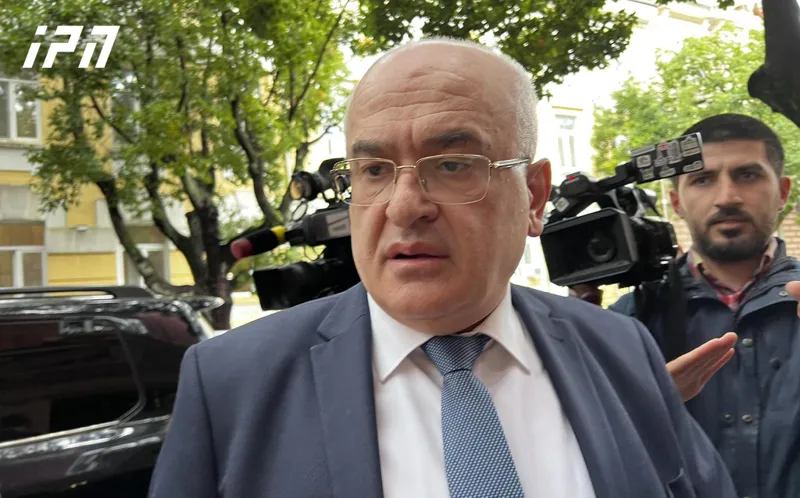
If we wanted to make some dark decision, we would not have held this session at all, the court could have made a decision behind closed doors - I am absolutely free, Chairman of the Constitutional Court, Merab Turava, told journalists before the start of the hearing on the impeachment submissions of the President of Georgia.
As Turava said, the fact that both the representatives of the President and the authors of the submissions were invited to the session indicates that the court is not biased towards any party.
"9 judges decided this [to consider the case]. The decision has been made and we have invited both one and the other to the session. We give the arena to both one and the other to convince the court of the correctness of their position. If we wanted to make some dark decision, we would not have held this meeting at all. It is written in the law that the Constitutional Court could not call either the authors of the submissions or the representatives of the President at all and make a decision behind closed doors. You did not see or do not want to see that the court decided that this process should be public, that journalists should be represented. The law also provided for us to make a decision behind closed doors, but the fact that we invited both and conducted this process in public indicates that we are not and cannot be biased towards any party," said Turava.
As for the assessments that Merab Turava "had an aggressive attitude towards the President" during the session, as the Chairman of the Constitutional Court says, if he had an aggressive attitude, they would have determined that the President should have appeared at the session.
"When the conclusion is made, only then can we talk about its content. Some television makes you feel that you know in advance what the court will decide.
If I had an aggressive attitude towards the President, we would have determined that the President should appear at the meeting. We said that her representatives are authorized to represent the position of the President. We have no aggression towards either the President or the authors of the submissions. When the process is over, when we listen to both, only then will we make a decision. I gave the President's representatives time to talk about anything they wanted. Neither one nor the other needs my hint, they themselves know perfectly well what to talk about. Both of them are represented by qualified lawyers," said Turava.
To the question that, according to the President's representatives, they were in unequal conditions at the session, Turava answers: "A lot of things can be said, but it should be expressed in something - we did not allow them to speak and ask questions, or in what form it was expressed?".
According to him, a decision on the issue will be made within the time limits set by the law.
At the same time, Turava answered the question whether he is free from political influence. According to him, the court takes its decision according to the Constitution.
"If you ask me this question, I will answer that I am absolutely and completely free. When we make a decision, we make it as we think it is constitutionally appropriate. As the Constitution dictates and obliges us, we take the decision," said Turava.
As for whether the President will be summoned to the session again, Turava says: "The session will start and we will see."
"Since the President didn't want to come to the trial, we don't want to make the situation even worse," says Merab Turava.










